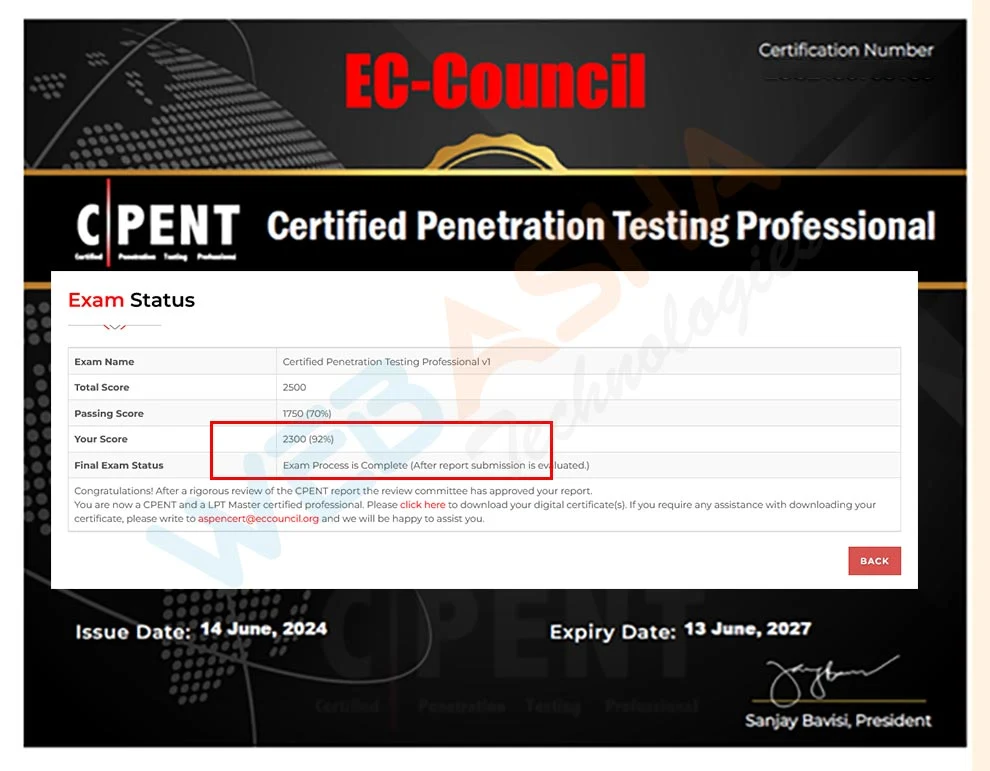
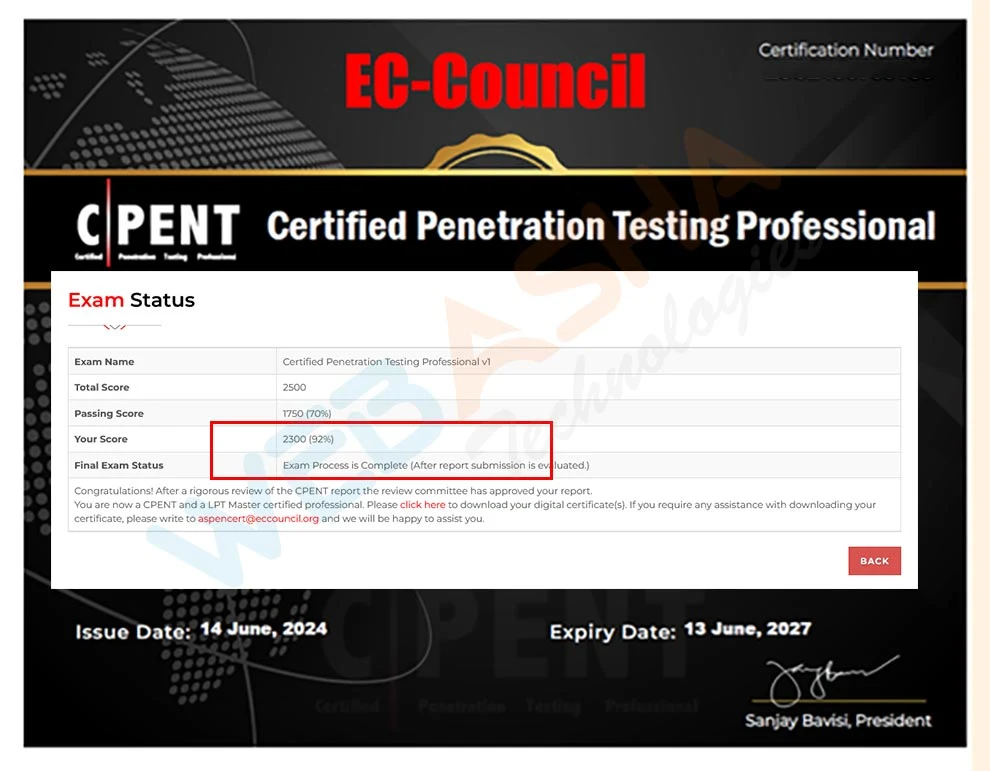
Learn advanced pen testing through our classroom and online CPENT training at WebAsha Technologies. It builds the hands-on offensive skills that the 24-hour CPENT exam tests.
Training overview:
The CPENT training picks up where entry-level courses stop. It follows EC-Council's 14 CPENT AI modules: methodology, scoping, OSINT, social engineering, web application and API testing, perimeter defense evasion, Windows and Linux exploitation, Active Directory, binary exploitation, lateral movement and pivoting, IoT testing and report writing. Labs run on a defense-in-depth cyber range.
Intended audience:
This course suits penetration testers, red teamers and advanced ethical hackers who want an advanced, fully hands-on pen-testing credential.
Topics covered:
-
Scoping and OSINT: Plan the engagement, agree the rules and gather intelligence.
-
Windows and Linux exploitation: Gain initial access and escalate privileges.
-
Lateral movement and pivoting: Move through segmented networks.
-
Binary exploitation: Reverse engineering, fuzzing and buffer overflows.
-
Web application and API testing: Injection, authentication and session flaws, JWT and GraphQL.
-
IoT, with OT/SCADA as self-study: Firmware analysis, IoT software and network testing.
-
Active Directory attacks: Enumerate and exploit enterprise AD.
-
Perimeter defense evasion: Get past firewalls, IDS, routers and switches.
Requirements:
CEH-level knowledge and pen-testing fundamentals are recommended. Online participants need a stable internet connection and a laptop or desktop for the live range.
Prerequisites:
EC-Council describes CPENT as suited to people with two years of information security experience or CEH-level knowledge. We recommend CEH-level knowledge and penetration-testing fundamentals before you start.
Career benefits:
Advanced pen-testing skills pay well. In India, CPENT/LPT holders typically earn ₹7 LPA to ₹30+ LPA in penetration-testing and red-team roles.