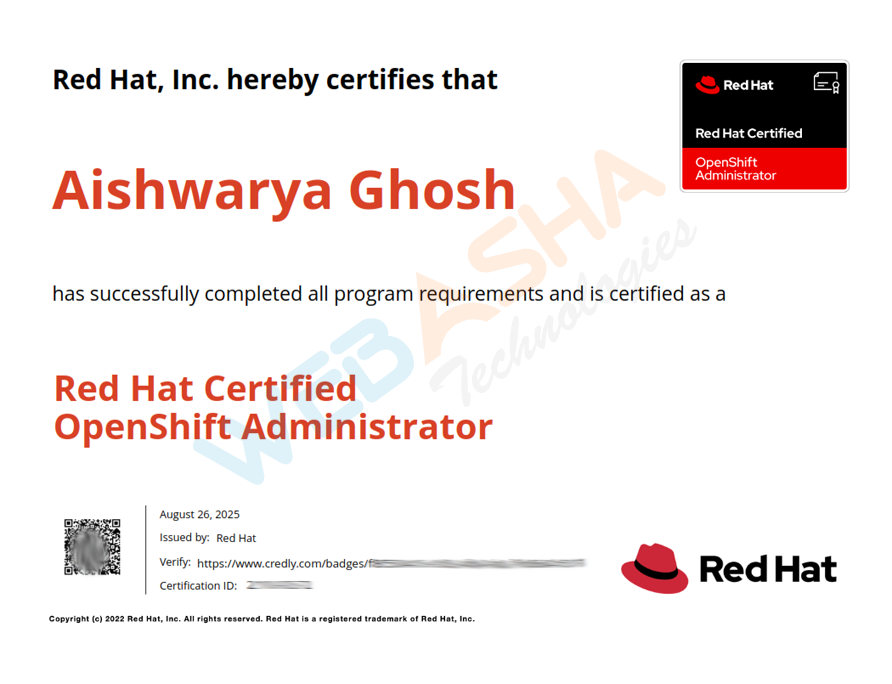
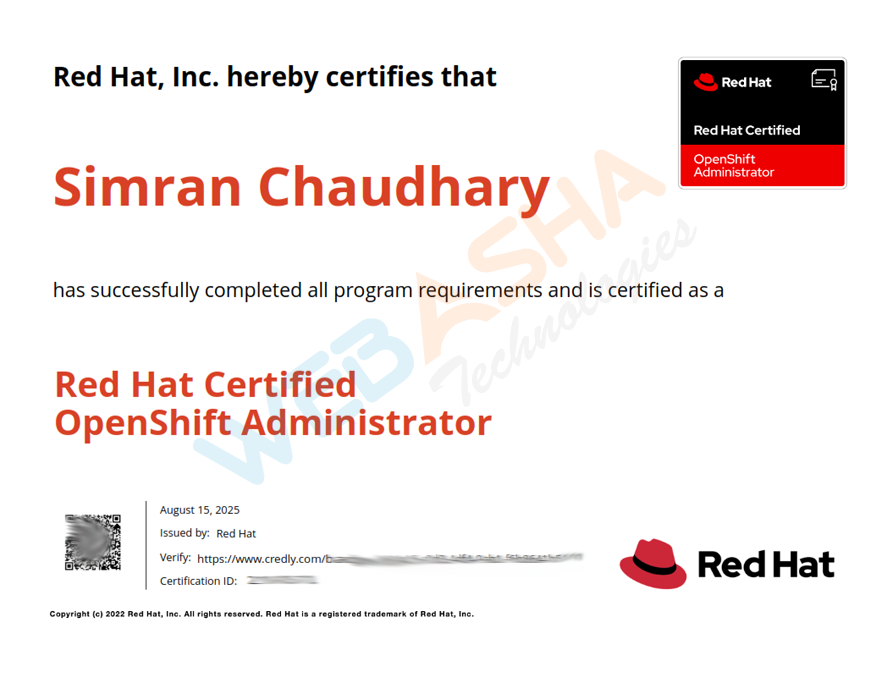
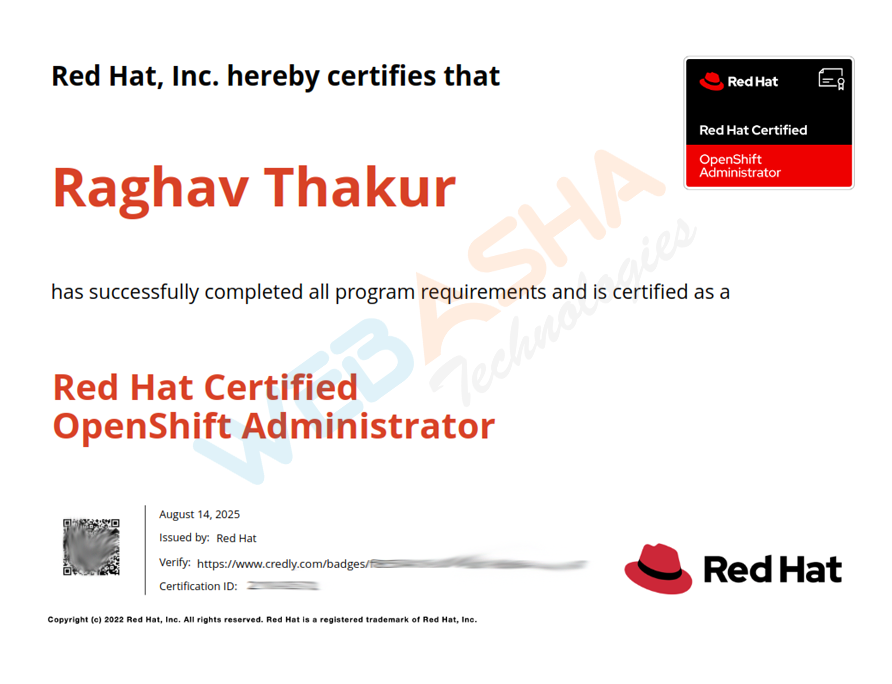
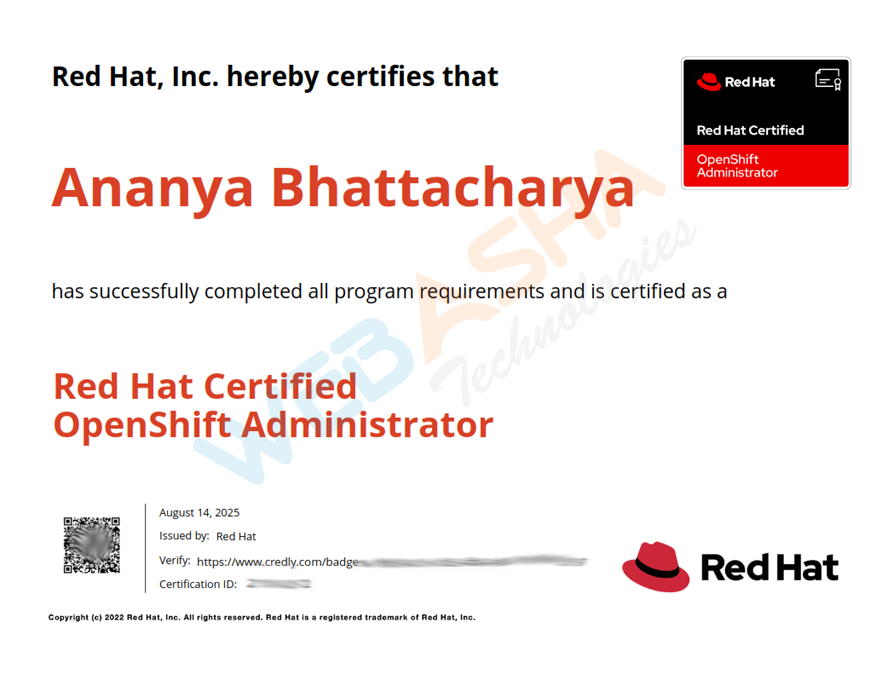
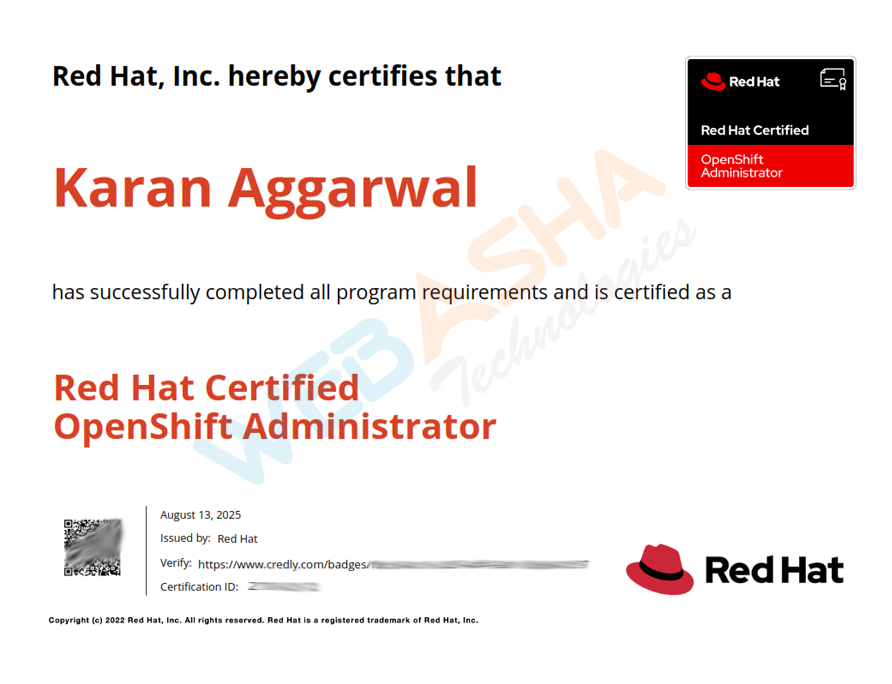
Our classroom and online Red Hat OpenShift Administration (DO280 | EX280) training at WebAsha Technologies covers the day-to-day administration of a production cluster. Red Hat bases the current course on OpenShift 4.22, and the program teaches the hands-on skills tested in the performance-based EX280 exam.
Training overview:
The DO280 EX280 training follows the nine chapters of Red Hat's course: declarative resource management, packaged applications, authentication and authorization, network security, non-HTTP/SNI applications, developer self-service, operators, application security and OpenShift updates. You practise each one in labs so that the exam conditions are familiar.
Intended audience:
This course is for system administrators, cluster operators, SREs, DevOps and platform engineers who deploy and manage applications on OpenShift and want an official Red Hat credential.
Topics covered:
-
Declarative resource management: Deploy and update applications from YAML manifests and Kustomize overlays.
-
Packaged applications: Deploy applications from templates and Helm charts.
-
Users, groups and RBAC: Configure the HTPasswd identity provider, manage users and groups, and assign roles.
-
Network security: Protect traffic with TLS certificates and network policies.
-
Non-HTTP/SNI applications: Expose applications with load balancer services, without the ingress controller.
-
Developer self-service: Set resource quotas, limit ranges and project templates for teams.
-
Operators and updates: Install and update operators, and update the OpenShift cluster.
-
Application security: Run privileged applications with service accounts and security context constraints.
Requirements:
Learners should be comfortable with the Linux command line and with basic container and Kubernetes concepts. Online participants need a stable internet connection and a laptop or desktop for the live OpenShift cloud labs, where most of the EX280 practice happens.
Prerequisites:
Red Hat recommends DO180 (Red Hat OpenShift Administration I) or equivalent skills in deploying and managing Kubernetes applications, along with intermediate Bash skills. It strongly recommends RHCSA for the exam but does not require it.
Career benefits:
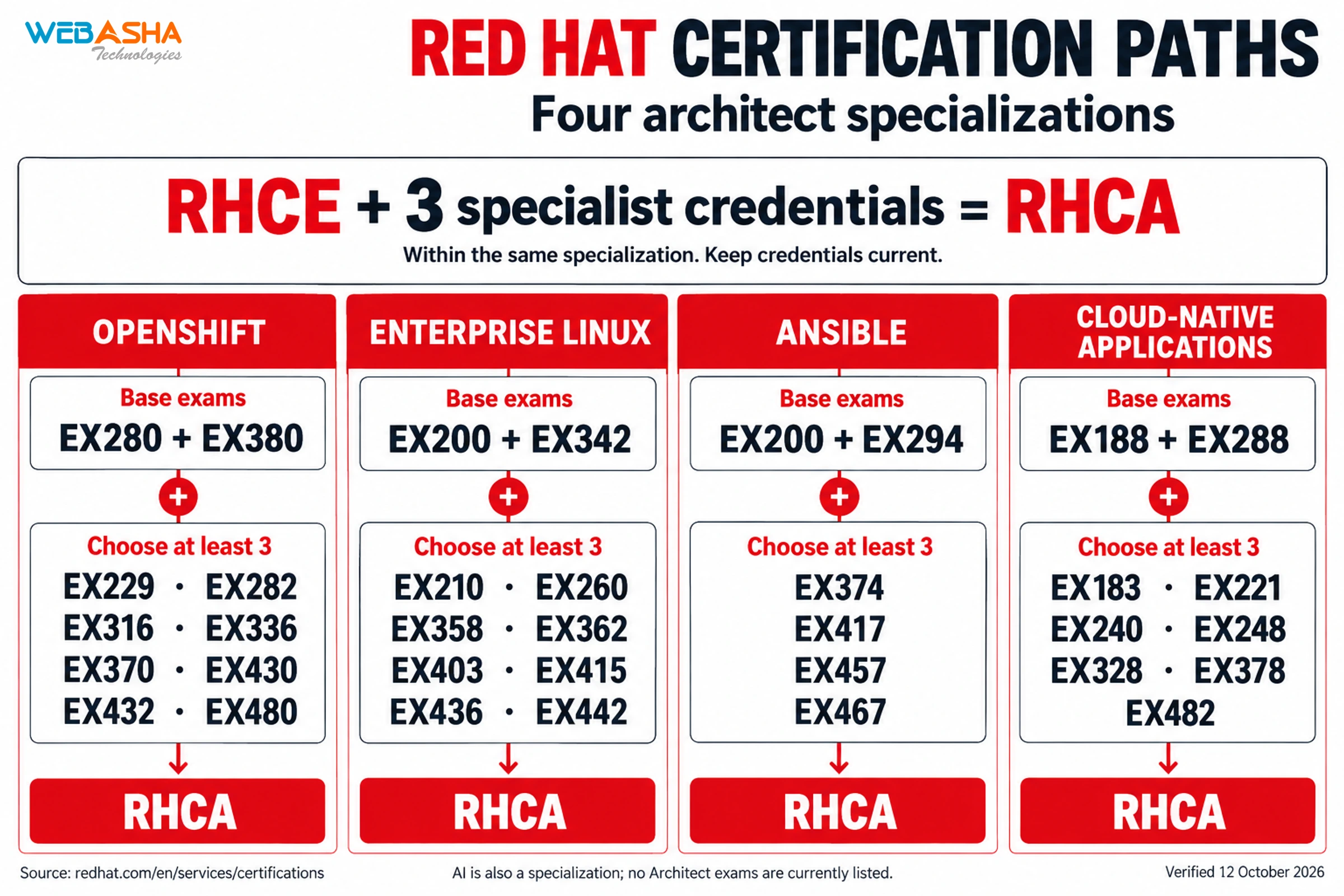
Enterprises standardising on Kubernetes and OpenShift hire EX280-certified administrators. In India, packages typically range from ₹6 LPA to ₹32+ LPA in roles such as OpenShift Administrator, Platform Engineer and SRE, and the exam is a required step toward the RHCA in OpenShift.