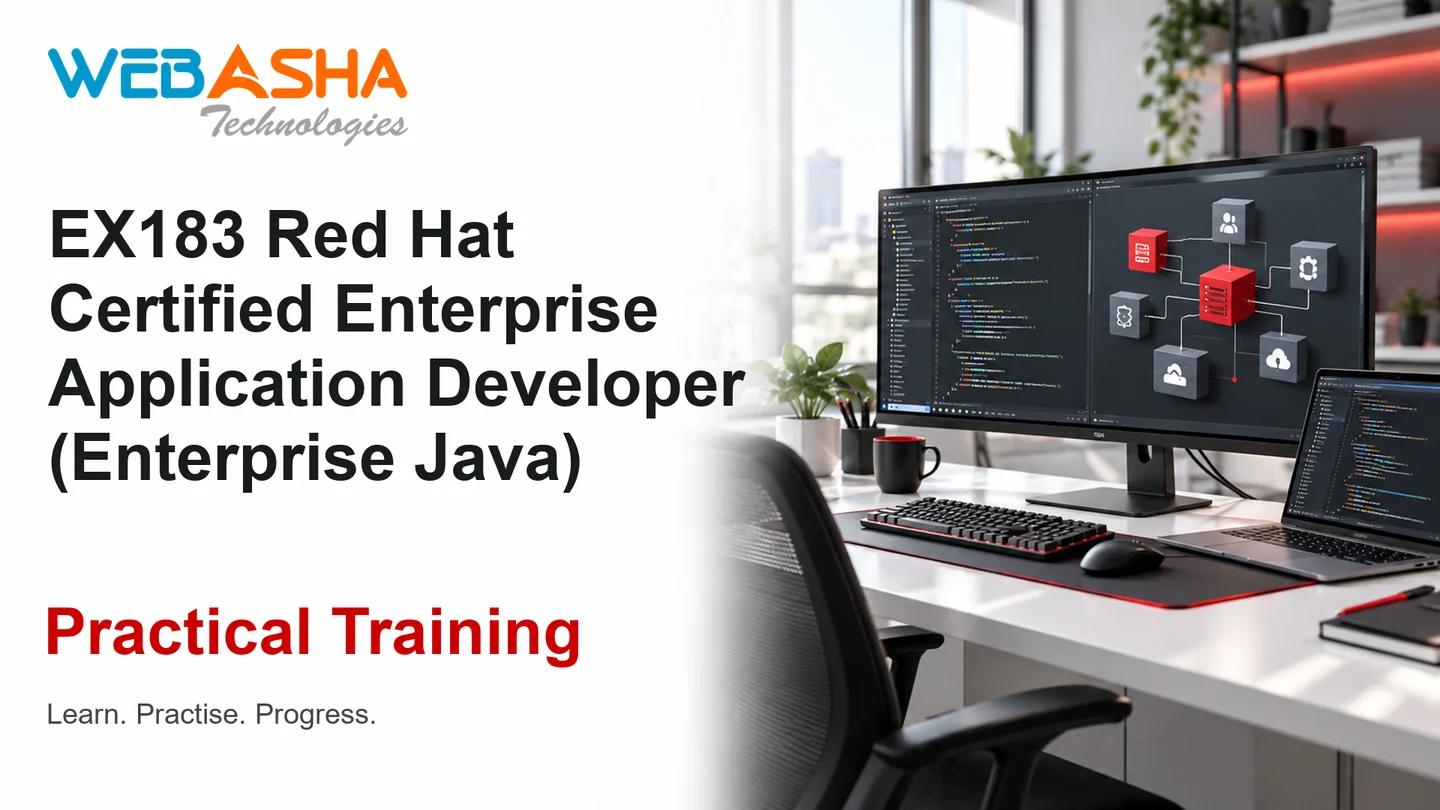
Our classroom and online EX183 training at WebAsha Technologies teaches you to build enterprise Java services. It covers the enterprise Java development skills that the hands-on EX183 exam tests.
Training overview:
The EX183 training sticks to the small set of enterprise Java APIs needed for stateless business services: JAX-RS REST APIs, stateless EJB business logic, CDI component integration, JPA persistence, JMS messaging, JAAS security and Bean Validation. EX183 is an exam with no chapter list of its own, so the syllabus below follows Red Hat's published study points. Red Hat pairs the exam with its course Red Hat Application Development I: Programming in Java EE (AD183). You practise each topic in coding labs.
Who it is for:
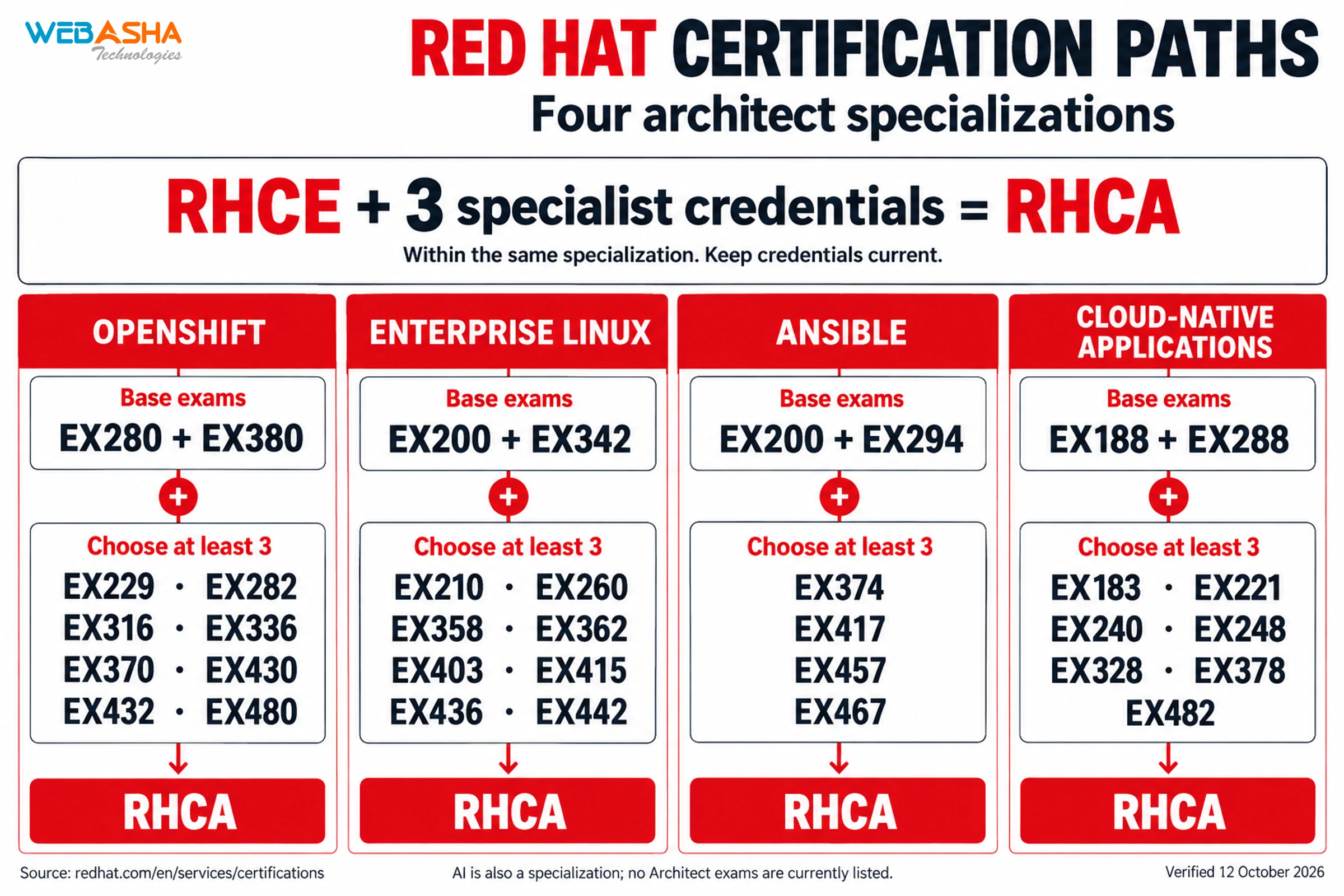
The course is for Java developers, backend engineers and software developers who want a certificate for their enterprise Java skills and a first step on the Red Hat cloud-native developer path.
Topics covered:
-
JAX-RS REST APIs: Write REST services that create, read, update and delete data.
-
Stateless EJB: Put business logic in stateless session beans.
-
CDI: Connect components with dependency injection and contextual scopes.
-
JPA Persistence: Map objects to database tables, then create, read, update and delete them.
-
JMS Messaging: Send and receive messages through queues and topics.
-
JAAS Security: Restrict access to REST services and EJBs.
-
Bean Validation: Check that data has the right format and stays consistent.
-
Stateless Services: Design business services that keep no client state.
Requirements:
You should already program in Java. Online participants need a stable internet connection and a laptop or desktop for the live coding labs.
Prerequisites:
EX183 has no formal prerequisites. Red Hat recommends its AD183 course, solid Java SE knowledge (exceptions, annotations and the Collections API) and familiarity with Red Hat JBoss Developer Studio.
Career benefits:
Employers continue to hire for enterprise Java work. In India, Java developers typically earn ₹4 LPA to ₹24+ LPA, and experienced developers move into senior and cloud-native roles.