Learn Linux network services in our classroom and online RH358 training at WebAsha Technologies. The course is based on RHEL 9.4 and Ansible Automation Platform 2.4 and teaches the skills tested in the performance-based EX358 exam.
Training overview:
The RH358 training follows the 10 chapters of the Red Hat course: managing network services, link aggregation, DNS, DHCP, printing, email, MariaDB, web servers, file-based storage (NFS and SMB) and block-based storage (iSCSI). You set up each service by hand and then automate the same work with Ansible so it can be repeated at scale. Lab work prepares you for the hands-on EX358 exam.
Intended audience:
The course is meant for Linux system administrators and automation engineers with some Ansible experience who want to deploy and automate network services on RHEL.
Topics covered:
-
DNS services: Configure caching and authoritative name servers.
-
DHCP services: Assign IPv4 and IPv6 addresses automatically.
-
Web services: Deploy Apache HTTPD and Nginx with virtual hosts and TLS.
-
Email services: Send mail through an outbound relay with Postfix.
-
File and block storage: Share files with NFS and SMB, and connect to iSCSI storage.
-
Database services: Deploy and manage MariaDB.
-
Printing and advanced networking: Configure print queues and network bonding.
-
Automate with Ansible: Automate the manual tasks from each chapter.
Requirements:
RHCSA-level Linux experience and a working knowledge of Ansible are recommended. Online participants need a stable internet connection and a laptop or desktop for the live services labs.
Prerequisites:
For the RH358 course, Red Hat asks for RHCSA-level administration skills and a working knowledge of Ansible (RH294 or equivalent). The EX358 exam has no required prerequisite, but its objectives expect RHCE-level skills.
Career benefits:
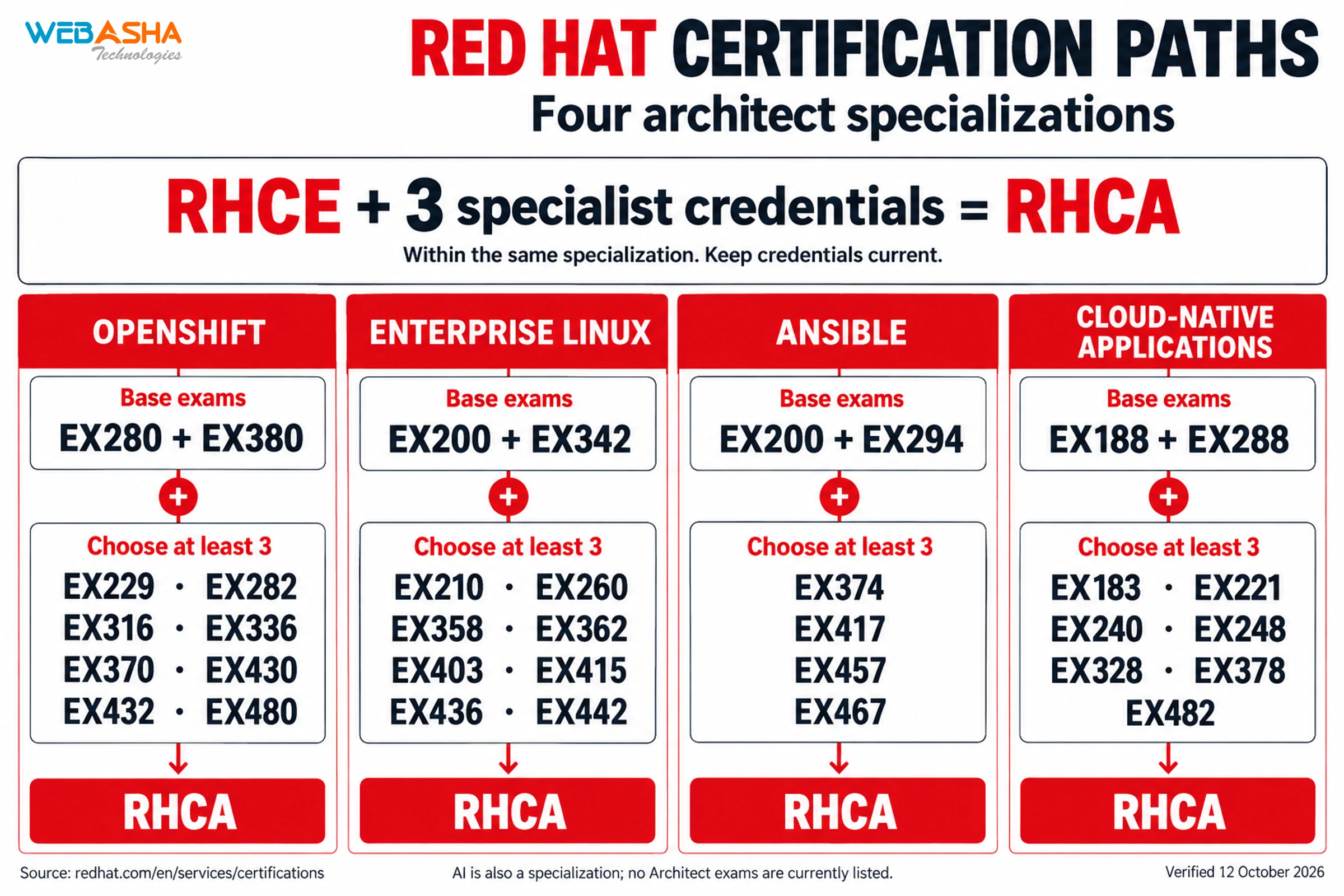
Running and automating services is everyday work in Linux operations. In India, administrators in these roles typically earn ₹6 LPA to ₹24+ LPA, and the exam counts toward the RHCA.