Our classroom and online DO328 training at WebAsha Technologies teaches you to build resilient microservices. It builds the OpenShift Service Mesh skills tested in the performance-based EX328 exam.
Training overview:
The DO328 training follows Red Hat's five-chapter outline for OpenShift Service Mesh (Istio): an introduction to the mesh, observing it, managing traffic, securing it and a closing review chapter. You practise traffic management, resilience patterns, mutual TLS security and observability on a multi-microservice application. Lab work prepares you for the hands-on EX328 exam.
Who it is for:
This course is for microservices developers, DevOps engineers and architects who build and operate cloud-native applications on OpenShift.
Topics covered:
-
Service mesh basics: What OpenShift Service Mesh (Istio) adds to a microservices application.
-
Traffic management: Route, split and mirror traffic between service versions.
-
Resilience patterns: Apply timeouts, retries and circuit breakers, and test them with fault injection.
-
Canary deployments: Send a share of traffic to a new version before a full release.
-
Mutual TLS security: Encrypt and authenticate service-to-service traffic.
-
Observability: Trace, measure and visualise traffic in the mesh.
-
Persistent data: Work with an application that uses a persistent data store.
-
Multi-microservice apps: Run several microservices together in one mesh.
Requirements:
Familiarity with OpenShift and microservices is recommended. Online participants need a stable internet connection and a laptop or desktop for the live OpenShift labs.
Prerequisites:
Red Hat lists Red Hat OpenShift Developer II (DO288), or equivalent OpenShift experience, as the prerequisite for DO328/EX328. It also recommends DO378 or similar experience of building microservices.
Career benefits:
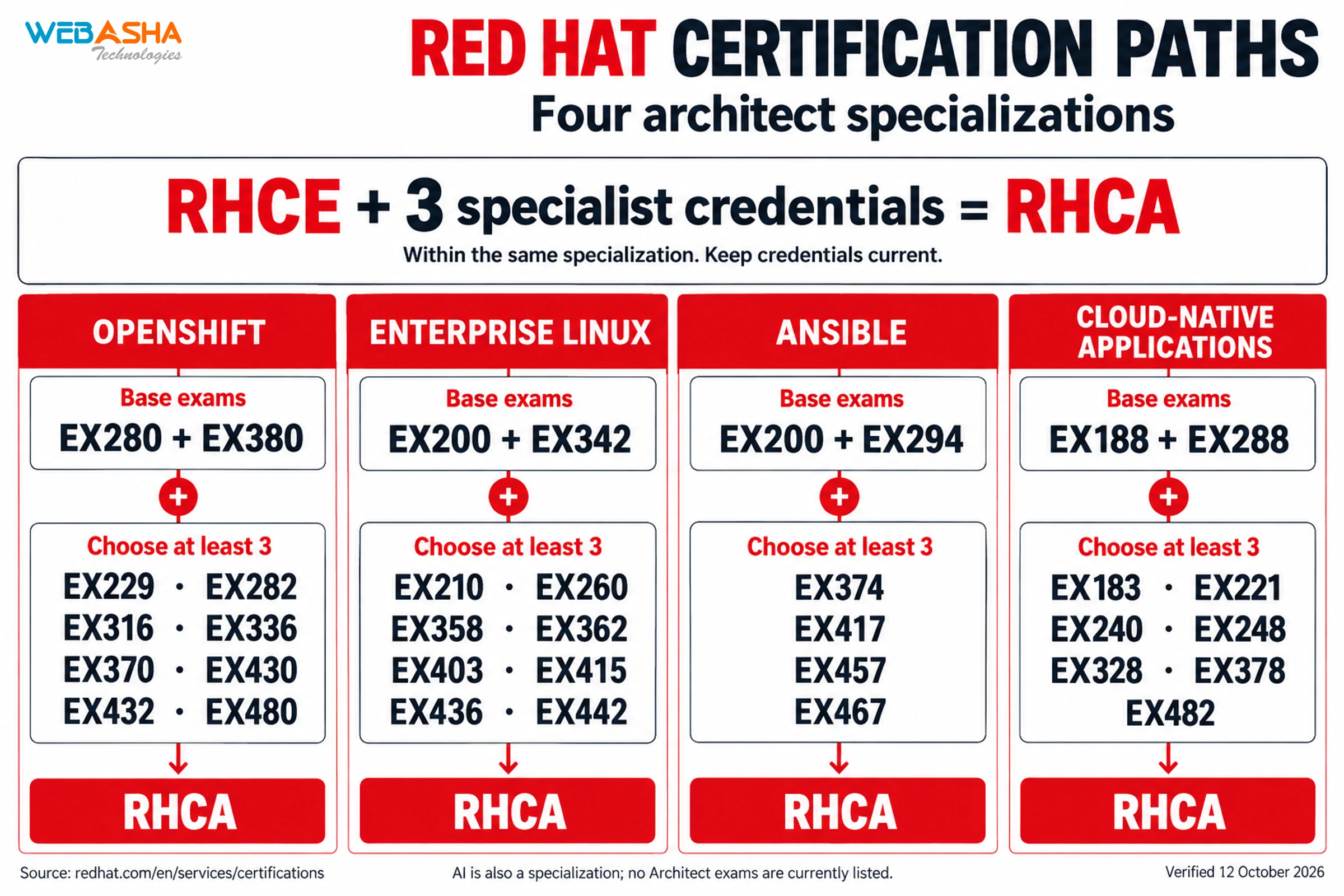
Cloud-native teams hire for microservices and service mesh skills. In India, engineers in this area typically earn ₹6 LPA to ₹30+ LPA, and many move on to architect roles and the RHCA.