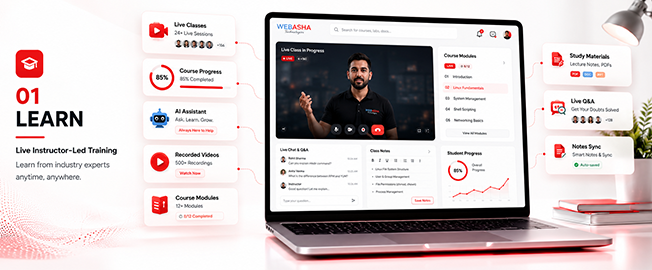
Our Classroom and Online DO180 Training at WebAsha Technologies teaches the hands-on container and OpenShift skills that the EX180 exam tests.
Training Overview:
The DO180 training follows the seven chapters of Red Hat's course. You start with the Kubernetes and OpenShift services, the web console and the command line. Then you run containers and pods, deploy and expose applications, attach configuration and storage, set up health probes and autoscaling, and manage application updates. The labs are hands-on, as the EX180 exam is.
Intended Audience:
This course is for developers, system administrators, DevOps engineers and SREs who want cloud-native skills and plan to start the Red Hat OpenShift certification path.
Topics Covered:
-
Kubernetes & OpenShift Basics: Identify the main cluster and platform services in the web console.
-
Command Line & APIs: Use the oc CLI to query Kubernetes API resources.
-
Containers & Pods: Run and troubleshoot containerised applications as pods.
-
Container Images: Find and inspect container images.
-
Deploy Applications: Deploy apps from images, templates and manifests.
-
Expose & Scale: Expose applications inside and outside the cluster and scale workloads.
-
Configuration & Storage: Use config maps, secrets and persistent volumes.
-
Reliability & Updates: Set health probes, resource limits and autoscaling, and roll updates out or back.
Requirements:
Basic Linux command-line familiarity is helpful. Online participants need a stable internet connection and a laptop or desktop for the live OpenShift labs.
Pre-Requisites:
Red Hat recommends basic Bash shell skills and some knowledge of Linux containers before DO180. For the EX180 exam it also recommends RH124 and RH134 or equivalent experience, which is RHCSA-level knowledge.
Career Benefits:
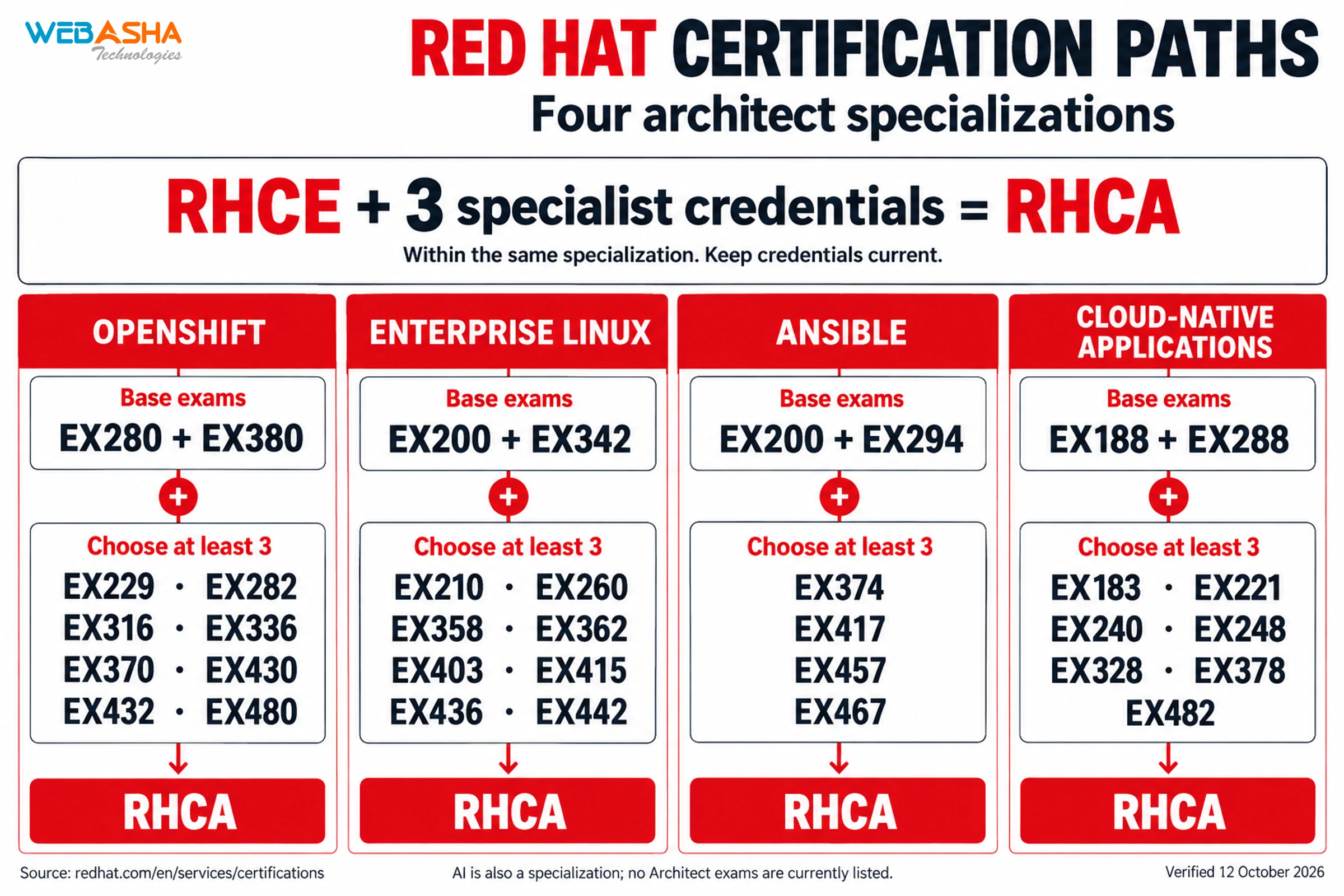
Many employers now run their applications on containers and OpenShift. In India, related roles typically pay ₹5 LPA to ₹24+ LPA, and pay tends to rise as you move along the OpenShift certification path.