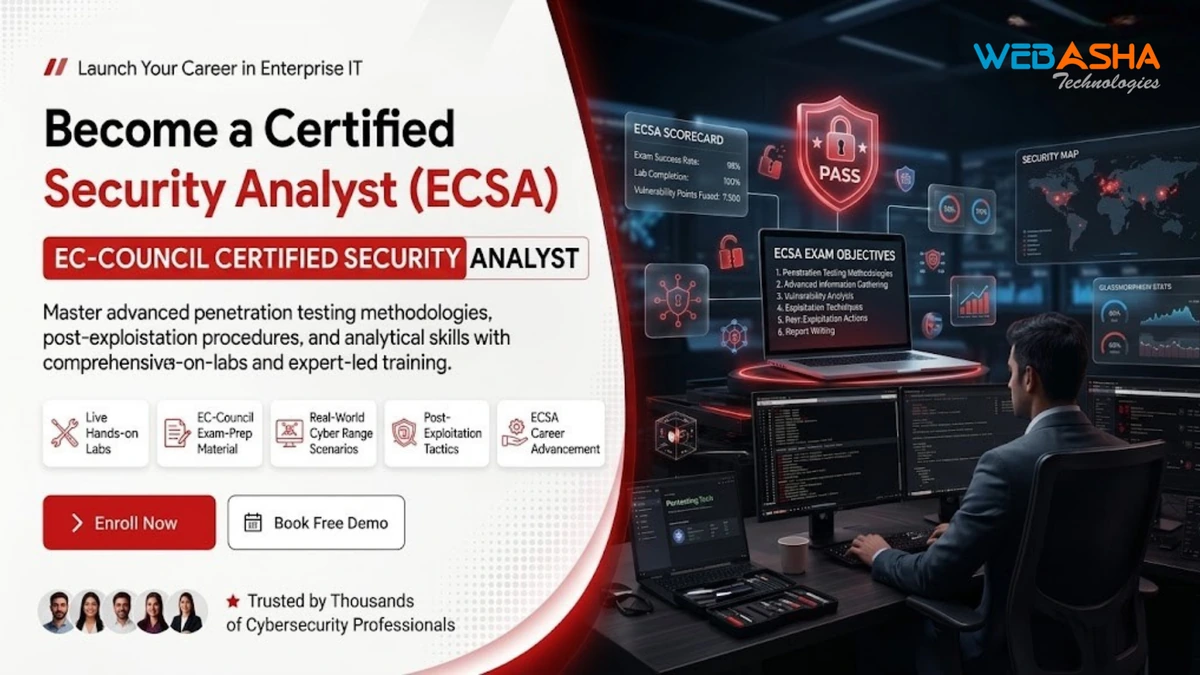
Important: EC-Council retired the ECSA certification in 2021. The current, active penetration-testing certification is CPENT (Certified Penetration Testing Professional), which replaced ECSA. WebAsha recommends the CPENT program for pen-testing certification today; this page is kept for reference and skills context.
The ECSA program built advanced penetration-testing methodology skills. Since it is retired, WebAsha delivers these skills - and current certification - through the CPENT program.
Training Overview:
ECSA focused on a structured penetration-testing methodology: pre-engagement and scoping, network and web application penetration testing, and professional reporting. These skills live on in CPENT, EC-Council's current, fully hands-on penetration-testing certification, which adds advanced topics such as IoT, OT/SCADA, binary exploitation and pivoting.
Intended Audience:
Security analysts and aspiring penetration testers who once targeted ECSA should now pursue CPENT. WebAsha guides you directly to the current certification.
Topics Covered:
-
Penetration-Testing Methodology: Structured, repeatable testing (now in CPENT).
-
Scoping & Pre-Engagement: Plan and scope engagements.
-
Network Penetration Testing: Test networks methodically.
-
Web Application Testing: Assess web applications.
-
Reporting: Write professional pen-test reports.
-
Current Path - CPENT: Hands-on, 24-hour practical exam.
-
Advanced CPENT Topics: IoT, OT/SCADA, binary exploitation, pivoting.
-
LPT Route: Score 90%+ on CPENT to also earn LPT (Master).
Requirements:
ECSA is retired; enrol in the CPENT program instead. Online participants need a stable internet connection and a laptop/desktop for the live labs.
Pre-Requisites:
ECSA is no longer offered. For current penetration-testing certification, CEH-level knowledge is recommended before CPENT.
Career Benefits:
Penetration-testing skills remain in strong demand. Pursue them via CPENT; in India, pen-testers typically earn ₹5 LPA to ₹26+ LPA.