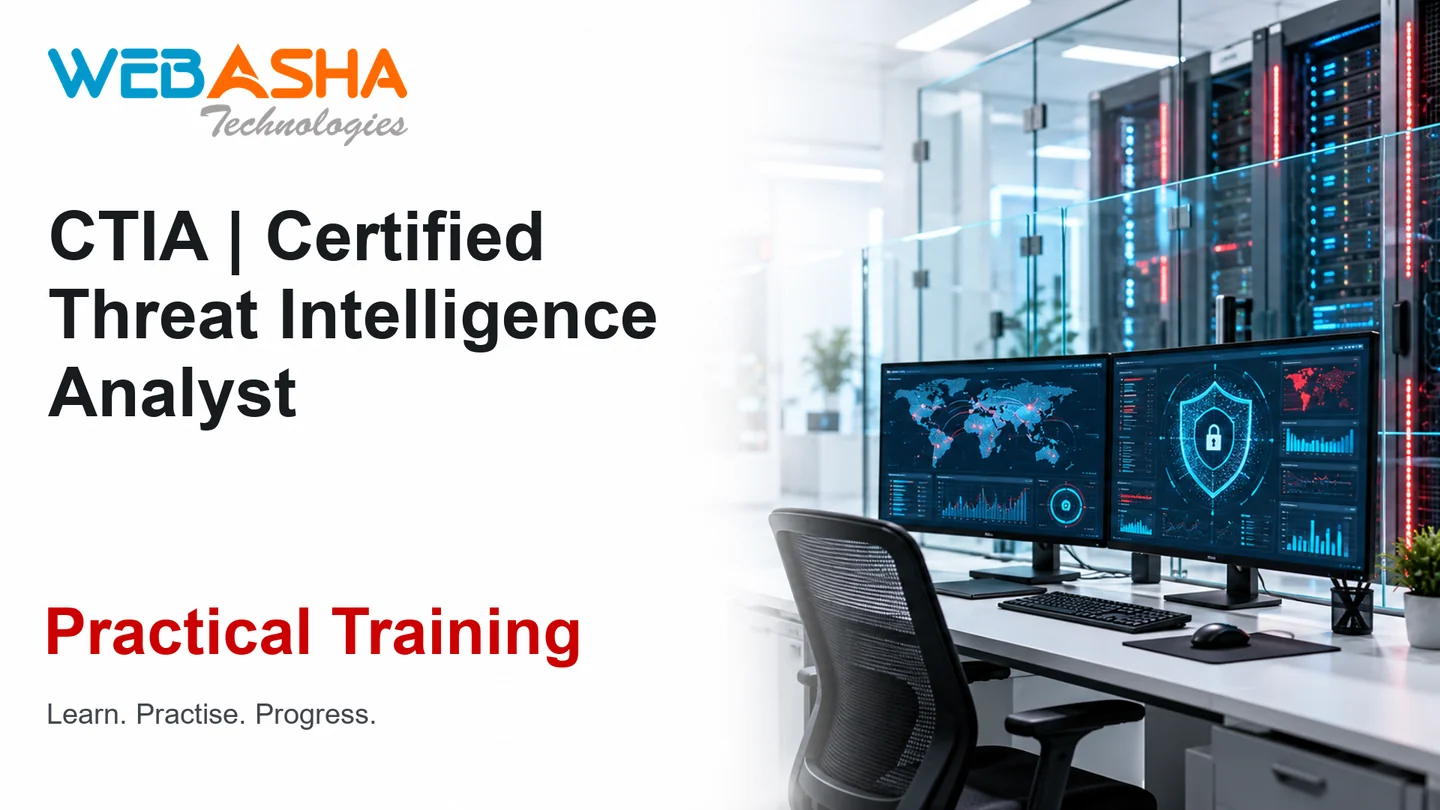
Prepare for the Certified Threat Intelligence Analyst credential through Classroom and Online CTIA Training at WebAsha Technologies. The labs give you practice in the skills the CTIA exam tests.
Training overview:
The course teaches a structured threat-intelligence lifecycle (planning and direction, collection and processing, analysis, then reporting and dissemination), so you can turn raw data into intelligence that teams can act on. It covers threat frameworks and threat modelling, data collection and processing, analysis techniques, reporting, threat hunting and the use of intelligence in SOC and incident response work, across 8 official modules. The course prepares you for the CTIA (312-85) exam.
Intended audience:
The course is meant for SOC analysts, threat analysts and security professionals who want to build cyber threat-intelligence skills.
Topics covered:
-
Intelligence lifecycle: Plan the work, collect and process data, analyse it, then report and share the result.
-
Threat modeling: Model adversaries and their TTPs with the Cyber Kill Chain, MITRE ATT&CK and the Diamond Model.
-
Data collection: Gather data from OSINT, feeds, and internal and external sources.
-
Processing: Process and normalise the collected data.
-
Analysis: Apply structured techniques such as Analysis of Competing Hypotheses.
-
IoCs & TTPs: Collect indicators of compromise and validate them.
-
Reporting and dissemination: Write intelligence reports and share them with stakeholders.
-
Threat hunting and SOC use: Hunt for threats and apply intelligence in SOC, incident response and risk management.
Requirements:
You should know the basics of security and networking. If you join online, you need a stable internet connection and a laptop or desktop for the live labs.
Prerequisites:
Take CTIA once you have security fundamentals. SOC or analyst experience helps.
Career benefits:
More security teams now ask for threat-intelligence skills. In India, CTIA-certified analysts typically earn ₹5 LPA to ₹26+ LPA.