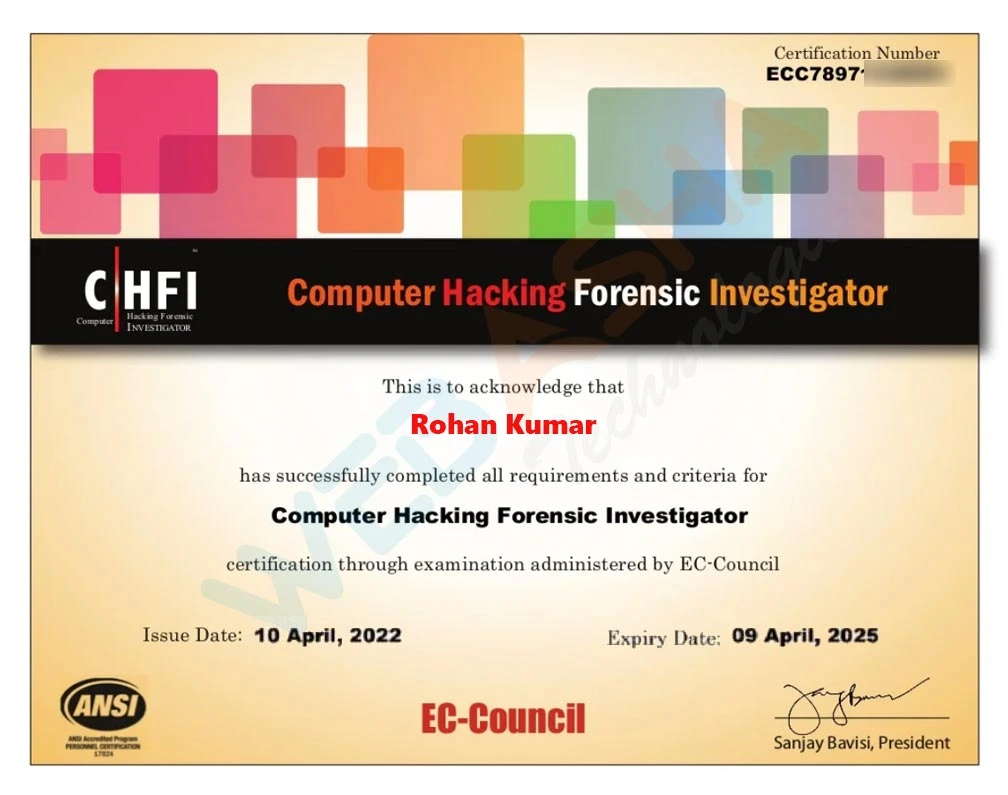
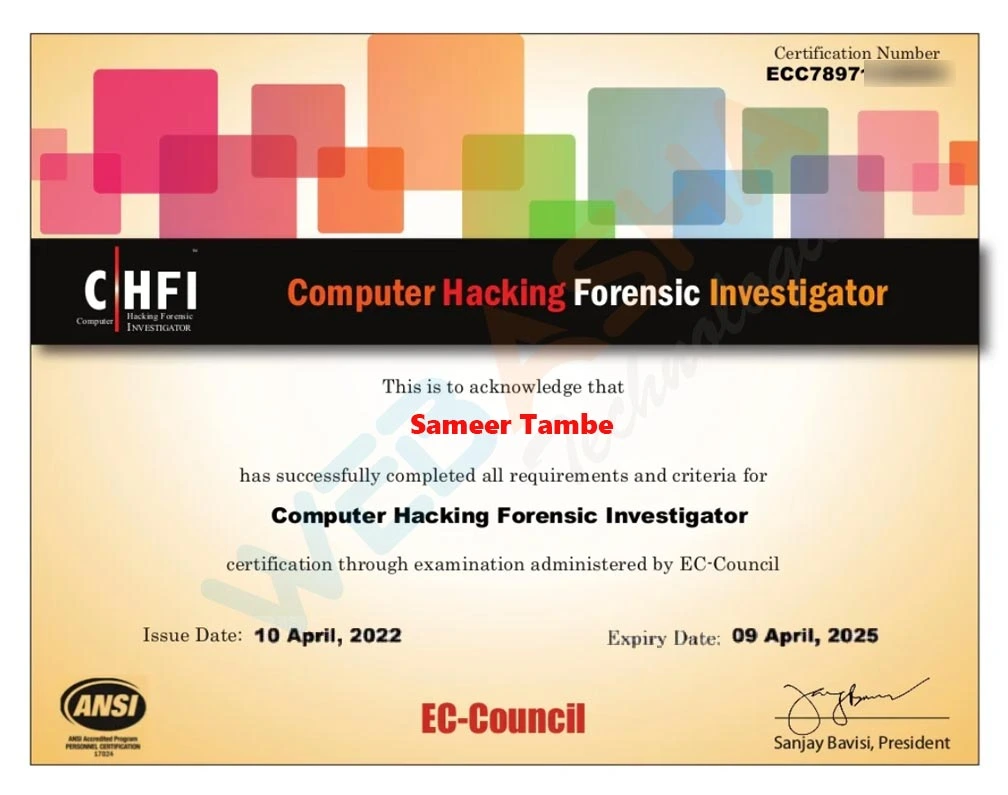
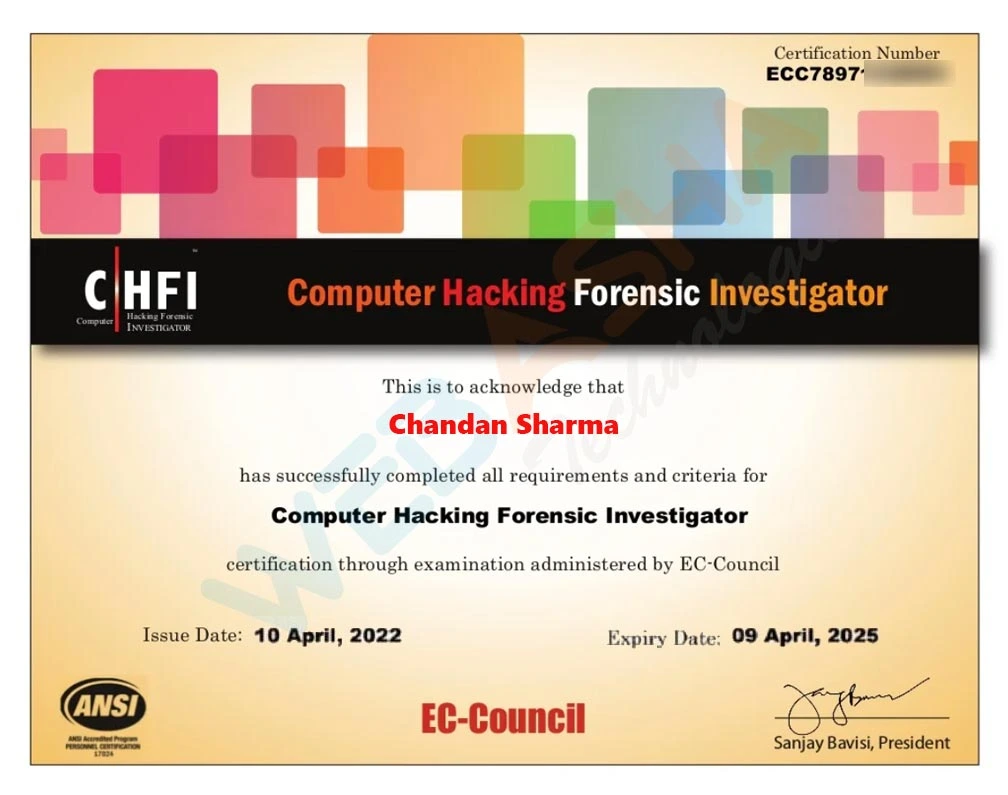
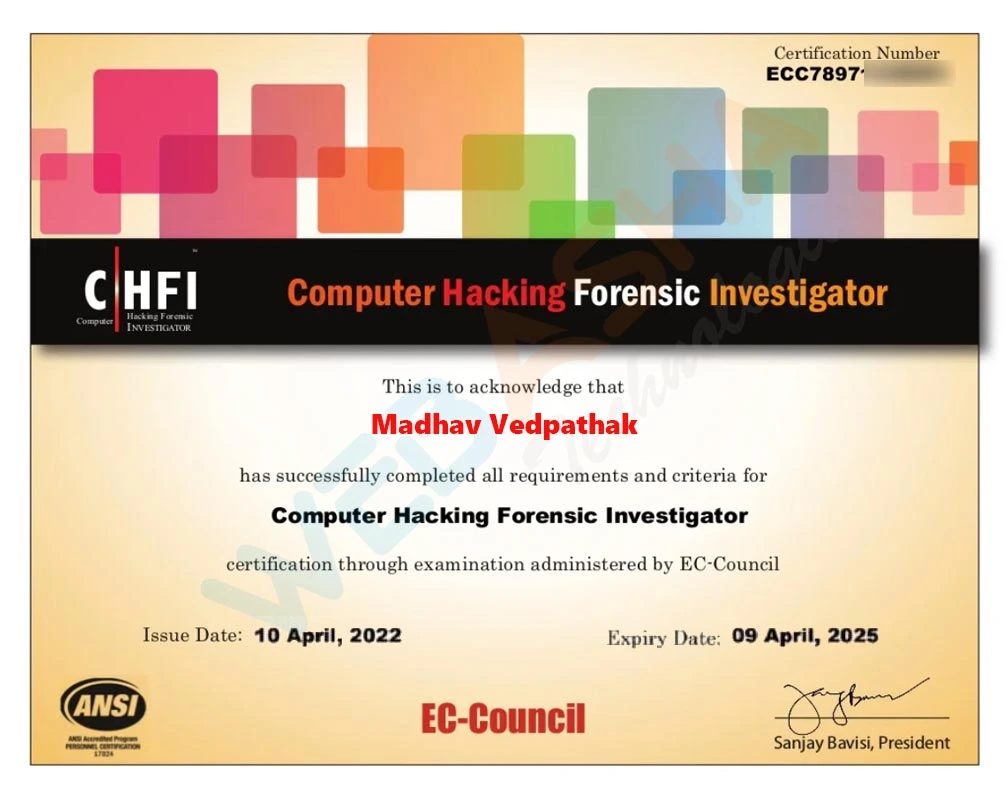
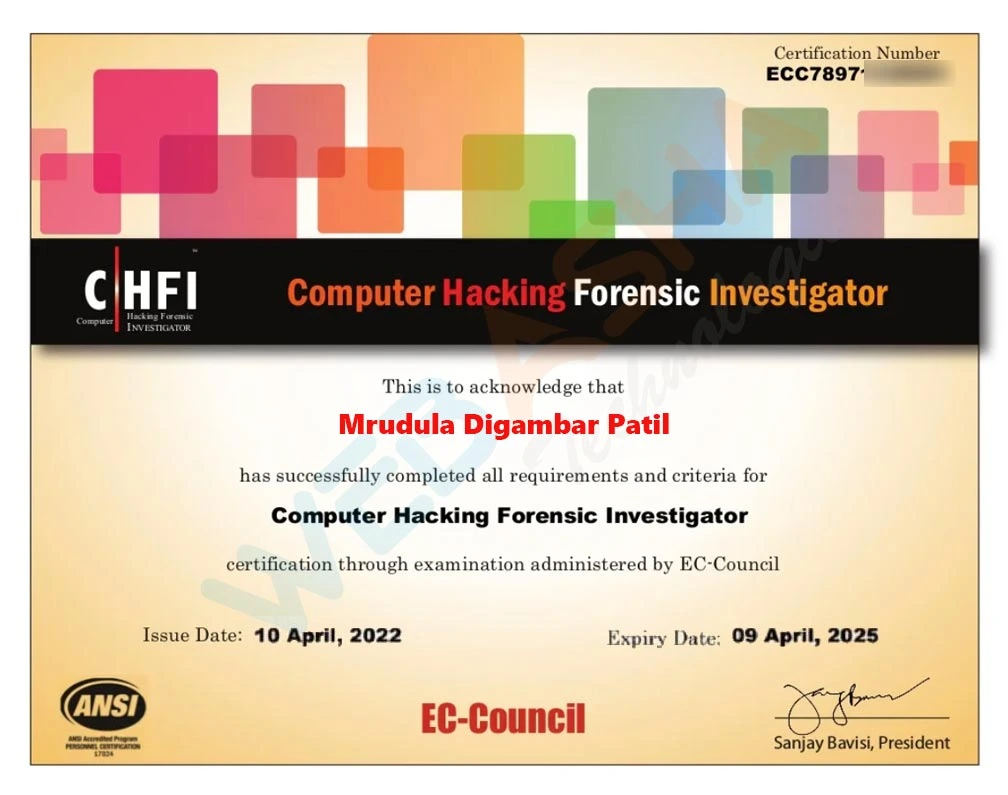
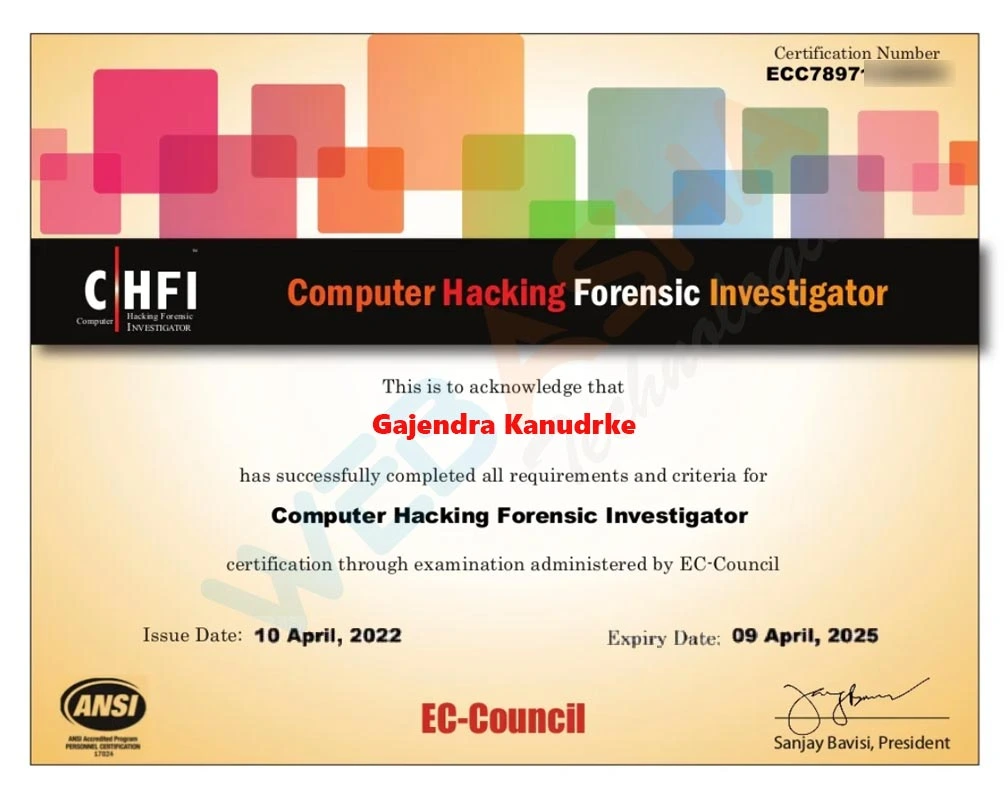
Learn Computer Hacking Forensic Investigator (v11) through Classroom and Online CHFI Training at WebAsha Technologies. The labs give you practice in the skills the CHFI exam tests.
Training overview:
CHFI teaches a detailed, methodical approach to digital forensics and evidence analysis. It covers the forensic investigation process, then Windows, Linux and Mac, network, cloud, malware, email, mobile, dark web and IoT forensics, along with anti-forensics techniques, across 15 official modules. The course prepares you for the CHFI (312-49) exam.
Intended audience:
The course is meant for forensic investigators, incident responders, security analysts and law-enforcement professionals who investigate cyber incidents.
Topics covered:
-
Forensic process: Follow an investigation from first response to the final report.
-
Disk and file forensics: Image disks, then analyse hard disks and file systems.
-
OS forensics: Collect and examine evidence on Windows, Linux and Mac.
-
Network forensics: Investigate network attacks through logs and traffic, and web attacks through server logs.
-
Cloud forensics: Examine AWS, Azure and Google Cloud environments.
-
Malware and email forensics: Analyse malware and suspicious documents, and investigate email crimes and social media.
-
Mobile, dark web and IoT: Examine Android and iOS devices, Tor Browser artefacts and IoT devices.
-
Anti-Forensics: Recover deleted data, crack passwords and detect hidden data.
Requirements:
You should know the basics of security and networking. If you join online, you need a stable internet connection and a laptop or desktop for the live labs.
Prerequisites:
Take CHFI once you have security and IT fundamentals. CEH-level knowledge is a good base. EC-Council's course page asks for basic knowledge of IT or cyber security, computer forensics and incident response.
Career benefits:
Forensics is a specialised area, and demand for it is steady. In India, CHFI-certified investigators typically earn ₹5 LPA to ₹26+ LPA.