
Cybersecurity Careers in India | Top AI Skills, Jobs, Salary Trends & Certification Paths
Explore top cybersecurity careers in India for 2025 with a focus on AI-powered skills. Learn about high-demand job roles, certifications like CEH and CAISS, salary expectations, and how to start your career in cyber defense and AI security.
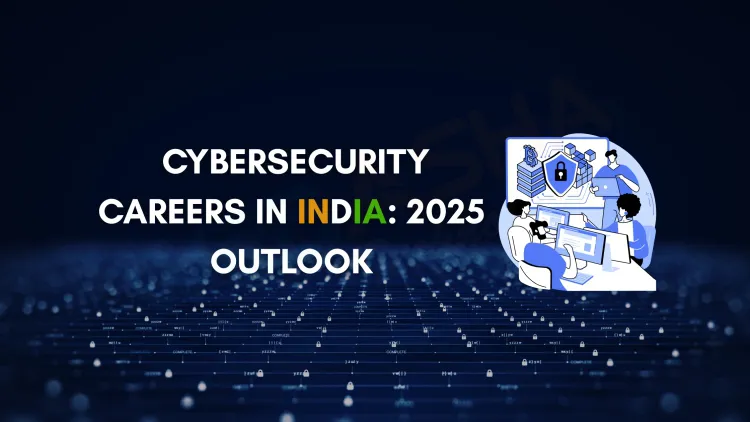
Quick answer: Cybersecurity careers in India include SOC analyst, penetration tester, security engineer, cloud security and incident response roles. AI now matters on both sides, so learn machine learning basics, automation with Python and how to defend AI systems. Start with networking and Linux, then add a recognised certification that fits your chosen role.
Key takeaways
- Roles include SOC analyst, penetration tester, security engineer and cloud security.
- AI matters on both sides, so learn machine learning basics.
- Salary trends need sources.
As India rapidly embraces digital transformation, the demand for skilled cybersecurity professionals is skyrocketing. In 2026, cybercrime is not just a threat, it's a reality affecting everything from national infrastructure to personal data. With AI and machine learning becoming essential tools for both cyber attackers and defenders, the future of cybersecurity in India depends on professionals mastering the intersection of AI and digital security.
This blog will guide you through the most in-demand cybersecurity career paths and the AI skills you need to stay ahead in 2026.
Why Cybersecurity Careers Are Booming in India
India ranks among the top nations in digital adoption, but this digital shift also opens the floodgates to cyber threats. According to CERT-In, cyberattacks in India rose by over 200% in the last three years, with AI-powered phishing, deepfakes, and ransomware being top concerns.
The Union Budget 2025 further reflects the urgency:
-
₹1,900 crore allocated to cybersecurity
-
₹900 crore to AI and cyber-physical systems
-
₹255 crore to strengthen CERT-In capabilities
This significant investment is creating thousands of new job opportunities across government, banking, telecom, defense, and IT sectors.
Top Cybersecurity Job Roles in India
Here’s a snapshot of the most in-demand cybersecurity career paths this year:
| Job Role | Average Salary (INR) | Required AI/Tech Skills |
|---|---|---|
| Cybersecurity Analyst | ₹6–10 LPA | SIEM tools, anomaly detection, basic ML models |
| SOC Analyst | ₹5–8 LPA | Threat hunting, real-time monitoring, AI alerts |
| Penetration Tester (Ethical Hacker) | ₹7–12 LPA | AI vulnerability scanners, automation scripting |
| AI Security Engineer | ₹10–18 LPA | ML algorithms, NLP for phishing detection |
| Threat Intelligence Analyst | ₹8–14 LPA | Predictive analytics, data mining, OSINT tools |
| Cloud Security Engineer | ₹10–15 LPA | AI-powered cloud protection tools, Zero Trust |
| Digital Forensics Expert | ₹6–11 LPA | AI-based forensic platforms, metadata extraction |
Top AI Skills to Learn for Cybersecurity Careers
1. Machine Learning (ML) for Threat Detection
Learn how supervised and unsupervised ML models help detect anomalies and flag suspicious behavior in real time.
2. Natural Language Processing (NLP)
Used to detect phishing, fake emails, and deepfake content. NLP also supports real-time social engineering analysis.
3. Data Analytics & Big Data Security
AI-driven analytics helps track, interpret, and predict threats by analyzing massive security logs and network traffic.
4. Neural Networks for Malware Detection
Advanced AI models like CNNs and RNNs are used to identify zero-day malware that traditional antivirus misses.
5. Automated Threat Hunting
Learn how AI bots and decision trees help cybersecurity teams proactively hunt vulnerabilities without human intervention.
6. AI-Driven Incident Response
AI tools like SOAR (Security Orchestration, Automation, and Response) automate response workflows for faster threat mitigation.
Certifications That Combine AI and Cybersecurity
-
Certified Ethical Hacker (CEH) v13
-
CompTIA Security+ with AI Analytics Track
-
Certified AI Security Specialist (CAISS)
-
Machine Learning for Cybersecurity (Coursera/Stanford)
-
Google AI for Cybersecurity (Free Track)
These programs not only enhance your cybersecurity foundations but also add in-demand AI capabilities to your skillset.
Top Tools Every AI-Enabled Cybersecurity Expert Should Know
-
Splunk + Machine Learning Toolkit
-
Darktrace AI Cyber Defense Platform
-
IBM QRadar with Watson AI
-
Cortex XSOAR (Palo Alto Networks)
-
Google Chronicle
-
VirusTotal AI Scanner
Industries Hiring AI-Skilled Cybersecurity Professionals in India
-
Finance & Banking – Fraud detection, compliance automation
-
Telecom – AI-enhanced network security
-
Healthcare – Protecting patient data using AI forensics
-
Defense & Aerospace – Threat intelligence and cyber warfare
-
IT/Cloud Providers – Secure DevOps pipelines and AI access control
How to Start a Cybersecurity Career in 2026 (Even as a Fresher)
-
Step 1: Start with a foundational course (like CompTIA or CEH)
-
Step 2: Learn Python and basic machine learning
-
Step 3: Practice in virtual labs (TryHackMe, WebAsha Labs, Hack The Box)
-
Step 4: Get certified and build projects (e.g., phishing detectors, malware classifiers)
-
Step 5: Apply for internships or SOC analyst roles to gain experience
Conclusion: The Future of Cybersecurity Is AI-Driven
In 2026, AI is not just an add-on, it’s a requirement in cybersecurity. India is building one of the largest cybersecurity talent pools in the world, and those who blend technical defense skills with AI expertise will lead the industry.
For freshers and experienced IT professionals, now is the time to upskill, earn recognized certifications, and find your place in India's growing cybersecurity ecosystem.
To take this further with guided labs and an instructor, see our cyber security training at WebAsha.
Related reading
- Top AI & Machine Learning Jobs in India with Highest Salaries | Best Roles, Skills, Salary Range & How to Start a Career
- Are Cyber Security Jobs in Demand in 2026? Salary, Scope & Best Courses in Pune
- Top AI and Machine Learning Jobs in India | Highest Salaries, Roles, Skills Required, and Career Path
Reference
For the authoritative details, see ISC2 certifications.
Frequently Asked Questions
What's Your Reaction?
 Like
0
Like
0
 Dislike
0
Dislike
0
 Love
0
Love
0
 Funny
0
Funny
0
 Wow
0
Wow
0
 Sad
0
Sad
0
 Angry
0
Angry
0

Vaishnavi is a skilled tech professional at the Ethical Hacking Training Institute in Pune, responsible for managing and optimizing the technical infrastructure that supports advanced cybersecurity education. With deep expertise in network security, backend operations, and system performance, she ensures that practical labs, online modules, and assessments run smoothly and securely. Her behind-the-scenes contributions play a vital role in delivering a seamless and secure learning experience for aspiring ethical hackers.












![Top 10 Famous Ethical Hackers in India [Updated 2026]](https://www.webasha.com/blog/uploads/images/202608/image_140x98_da23f65c290cfbf1237d77aec58a2f0f.jpg)