Types of VLANs Explained with Examples: Default, Data, Voice and More
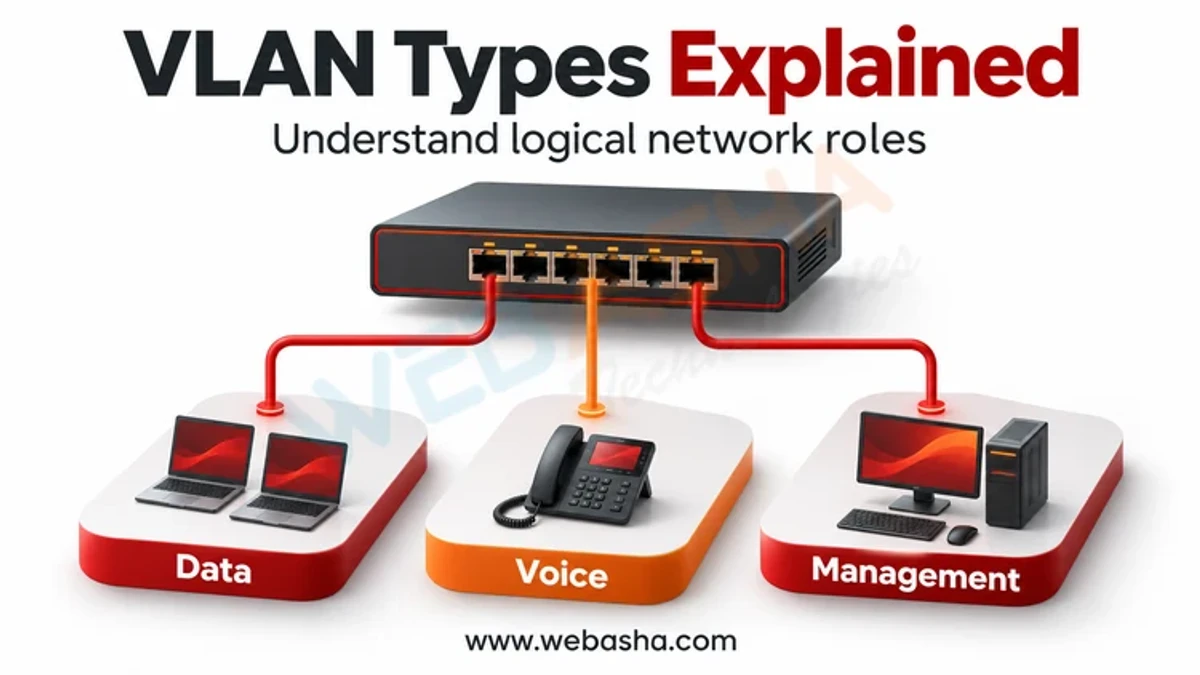
A VLAN (virtual LAN) splits one physical switch network into separate logical broadcast domains using the IEEE 802.1Q tag.

4 posts
A VLAN (virtual LAN) splits one physical switch network into separate logical broadcast domains using the IEEE 802.1Q tag.
Switch configuration interviews ask how port roles, VLAN membership, trunks, loop prevention, management and security fit together. Explain how a frame is classified and forwarded, then identify the evidence that would verify the intended behaviour. This guide uses a fictional printer move to distinguish a configured VLAN from an active end-to-end path. Documented command names are answer cues, not executed examples.
Routing and switching questions test how Layer 2 membership and Layer 3 addressing work together. The former CCNA Routing and Switching credential is retired, but these concepts remain central to networking. A fictional pair of hosts shares an IPv4 prefix while sitting in separate, unbridged VLANs.
Common CCNA questions often become difficult because a short answer hides an assumption. A public address is not automatically reachable, a logical loopback is not guaranteed to be remotely accessible, and a VLAN does not define every security rule. These original questions explain those distinctions.