How to Become a Red Hat Certified Openshift Architect?

Becoming a Red Hat Certified Architect (RHCA) in Openshift is a pinnacle achievement that showcases mastery in architecting solutions on the innovative Openshift platform. This advanced certification signifies an individual's expertise in designing, implementing, and managing complex containerized applications and orchestration using Red Hat Openshift.
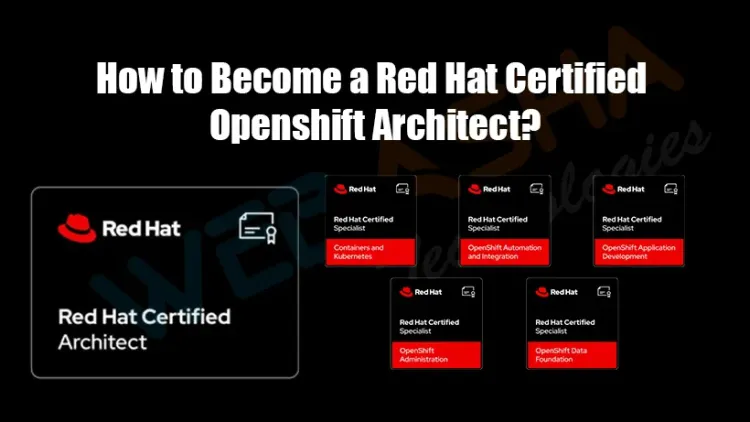
How to Become a Red Hat Certified Openshift Architect?

As organizations move rapidly toward cloud-native platforms, container orchestration, and Kubernetes-based architectures, Red Hat OpenShift has become the enterprise standard for building, deploying, and managing modern applications. With this growing adoption, the demand for highly skilled professionals who can design and architect OpenShift platforms has increased significantly.

This is where the Red Hat Certified OpenShift Architect credential comes in. It validates not just operational knowledge, but deep architectural expertise across OpenShift administration, development, automation, security, data, and multi-cluster environments.

In this detailed guide, you will learn exactly how to become a Red Hat Certified OpenShift Architect, including prerequisites, certification paths, exams, preparation strategy, and career benefits.

Table of Contents

What Is a Red Hat Certified OpenShift Architect?

A Red Hat Certified OpenShift Architect is an advanced-level professional who has proven the ability to design, build, secure, integrate, and manage enterprise-grade OpenShift platforms across complex IT environments. This certification validates not only technical expertise, but also architectural judgment—how to make the right platform decisions for scalability, security, and long-term business requirements.

According to Red Hat’s certification framework, the OpenShift Architect designation is designed for experienced professionals who go beyond day-to-day administration. These individuals are responsible for defining how OpenShift is implemented across organizations, including on-premise data centers, hybrid clouds, and managed cloud services such as ROSA (Red Hat OpenShift Service on AWS).

Unlike foundational or role-based certifications that focus on operating a cluster or deploying applications, the OpenShift Architect credential emphasizes architecture-level responsibilities. This includes evaluating enterprise requirements, selecting the right OpenShift components, and designing platforms that are resilient, secure, automated, and future-ready.

Key areas of expertise validated by the Red Hat Certified OpenShift Architect designation include:

  • Platform architecture and design – Designing scalable, highly available OpenShift clusters that align with enterprise workloads and operational models
  • Enterprise security and compliance – Implementing role-based access control, policy enforcement, container security, and compliance-ready architectures
  • Automation and integration – Automating platform operations and integrating OpenShift with CI/CD pipelines, identity providers, and enterprise systems
  • Multi-cluster and hybrid cloud management – Managing fleets of OpenShift clusters across data centers and cloud providers using centralized governance
  • Application modernization – Supporting cloud-native development, microservices, event-driven architectures, and modern application lifecycles

It is important to understand that Red Hat Certified OpenShift Architect is not a single exam. Instead, it is an architect-level designation earned by successfully completing a combination of Red Hat OpenShift–related performance-based exams. Each exam validates hands-on skills in a specific OpenShift domain, such as administration, application development, security, automation, data services, AI, or multi-cluster management.

All qualifying exams are performance-based, meaning candidates must complete real tasks in live environments. There are no multiple-choice questions. This ensures that professionals holding the OpenShift Architect credential have demonstrated practical, real-world capabilities rather than theoretical knowledge alone.

In essence, a Red Hat Certified OpenShift Architect is trusted to make critical platform decisions—decisions that impact uptime, security posture, developer productivity, and business continuity. This certification represents one of the highest levels of OpenShift expertise recognized by Red Hat and the global enterprise IT industry.

Why Become a Red Hat Certified OpenShift Architect?

As enterprises increasingly run mission-critical workloads on Kubernetes and OpenShift, the expectations from technology professionals have changed. Organizations no longer look only for administrators who can keep clusters running. They need architects who can design platforms that are scalable, secure, resilient, and aligned with long-term business goals.

This is exactly where the role of a Red Hat Certified OpenShift Architect becomes crucial. OpenShift environments today support customer-facing applications, financial systems, data platforms, AI workloads, and large-scale DevOps pipelines. A single design decision—around networking, security, or automation—can directly impact performance, compliance, and availability.

Red Hat positions the OpenShift Architect role as a strategic one. Architects are expected to think beyond daily operational tasks and focus on how OpenShift should be implemented and governed across the organization. This includes understanding not just the technology, but also how teams build applications, how security policies are enforced, and how platforms evolve over time.

Organizations need OpenShift Architects who understand:

  • How to design scalable OpenShift platforms that can handle growing workloads, multiple teams, and changing business demands
  • How to secure workloads end-to-end, including cluster security, container security, access control, and compliance requirements
  • How to integrate CI/CD, automation, and observability to improve developer productivity and operational efficiency
  • How to support hybrid and multi-cloud deployments, enabling consistency across on-premise data centers and public cloud platforms

Becoming a Red Hat Certified OpenShift Architect positions you as a decision-maker rather than an executor. Instead of simply following predefined processes, architects define standards, best practices, and reference architectures that other teams rely on. They influence how platforms are built, how risks are managed, and how future technologies are adopted.

From a career perspective, this certification clearly signals advanced expertise to employers. It demonstrates that you can handle complex OpenShift environments and are capable of leading platform initiatives at scale. As a result, certified OpenShift Architects are often trusted with responsibilities such as platform ownership, architecture reviews, and cross-team coordination.

Professionals who earn this credential typically move into senior roles such as:

  • OpenShift or Platform Architect
  • Cloud Solutions Architect
  • DevOps or Platform Engineering Lead
  • Kubernetes or Cloud-Native Consultant

In addition to role growth, OpenShift Architects often see significant improvements in compensation, job stability, and global opportunities. Enterprises investing heavily in cloud-native platforms value certified architects who can reduce risk, improve reliability, and accelerate innovation.

In summary, becoming a Red Hat Certified OpenShift Architect is not just about earning another certification. It is about transitioning into a strategic role where your skills directly shape how modern applications are built and operated. For professionals who want to move from managing systems to designing enterprise platforms, this certification represents a powerful and future-proof career step.

Who Should Pursue This Certification?

The Red Hat Certified OpenShift Architect certification is designed for professionals who already have practical experience with OpenShift, Kubernetes, or enterprise Linux platforms and are ready to move into more strategic, architecture-focused roles. This is not an entry-level certification; it is intended for individuals who want to take ownership of platform design, governance, and long-term scalability.

Professionals who benefit the most from this certification typically work close to production systems and understand the challenges of running container platforms at scale. They are familiar with real-world issues such as performance bottlenecks, security risks, operational complexity, and cross-team collaboration. The OpenShift Architect path helps such professionals formalize and validate their expertise at an enterprise level.

The certification is particularly well-suited for:

  • OpenShift Administrators and Engineers who want to evolve from managing clusters to designing and standardizing OpenShift platforms across teams and environments
  • DevOps and Platform Engineers responsible for CI/CD pipelines, automation, and developer enablement, who want deeper control over the underlying OpenShift architecture
  • Kubernetes Specialists looking to transition into enterprise OpenShift environments with stronger security, governance, and lifecycle management
  • Cloud Architects and Site Reliability Engineers (SREs) who design highly available, resilient systems and want to extend those principles into OpenShift-based platforms
  • Experienced Red Hat professionals aiming to move into architect-level roles by demonstrating mastery across multiple OpenShift domains

This certification is ideal for professionals who are already asking higher-level questions, such as:

  • How should OpenShift be deployed across multiple data centers or clouds?
  • What security and compliance controls should be enforced by default?
  • How can automation reduce operational risk and manual effort?
  • How do we design a platform that supports both current and future workloads?

The Red Hat Certified OpenShift Architect path is not recommended for absolute beginners. Candidates who are new to Linux, containers, or Kubernetes may find the exams overwhelming without prior hands-on experience. Red Hat’s performance-based exams assume that candidates can work independently in live environments and make informed architectural decisions under time constraints.

Instead, this certification is best suited for professionals who:

  • Have hands-on experience working with OpenShift or Kubernetes
  • Understand enterprise IT environments and operational challenges
  • Want to move into design, leadership, or platform ownership roles
  • Are comfortable learning through practical labs rather than theory alone

For such professionals, pursuing the Red Hat Certified OpenShift Architect credential represents a natural career progression. It signals readiness to take on greater responsibility, influence technical direction, and lead platform initiatives that support business-critical applications.

In short, if you are already operating OpenShift environments and want to transition from execution to architecture—from following designs to creating them—this certification is a strong and future-focused choice.

Core Skills Required Before Starting

Before beginning the journey toward becoming a Red Hat Certified OpenShift Architect, it is essential to have a solid foundation in several core technical areas. This certification is designed for experienced professionals, and Red Hat’s performance-based exams assume that candidates can work confidently in real-world, production-like environments without step-by-step guidance.

At an architect level, OpenShift is not treated as an isolated platform. It is deeply connected to operating systems, networking, automation, and application workflows. As a result, candidates must already be comfortable with the underlying technologies that OpenShift builds upon.

The most important foundational skills required before starting this certification path include:

  • Linux system administration – A strong understanding of Linux is critical, as OpenShift runs on Red Hat Enterprise Linux. You should be comfortable with file systems, permissions, processes, services, system troubleshooting, and command-line tools. Architects are expected to understand how the operating system impacts cluster performance, security, and stability.
  • Kubernetes fundamentals – Since OpenShift is an enterprise Kubernetes platform, you must understand core Kubernetes concepts such as pods, services, deployments, namespaces, controllers, and scheduling. Architects need to understand how Kubernetes resources interact and how design choices affect scalability and reliability.
  • Containers, images, and registries – You should already know how container images are built, stored, scanned, and deployed. This includes understanding container runtimes, image registries, image security, and versioning strategies. These skills are essential for application modernization and secure supply chains.
  • Networking basics – OpenShift architects must understand fundamental networking concepts such as DNS, routing, load balancing, TLS certificates, and ingress/egress traffic. Many real-world OpenShift challenges involve networking design, connectivity between services, and secure communication across environments.
  • Shell scripting and automation concepts – While deep programming expertise is not mandatory, familiarity with shell scripting and automation principles is important. Architects often design automated workflows for deployments, scaling, upgrades, and recovery, and must understand how automation reduces operational risk.

In addition to technical knowledge, candidates should be comfortable with troubleshooting under pressure. Red Hat exams and real-world OpenShift environments both require the ability to analyze logs, interpret error messages, and resolve issues efficiently without relying on documentation during execution.

Certifications such as Red Hat Certified System Administrator (RHCSA) and Red Hat Certified Engineer (RHCE) are not mandatory prerequisites, but they provide a strong and structured foundation. These certifications help build confidence in Linux administration, automation, and problem-solving—skills that are heavily relied upon at the OpenShift architect level.

Professionals who lack these foundational skills may find the OpenShift Architect path overwhelming. Red Hat’s architect-level certifications are designed to validate readiness for real-world enterprise responsibility, not to teach basic concepts from scratch.

In summary, the strongest candidates for the Red Hat Certified OpenShift Architect certification are those who already understand the building blocks of modern infrastructure. With solid Linux, Kubernetes, container, networking, and automation fundamentals in place, you can focus on higher-level architecture decisions and succeed in this advanced certification path.

Red Hat OpenShift Architect Certification Overview

The Red Hat Certified OpenShift Architect credential represents one of the highest levels of expertise within the Red Hat OpenShift certification ecosystem. Unlike traditional certifications that are earned by passing a single exam, this credential is achieved by completing a structured set of OpenShift-related certifications that together validate deep, real-world architectural skills.

Red Hat designed this certification to reflect how OpenShift is used in enterprise environments. Modern organizations do not rely on a single OpenShift skill set. Instead, they require professionals who understand how administration, application development, security, automation, data services, and multi-cluster operations work together as part of a unified platform strategy.

To earn the Red Hat Certified OpenShift Architect designation, candidates must:

  • Complete a base OpenShift certification – This establishes core competency in either OpenShift administration or OpenShift application development and confirms that the candidate understands fundamental platform operations.
  • Pass multiple additional OpenShift Specialist exams – These exams validate advanced skills across specific OpenShift domains such as security, automation, integration, data management, virtualization, AI, and multi-cluster governance.

Each specialist certification contributes to the overall architect designation by validating expertise in a focused area of the OpenShift ecosystem. This modular approach allows professionals to build an architect profile that aligns with their real-world responsibilities, whether they focus on platform engineering, security, cloud-native development, or hybrid cloud operations.

A defining characteristic of all Red Hat OpenShift exams is that they are 100% performance-based. There are no multiple-choice or theory-based questions. Instead, candidates are required to work in a live OpenShift environment and complete practical tasks within a fixed time limit.

During these exams, you are expected to:

  • Configure and manage OpenShift clusters
  • Deploy and troubleshoot applications
  • Implement security controls and policies
  • Integrate automation and platform services
  • Diagnose and resolve real operational issues

This exam format closely mirrors real production scenarios. It ensures that professionals who earn the OpenShift Architect credential can apply their knowledge under pressure and make correct technical decisions without external assistance. This is one of the reasons Red Hat certifications are highly respected by employers worldwide.

Another important aspect of the OpenShift Architect certification is flexibility. Red Hat allows candidates to choose from a range of qualifying OpenShift Specialist exams, enabling them to tailor their certification journey based on career goals and organizational needs. This reflects the reality that OpenShift architects often specialize in certain areas while maintaining a broad understanding of the platform.

In summary, the Red Hat Certified OpenShift Architect credential is not simply a collection of exams. It is a comprehensive validation of advanced OpenShift expertise, earned through hands-on performance-based testing across multiple domains. For professionals aiming to design, standardize, and lead enterprise OpenShift platforms, this certification serves as a powerful and globally recognized benchmark of architectural competence.

Step-by-Step Certification Path

The journey to becoming a Red Hat Certified OpenShift Architect follows a structured, progressive certification path designed to reflect real-world enterprise learning. Red Hat does not expect architects to emerge overnight. Instead, the certification framework ensures that candidates first build a strong foundation and then expand their expertise across multiple advanced OpenShift domains.

This step-by-step approach mirrors how professionals grow in real organizations—from understanding core platform operations to making high-level architectural decisions that affect scalability, security, and long-term platform strategy.

Step 1: Earn a Base OpenShift Certification

The first mandatory step toward the OpenShift Architect designation is earning a base OpenShift certification. This establishes your core competency with the platform and confirms that you understand how OpenShift works in practice.

Candidates must begin with one of the following certifications:

The EX280 certification focuses on OpenShift administration skills such as cluster management, user access, application deployment, storage, networking, and troubleshooting. It is ideal for professionals responsible for operating and maintaining OpenShift environments.

The EX288 certification focuses on OpenShift application development, including building, deploying, and managing containerized applications on OpenShift. It is well suited for developers and DevOps engineers who work closely with application teams.

Completing either of these certifications demonstrates that you have a solid understanding of OpenShift fundamentals. This base certification is critical because all architect-level skills build on this operational or development knowledge.

Step 2: Choose Additional Specialist Certifications

After earning a base OpenShift certification, the next step is to expand your expertise by passing multiple OpenShift Specialist certifications. These exams validate advanced skills across specific areas of the OpenShift ecosystem and collectively qualify you for the architect designation.

These specialist certifications focus on advanced and enterprise-relevant capabilities, including:

  • Platform security and compliance
  • Automation and integration with enterprise systems
  • Data services and persistent storage
  • Application modernization and cloud-native integration
  • Artificial intelligence and machine learning workloads
  • Multi-cluster and hybrid cloud management

This modular structure allows candidates to tailor their OpenShift Architect journey based on their role and career goals. For example, a platform engineer may focus more on automation, multi-cluster management, and security, while a cloud-native architect may emphasize integration, data services, and application modernization.

Each specialist exam is performance-based and conducted in a live OpenShift environment. Candidates must complete real configuration, deployment, and troubleshooting tasks within a defined time limit. This ensures that the architect designation reflects proven hands-on ability rather than theoretical understanding.

By completing the required combination of base and specialist certifications, you demonstrate not only breadth across the OpenShift platform but also the depth required to design and lead enterprise OpenShift implementations.

In summary, the OpenShift Architect certification path is intentionally progressive. It starts with mastering the fundamentals, then builds toward advanced, domain-specific expertise. This structured approach ensures that professionals who earn the Red Hat Certified OpenShift Architect designation are fully prepared to design, standardize, and govern OpenShift platforms at enterprise scale.

Qualifying OpenShift Specialist Exams

To earn the Red Hat Certified OpenShift Architect designation, candidates must complete a combination of advanced OpenShift Specialist certifications. Each of these exams validates hands-on expertise in a specific domain of the OpenShift ecosystem, allowing professionals to build an architect profile that reflects real-world enterprise responsibilities.

Red Hat intentionally designed this model to be flexible. Instead of enforcing a single rigid path, candidates can choose specialist exams based on their role focus, such as platform architecture, security, automation, application modernization, or data and AI workloads.

Below is a list of commonly selected qualifying OpenShift Specialist exams that contribute toward the OpenShift Architect designation:

  • Red Hat Certified Specialist in Cloud-native Integration (Fuse) – EX221
  • Red Hat Certified Specialist in ROSA (Red Hat OpenShift Service on AWS) – EX229
  • Red Hat Certified Specialist in API Management (3scale) – EX240
  • Red Hat Certified Specialist in OpenShift AI – EX267
  • Red Hat Certified Specialist in OpenShift Virtualization – EX316
  • Red Hat Certified Specialist in Building Resilient Microservices (Service Mesh) – EX328
  • Red Hat Certified Specialist in Automating OpenShift Virtual Machine Management – EX336
  • Red Hat Certified Specialist in OpenShift Data Foundation – EX370
  • Red Hat Certified Cloud-native Developer (Quarkus) – EX378
  • Red Hat Certified Specialist in OpenShift Automation and Integration – EX380
  • Red Hat Certified Specialist in Event-Driven Development with Kafka – EX482
  • Red Hat Certified Specialist in OpenShift Advanced Cluster Security – EX430
  • Red Hat Certified Specialist in OpenShift Advanced Cluster Management – EX432

Each of these exams focuses on a distinct architectural capability within OpenShift. For example, virtualization and data foundation exams validate platform consolidation and persistent storage design, while automation, integration, and Kafka-based exams focus on building scalable, event-driven, and automated enterprise systems.

Security-focused certifications such as OpenShift Advanced Cluster Security (EX430) validate the ability to design secure-by-default platforms, enforce policies, and protect containerized workloads at scale. Similarly, multi-cluster and management-oriented certifications validate governance and lifecycle management across multiple OpenShift environments.

From an architect’s perspective, the value of these certifications lies in their performance-based nature. Each exam requires candidates to configure, integrate, troubleshoot, and optimize OpenShift components in live environments. This ensures that certified professionals can apply their knowledge under real operational constraints.

Candidates are encouraged to select exams strategically based on their career goals. For example:

  • Platform and cloud architects may focus on virtualization, data foundation, and advanced cluster management
  • DevOps and integration architects may prioritize automation, API management, service mesh, and Kafka
  • AI and application modernization specialists may choose OpenShift AI and cloud-native development exams

By combining multiple specialist certifications, candidates demonstrate both breadth and depth across the OpenShift platform. This approach ensures that the Red Hat Certified OpenShift Architect designation reflects real-world architectural expertise rather than isolated technical knowledge.

In summary, qualifying OpenShift Specialist exams allow professionals to build a certification profile that matches how OpenShift is actually used in enterprises. Selecting the right mix of exams is a key step in establishing yourself as a trusted OpenShift Architect capable of designing and leading complex platform environments.

How to Prepare for OpenShift Architect Certifications

Preparing for the Red Hat Certified OpenShift Architect certification requires a disciplined, hands-on, and highly structured approach. Unlike theory-based certifications, Red Hat OpenShift exams are entirely performance-based, meaning success depends on your ability to design, configure, troubleshoot, and optimize OpenShift environments under real-world conditions.

At the architect level, preparation is not about memorizing commands. It is about understanding why certain architectural decisions are made, how different OpenShift components interact, and how to solve complex platform challenges efficiently. This is why a practical and methodical preparation strategy is essential.

A recommended preparation approach includes the following key elements:

  • Use official Red Hat training and lab environments – Red Hat’s official labs are designed to closely mirror exam and production environments. Practicing in these labs helps candidates become comfortable with the OpenShift interface, CLI tools, and enterprise workflows.
  • Practice real-world scenarios, not just commands – Architect exams test scenarios such as platform failures, misconfigurations, security enforcement, and integration challenges. You should focus on understanding outcomes, not just syntax.
  • Build and troubleshoot clusters repeatedly – Repetition is critical. Setting up, modifying, breaking, and fixing OpenShift clusters helps develop the confidence required to work under exam pressure.
  • Learn to read logs, events, and YAML deeply – OpenShift troubleshooting relies heavily on interpreting logs, events, and resource definitions. Architects must be able to quickly identify root causes using YAML, oc logs, and cluster diagnostics.
  • Simulate exam conditions during practice – Time-bound practice sessions help develop the ability to prioritize tasks, manage stress, and avoid common exam pitfalls.

While self-study and independent lab practice are important, many candidates benefit significantly from guided preparation—especially at the architect level. This is where structured training and mentorship play a critical role.

WebAsha Technologies supports OpenShift Architect aspirants by providing structured, exam-aligned training programs combined with real-world lab practice. Their approach focuses on bridging the gap between theoretical understanding and exam-ready execution. Rather than teaching isolated topics, training is delivered in the context of real enterprise scenarios that closely reflect Red Hat exam objectives.

One of the key advantages of preparing with an experienced training partner like WebAsha Technologies is access to expert mentors who understand how Red Hat exams are evaluated. This includes guidance on common design mistakes, troubleshooting approaches, and time-management strategies that are often difficult to learn through self-study alone.

In addition to training, WebAsha Technologies assists candidates with certification planning, exam readiness assessments, and official exam voucher guidance. This holistic support model helps professionals stay focused on skill development while navigating the certification process efficiently.

It is important to remember that OpenShift Architect exams reward clarity of thought and architectural understanding, not speed alone. Candidates who take the time to understand platform behavior, practice structured problem-solving, and prepare under realistic conditions consistently perform better.

In summary, successful preparation for OpenShift Architect certifications requires a balance of hands-on practice, conceptual clarity, and guided mentorship. By combining official Red Hat labs with structured training and expert support from trusted partners such as WebAsha Technologies, professionals can significantly improve their chances of achieving architect-level certification success.

Exam Format and Difficulty Level

The Red Hat OpenShift certification exams are widely recognized for their rigorous, performance-based format. Unlike traditional certification exams that rely on multiple-choice questions or theoretical assessments, Red Hat exams are designed to validate a candidate’s ability to perform real tasks in a live, production-like environment.

This approach closely reflects how OpenShift is used in enterprise settings. Employers value these certifications because they demonstrate that a professional can apply knowledge under pressure, troubleshoot complex issues, and make correct technical decisions without external assistance.

All Red Hat OpenShift exams share the following core characteristics:

  • 100% practical and hands-on – Candidates must complete real tasks in a live OpenShift environment. There are no multiple-choice questions, theoretical explanations, or guess-based answers.
  • Live environment configuration – You are required to configure, deploy, integrate, and troubleshoot OpenShift components in real time, exactly as you would in a production cluster.
  • Production-like scenarios – Exam objectives are modeled on real enterprise use cases such as application deployment failures, security enforcement, storage configuration, automation workflows, and cluster management challenges.
  • Strict time management – Each exam has a fixed duration, and candidates must prioritize tasks effectively to complete all required objectives within the allotted time.

At the architect level, the difficulty of these exams increases significantly. Tasks are no longer isolated or purely operational. Instead, candidates are often required to understand how multiple OpenShift components interact and to apply solutions that align with best practices and architectural intent.

OpenShift Architect–level exams test more than technical execution. They evaluate:

  • The ability to analyze complex requirements
  • Architectural decision-making under constraints
  • Problem-solving and troubleshooting methodology
  • Understanding of platform behavior rather than rote commands

Because of this, many candidates find that knowing individual commands is not enough. Success depends on understanding the underlying platform design, recognizing patterns, and choosing the correct approach for a given scenario. Mistakes such as misinterpreting requirements or applying solutions that conflict with platform best practices can lead to lost marks.

Time pressure is another major challenge. Even highly skilled professionals can struggle if they do not practice under exam-like conditions. Effective candidates learn to quickly assess tasks, identify dependencies, and execute solutions efficiently without unnecessary steps.

For this reason, consistent hands-on practice is the single most important factor in exam success. Repeated exposure to real OpenShift environments helps build muscle memory, confidence, and speed. Practicing troubleshooting scenarios, reviewing logs and events, and working with YAML definitions under time constraints all contribute to improved performance.

In summary, the Red Hat OpenShift exam format is intentionally demanding. The high difficulty level—especially for architect-level certifications—ensures that only professionals with genuine, real-world expertise earn the credential. Candidates who prepare through structured hands-on practice, understand architectural principles, and develop strong time-management skills are best positioned to succeed.

Career Benefits and Job Roles

Earning the Red Hat Certified OpenShift Architect credential significantly elevates a professional’s career profile. This certification signals to employers that you are capable of designing, governing, and leading enterprise-grade OpenShift platforms rather than simply operating them. As organizations increasingly rely on Kubernetes and OpenShift for mission-critical workloads, architect-level expertise has become a strategic requirement.

OpenShift Architects are typically involved in high-impact decisions that influence platform reliability, security posture, scalability, and developer productivity. Rather than focusing on individual tasks, these professionals take ownership of platform standards, reference architectures, and long-term technology direction.

After becoming a Red Hat Certified OpenShift Architect, professionals commonly move into roles such as:

  • OpenShift Architect – Responsible for designing and standardizing OpenShift platforms across environments, ensuring scalability, security, and compliance.
  • Platform Engineering Lead – Leading teams that build and maintain internal platforms used by application and DevOps teams, with a strong focus on automation and reliability.
  • Cloud Solutions Architect – Designing hybrid and multi-cloud architectures using OpenShift as the core application platform.
  • DevOps Architect – Defining CI/CD strategies, automation frameworks, and cloud-native workflows that integrate tightly with OpenShift.
  • Kubernetes or OpenShift Consultant – Advising enterprises on OpenShift adoption, migration, optimization, and modernization initiatives.

These roles often involve responsibilities such as platform ownership, architecture reviews, cross-team coordination, and strategic decision-making. OpenShift Architects frequently collaborate with security teams, developers, operations, and business stakeholders to ensure that the platform meets both technical and organizational requirements.

From a career-growth perspective, this certification positions professionals for leadership roles. It demonstrates not only technical depth but also the ability to think holistically about systems, risk management, and future scalability. As a result, OpenShift Architects are often trusted with complex projects and long-term platform roadmaps.


Salary Expectations

Salary expectations for Red Hat Certified OpenShift Architects vary based on region, industry, and years of experience. However, architect-level OpenShift skills consistently command premium compensation due to their scarcity and business impact.

In the Indian market, experienced OpenShift Architects typically earn between:

  • ₹20–40 LPA for professionals with strong hands-on experience and enterprise exposure

In global markets such as the United States, Europe, and the Middle East, compensation is significantly higher. OpenShift Architects commonly earn:

  • USD 120,000–180,000+ annually, depending on experience, specialization, and organization size

In consulting roles or niche domains such as platform security, multi-cluster management, or AI workloads on OpenShift, salaries can exceed these ranges. Professionals who combine OpenShift Architect certification with cloud expertise, automation skills, and real-world project experience are especially well-positioned for top-tier compensation.

It is important to note that certification alone does not guarantee high salary. However, when combined with hands-on enterprise experience, the Red Hat Certified OpenShift Architect credential significantly strengthens earning potential. Employers view this certification as evidence of practical competence, architectural thinking, and readiness to handle complex production environments.

In summary, becoming a Red Hat Certified OpenShift Architect offers strong career progression, access to senior and leadership roles, and attractive salary opportunities both in India and globally. For professionals committed to mastering cloud-native platforms at an architectural level, this certification represents a valuable long-term investment.

How Long Does It Take?

The time required to become a Red Hat Certified OpenShift Architect varies depending on a candidate’s background, hands-on experience, and learning discipline. Red Hat does not prescribe a fixed timeline for achieving architect-level credentials, as the certification path is designed to reflect real-world skill development rather than fast-track exam completion.

That said, based on typical professional journeys and Red Hat’s performance-based exam structure, most candidates follow one of the timelines outlined below:

  • 6–9 months for experienced OpenShift administrators – Professionals who already manage OpenShift clusters, understand platform operations, and have exposure to enterprise environments can progress relatively faster. Their preparation time is primarily spent deepening architectural understanding and expanding into specialist domains.
  • 9–10 months for professionals transitioning from DevOps or Kubernetes roles – Candidates with strong Kubernetes, CI/CD, or cloud experience typically need additional time to master OpenShift-specific tooling, enterprise features, and Red Hat best practices.

Red Hat’s architect-level certifications are cumulative. Candidates must earn a base OpenShift certification and then complete multiple specialist exams across different domains. Each exam requires focused preparation, hands-on lab work, and real-world problem-solving practice. Attempting to compress this process often leads to poor outcomes.

Progress is influenced by several key factors:

  • Depth of prior OpenShift and Kubernetes experience
  • Consistency of lab practice
  • Exposure to production-like scenarios
  • Ability to troubleshoot independently
  • Availability of structured guidance and mentorship

Red Hat’s own guidance emphasizes mastery over speed. The certification framework is intentionally designed to reward candidates who develop sustainable, long-term expertise rather than those who rush through exams. Professionals who take time to understand platform behavior and architectural patterns tend to succeed more consistently.

In summary, becoming an OpenShift Architect is a marathon, not a sprint. Candidates who invest steady effort over several months—balancing learning, practice, and assessment—are best positioned to achieve certification and long-term career benefits.


Common Mistakes to Avoid

Many capable professionals struggle with OpenShift Architect certifications not because of a lack of intelligence, but due to avoidable preparation mistakes. Understanding these pitfalls early can significantly improve your chances of success.

  • Focusing only on theory – Red Hat exams do not reward memorization. Candidates who rely heavily on documentation reading or video lectures without hands-on practice often fail to execute tasks under exam conditions.
  • Skipping YAML and troubleshooting practice – OpenShift architecture relies heavily on YAML definitions, logs, and events. Architects must be able to read, modify, and debug resources quickly. Avoiding this practice leads to confusion during live exams.
  • Rushing exams without readiness – Attempting exams before achieving comfort with real-world scenarios is one of the most common causes of failure. Red Hat certifications are designed to test readiness, not potential.
  • Ignoring architecture-level thinking – Treating architect exams like administrator exams is a critical mistake. Candidates must think in terms of design intent, scalability, security, and long-term maintainability—not just task completion.

Another frequent error is underestimating time management. Even experienced professionals can struggle if they do not practice under time-bound conditions. Red Hat exams require candidates to prioritize tasks, identify dependencies, and avoid unnecessary configuration steps.

Red Hat’s certification philosophy emphasizes depth, consistency, and real-world competence. Architect-level certifications demand a holistic understanding of the platform and the ability to apply that understanding under pressure.

In conclusion, success in OpenShift Architect certifications comes from avoiding shortcuts and embracing disciplined preparation. Candidates who focus on hands-on practice, architectural clarity, and gradual skill development consistently perform better than those who attempt to accelerate the process unnaturally.

Frequently Asked Questions (FAQs)

1. Is Red Hat Certified OpenShift Architect the same as RHCA?

No. Red Hat Certified OpenShift Architect focuses exclusively on OpenShift and its ecosystem, while Red Hat Certified Architect (RHCA) covers a broader range of Red Hat technologies across multiple domains such as Linux, automation, cloud, and application services.

2. Is the OpenShift Architect certification officially recognized by Red Hat?

Yes. It is an official Red Hat architect-level credential earned by completing a defined set of OpenShift-related performance-based certifications listed on RedHat.com.

3. Is OpenShift Architect worth it for career growth?

Yes. This certification is especially valuable for professionals targeting senior roles such as Platform Architect, Cloud Architect, DevOps Architect, or Kubernetes Consultant.

4. Do I need RHCSA or RHCE before pursuing OpenShift Architect?

RHCSA or RHCE is not mandatory, but Red Hat strongly recommends strong Linux and automation fundamentals, which these certifications help establish.

5. Is OpenShift Architect suitable for beginners?

No. This certification is not designed for beginners. It is intended for professionals with hands-on experience in OpenShift, Kubernetes, DevOps, or enterprise platforms.

6. How many exams are required to become an OpenShift Architect?

There is no single fixed number. You must complete one base OpenShift certification and multiple qualifying OpenShift Specialist exams as defined by Red Hat.

7. Are OpenShift Architect exams theoretical or practical?

All Red Hat OpenShift exams are 100% performance-based. You must complete real configuration and troubleshooting tasks in a live environment.

8. Can I choose which specialist exams to take?

Yes. Red Hat allows flexibility. You can choose specialist exams based on your role focus, such as security, automation, data, AI, or multi-cluster management.

9. How difficult are OpenShift Architect-level exams?

They are considered advanced and challenging. Exams test architectural thinking, real-world problem-solving, and time management under pressure.

10. How long does it typically take to complete the OpenShift Architect path?

Most professionals take between 6–15 months, depending on prior experience, lab practice, and the number of specialist exams pursued.

11. Can I fail an exam and retake it?

Yes. Red Hat allows exam retakes, though additional exam fees may apply depending on how the voucher was purchased.

12. Does OpenShift Architect certification expire?

Yes. Like other Red Hat certifications, OpenShift-related certifications have a validity period and may need renewal as technology evolves.

13. Is OpenShift Architect useful outside Red Hat environments?

Yes. The skills validated—Kubernetes architecture, automation, security, and platform design—are transferable across many cloud-native environments.

14. Is OpenShift Architect better suited for admins or developers?

It is suitable for both. Administrators, developers, and DevOps engineers can all pursue this path, depending on their role and exam selection.

15. Do employers value OpenShift Architect certification?

Yes. Employers value Red Hat certifications because they are performance-based and validate real-world, job-ready skills.

16. Can I prepare for OpenShift Architect certifications through self-study?

Self-study is possible, but most candidates benefit from structured training, hands-on labs, and expert guidance due to the complexity of the exams.

17. Does OpenShift Architect guarantee a job or salary hike?

No certification guarantees employment. However, when combined with real experience, this credential significantly improves job prospects and earning potential.

18. Is OpenShift Architect suitable for cloud roles?

Yes. OpenShift Architects are commonly involved in hybrid and multi-cloud designs, making this certification highly relevant for cloud architect roles.

19. What is the biggest challenge candidates face?

The biggest challenge is not technical difficulty alone, but developing architect-level thinking—understanding design trade-offs, scalability, and long-term impact.

20. Who should seriously consider pursuing this certification?

Professionals who already work with OpenShift or Kubernetes and want to move into design, leadership, and decision-making roles should strongly consider this path.

Conclusion: Your Next Steps

Becoming a Red Hat Certified OpenShift Architect is more than achieving another certification—it is a career-defining milestone that validates your ability to design, secure, automate, and scale enterprise-grade Kubernetes platforms with confidence. This credential demonstrates that you are capable of making architectural decisions that directly impact platform reliability, security, and business outcomes.

In today’s cloud-native world, organizations are not simply looking for professionals who can manage clusters. They need architects who understand how OpenShift fits into a broader enterprise ecosystem—across hybrid clouds, automation pipelines, security frameworks, and modern application lifecycles. The OpenShift Architect path is designed precisely for professionals who want to step into this strategic role.

Your journey toward this certification should begin with strong fundamentals. A solid understanding of Linux, containers, Kubernetes, and OpenShift core concepts forms the foundation on which all architect-level skills are built. From there, following a structured certification path—starting with a base OpenShift certification and progressing through specialist exams—ensures steady, meaningful growth rather than rushed exam attempts.

Equally important is focusing on real-world skills. Red Hat’s performance-based exams reward clarity of thought, architectural understanding, and hands-on problem-solving. Professionals who consistently practice real scenarios, troubleshoot live environments, and understand platform behavior are far better prepared than those who rely only on theoretical learning.

This is where choosing the right training and certification support becomes critical. WebAsha Technologies plays an important role in helping professionals prepare effectively for OpenShift Architect–level certifications. By offering structured, exam-aligned training combined with practical lab exposure, WebAsha Technologies helps bridge the gap between learning concepts and applying them in real exam and enterprise environments.

In addition, leveraging the Red Hat Learning Subscription (RHLS) – Standard can significantly enhance your preparation. RHLS Standard provides access to official Red Hat courses, hands-on cloud-based labs, and structured learning paths that align closely with OpenShift certification objectives. When combined with guided mentorship and exam-focused preparation, RHLS Standard becomes a powerful tool for building architect-level competence.

Professionals who use RHLS Standard alongside expert-led training are able to practice consistently, revisit complex topics, and develop the confidence needed to perform under exam conditions. This combination supports not only certification success, but also long-term skill development that translates directly into real-world performance.

As you plan your next steps, approach the OpenShift Architect journey with a long-term mindset. Set realistic timelines, focus on depth rather than speed, and choose specialist exams that align with your career goals—whether that is platform engineering, security, automation, data services, or cloud-native application architecture.

If your goal is to move beyond managing clusters and toward designing enterprise platforms, influencing technical direction, and leading cloud-native initiatives, the Red Hat Certified OpenShift Architect path is the right choice. With the right preparation, hands-on practice, and support from trusted partners such as WebAsha Technologies—combined with the power of RHLS Standard—you can position yourself for elite roles in modern cloud-native engineering.

Join Our Upcoming Class!