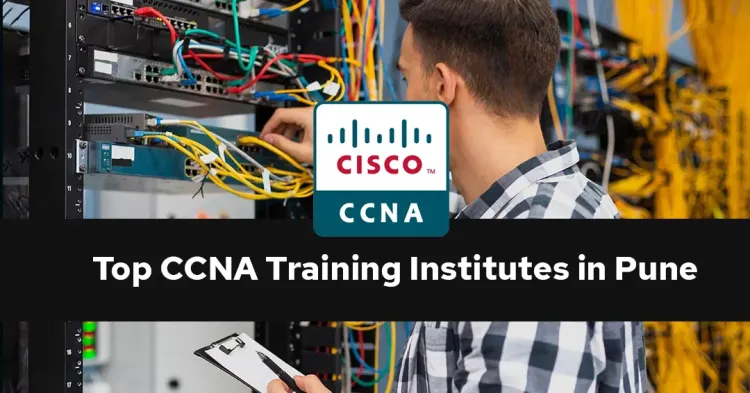
Top CCNA Training Institutes in Pune: How to Choose the Right One
Discover the top CCNA training institutes in Pune to kickstart your career in networking. Explore courses, expert instructors, and hands-on learning opportunities. Enroll at WebAsha Technologies for quality CCNA training and unlock networking excellence.
Quick answer: To choose a CCNA institute in Pune, check that the syllabus targets exam 200-301, that most class time is hands-on lab work, that you can meet the trainer in a demo class, and that batch size, fee inclusions, refund terms and exam support are written down. Distrust guaranteed-job promises. WebAsha runs CCNA training, so judge us against the same checklist.
Key takeaways
- CCNA is one exam, 200-301; retired tracks like CCNA Security and Routing and Switching should not appear in the syllabus.
- Labs, trainer quality and batch size matter more than the building or the brochure.
- Ask for the fee breakdown, refund policy and exam registration terms in writing.
- No institute can guarantee a job; ask what placement help actually includes.
A note before we start
WebAsha Technologies publishes this page and teaches CCNA in Pune, so we have a conflict of interest. We will not rank institutes, name competitors or quote star ratings. We cannot verify them fairly, and a list written by one of the institutes would not deserve your trust. What we can do is give you the criteria that separate a good CCNA programme from a poor one, so you can judge any institute, including ours, yourself.
What should a CCNA course teach?
The CCNA exam is 200-301, a single exam. The older tracks, such as CCNA Security and CCNA Routing and Switching, were retired in February 2020, so an institute that still sells them is out of date. Cisco groups the 200-301 content into six areas. Check the current blueprint on Cisco's certification pages, because the weighting changes between versions.
| Exam area | What it includes |
|---|---|
| Network fundamentals | Models, cabling, IPv4 and IPv6 addressing, subnetting, wireless basics, virtualisation |
| Network access | VLANs, trunking, STP, EtherChannel, wireless architecture |
| IP connectivity | Routing tables, static routing, OSPF, first-hop redundancy concepts |
| IP services | NAT, NTP, DHCP, DNS, SNMP, syslog, QoS basics |
| Security fundamentals | Threats, ACLs, Layer 2 security, VPN concepts, wireless security |
| Automation and programmability | Controllers, REST APIs, data formats such as JSON, configuration management concepts |
Ask for the course syllabus and compare it against this list. If subnetting, OSPF, ACLs and automation are not clearly in it, move on.
Twelve things to check before you pay
1. Is the syllabus mapped to 200-301?
Look for the exam code and the six areas. A syllabus that lists old topics such as legacy protocols without mention of automation is out of date.
2. How much of the time is hands-on?
CCNA is learned by configuring. Ask how many lab hours are included, what tools are used (Cisco Packet Tracer, GNS3 or Cisco Modeling Labs, or physical routers and switches) and whether you can access labs outside class hours.
3. Who is the trainer?
Ask for the trainer's name, Cisco certifications and years of real network work. Ask to sit in on a demo class. Ask the trainer to explain, for example, how OSPF elects a designated router. A strong trainer answers clearly and draws it.
4. What is the batch size?
Small batches let you get help. Ask for the maximum number of students, not an average.
5. What is the schedule and total duration?
Ask for total hours, hours per week and the end date. Check that weekday and weekend options suit your work or college timetable. Be wary of very short crash courses that promise to cover everything.
6. Are classes recorded, and can you repeat a topic?
Recordings or a repeat-batch option help when you miss a class. Ask what the terms are.
7. Is there structured exam preparation?
Look for timed practice tests, subnetting drills and troubleshooting labs. The 200-301 exam is taken through Cisco's testing partner, so ask who handles registration and whether the fee is included or separate.
8. What exactly does the fee include?
Get a written list: tuition, materials, lab access, exam voucher or not, taxes, repeat classes. Compare institutes on what is included as well as the headline number. We do not quote fees here because they change; our guide to CCNA course fees in Pune goes through typical cost components.
9. What is the refund and rescheduling policy?
Ask for it in writing, especially for online payments in advance.
10. How honest are the reviews and placement claims?
Read recent Google reviews and look for specific, dated comments rather than a perfect score with generic praise. Be careful with phrases like "100% placement". No institute can guarantee a job. Ask what placement help actually means: resume review, mock interviews, introductions to hiring companies. If you are shown numbers, ask where they come from and for what period.
11. Does it suit your starting level?
Complete beginners need basic computer and IP networking coverage first. Working engineers may want a faster batch. Ask whether there is a pre-course for those new to networking.
12. Is the location and format right?
Classroom batches in Pune suit people who learn better in person and want access to physical equipment. Online sessions suit working professionals. Check what the online lab setup looks like and whether the internet requirements are realistic for you.
Warning signs
| Red flag | Why it matters |
|---|---|
| Guaranteed job or guaranteed pass | Nobody can honestly promise either |
| No demo class, or the trainer cannot be named | You cannot judge teaching quality |
| Syllabus shows retired tracks or no automation | Out of date for 200-301 |
| Mostly slides, few labs | You will struggle in the exam's configuration and troubleshooting questions |
| Pressure to pay today with a "last seat" offer | A sales tactic, not information |
| Unclear fee breakdown | Hidden charges appear later |
| Exam dumps offered | They breach exam rules and do not teach the skill |
Questions to ask on the phone or at a visit
- Can I see the full syllabus and the exam code it targets?
- How many hours of lab are included, and on what equipment?
- Who will teach me, and can I attend a demo class?
- What is the maximum batch size?
- What does the fee include, in writing?
- What happens if I miss a class?
- What is your refund policy?
- Can I speak to someone who completed the course recently?
Is CCNA worth it, and what should you take next?
CCNA is the standard entry certification for network engineer and network support roles, and it also supports security and cloud careers, because they rest on networking. After CCNA you can go to CCNP, to Cisco's security track (350-701 SCOR) or to a cloud track. Whatever you choose, the certificate shows you studied. Hands-on skills decide whether you pass an interview.
What WebAsha offers
WebAsha's CCNA course targets the 200-301 exam and teaches in classroom and online formats from Pune. The course page lists current batch dates and what is included. We encourage you to ask us every question in the checklist above, and to ask other institutes the same.
Next steps
Start by reading the CCNA 200-301 course page and compare it against the checklist. For more detail, see CCNA certification in Pune: exam prep, duration and cost, and CCNA course fees in Pune. If you are also considering Linux, read top Linux training institutes in Pune.
Related reading
- Top Summer Courses in Pune | Best Summer Training for CSE Students
- Enroll in CCNA Course in Pune | Start Your High-Paying IT Networking Career Now
- Best Ethical Hacking Classes in Pune with Certification, Placement, Fees and Online Options | Complete Guide
- What Is the NIST Cybersecurity Framework? Simple Explanation for Beginners in 2026
Frequently Asked Questions
What's Your Reaction?
 Like
0
Like
0
 Dislike
0
Dislike
0
 Love
0
Love
0
 Funny
0
Funny
0
 Wow
0
Wow
0
 Sad
0
Sad
0
 Angry
0
Angry
0

With a passion for staying on the cutting edge of technology trends, I am dedicated to delivering content that not only informs but also inspires. Whether you need in-depth analysis pieces, informative guides, or thought-provoking opinion pieces, I craft content that resonates with tech enthusiasts and professionals alike.