Welcome!

Unlock your personalized experience.
Sign Up
Tag

Cybersecurity for beginners Articles, Guides & Tutorials

35 posts Page 1 / 3

New to security? Start here. These posts explain core ideas in plain language, from how networks and operating systems work to the main types of attack and the roles available in the field.

When you are ready for structured learning, see the Cyber Security Course, CCT and the CompTIA Security+ exam.

CCNA Cybersecurity 200-201 (Formerly CyberOps): Is It Worth It?

CCNA Cybersecurity is Cisco's associate-level certification for security operations, earned by passing exam 200-201. It was called CyberOps Associate (exam code CBROPS, now CCNACBR) until Cisco moved it under the CCNA name on 3 February 2026, and existing holders were migrated automatically.
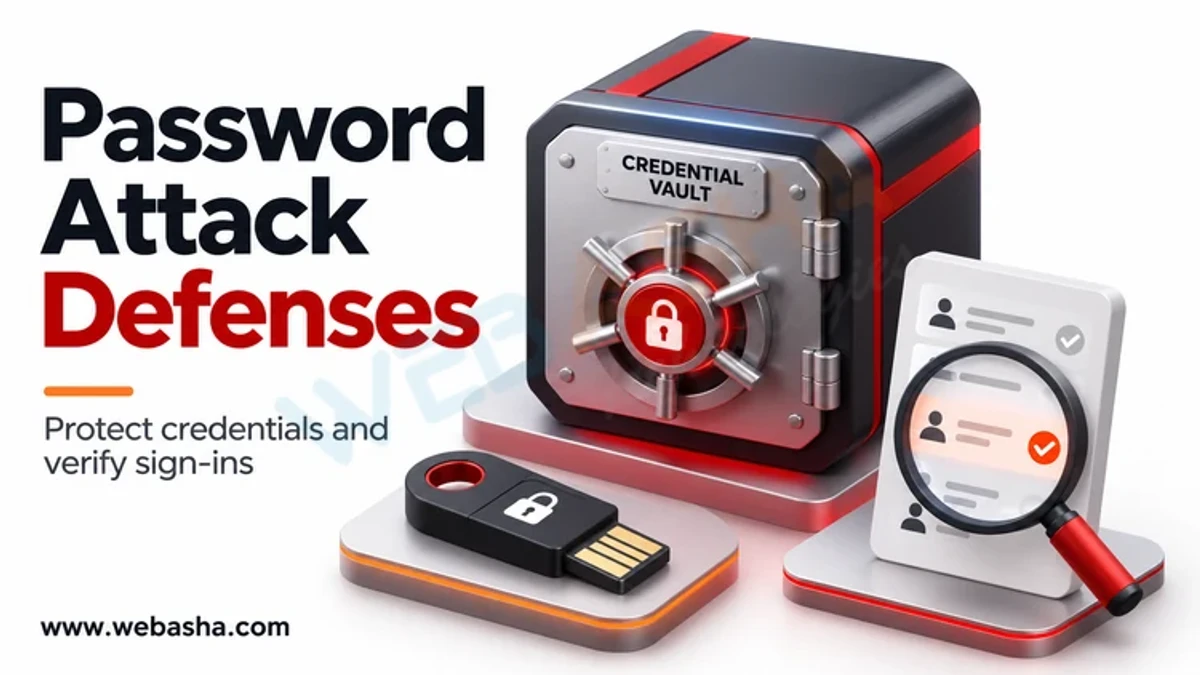
Common Types of Password Attacks and How to Prevent Them

Common password attacks include brute force (trying every combination), dictionary attacks (trying common words and passwords), password spraying (one common password against many accounts), credential stuffing (reusing leaked username and password pairs), offline cracking of stolen password hashes, phishing, keyloggers and infostealer malware, and MFA fatigue.

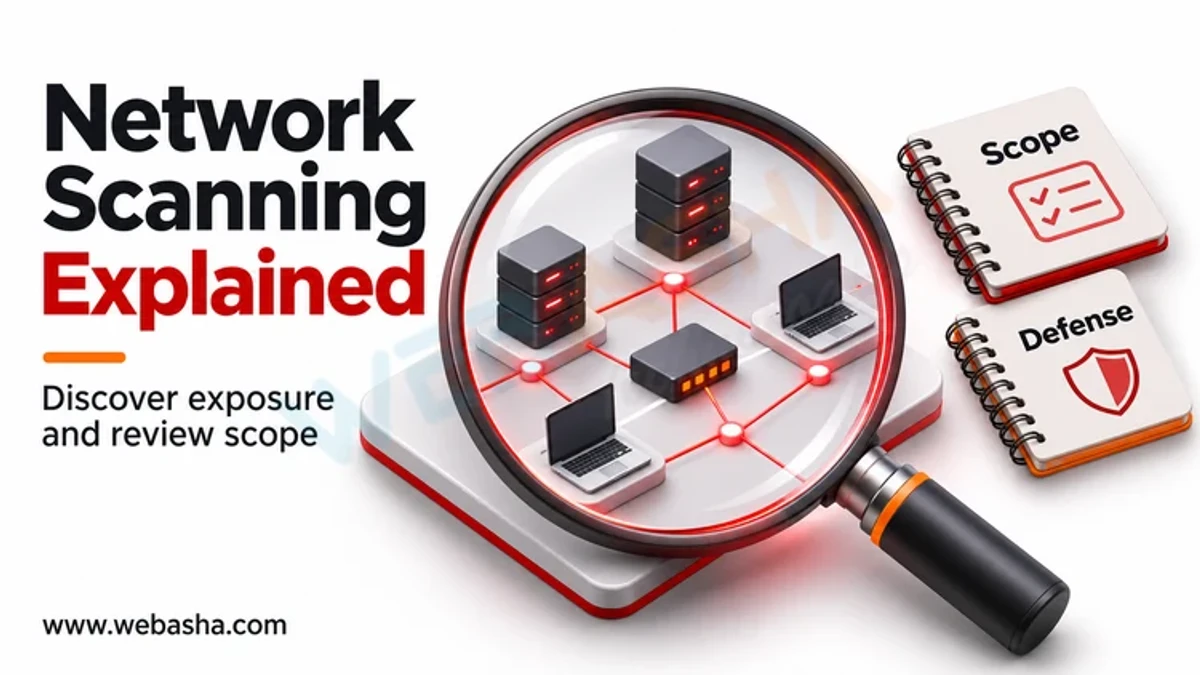
What Is Network Scanning? Types, Detection and Defence Explained

Network scanning is the process of sending probes to a range of addresses to find live hosts, open ports, running services and known weaknesses. It has four common types: host discovery, port scanning, service and version detection, and vulnerability scanning. Attackers scan to find targets, while defenders and authorised testers scan their own networks to find exposures before attackers do.

How a Cyber Security Internship Builds Job-Ready Skills: A Skills Map

A cyber security internship builds job-ready skills when each task you do leaves evidence. Typical skills are networking and Linux, vulnerability assessment, web application testing, log analysis, incident handling basics and report writing, plus communication and teamwork. The NIST NICE Framework links these skills to real work roles such as Vulnerability Analysis, Defensive Cybersecurity and Incident Response.

Cyber Security After 10th: A Safe Learning Plan for School Students

If you are in or just past Class 10 and interested in cyber security, start with a staged, legal learning plan rather than rushing into hacking tools. First learn to protect your own accounts and devices. Then learn how computers, networks and Linux work, pick up basic Python, and practise on legal training platforms such as picoCTF and OWASP Juice Shop.

What Is a PG Diploma in Cybersecurity? Eligibility, Syllabus and Roles

A PG diploma in cybersecurity is a postgraduate programme for graduates, often around one year, that teaches applied security skills: network and system security, security operations, incident response, cloud security, governance and law. Eligibility is normally a bachelor's degree, with subject and marks rules set by each university or institute.

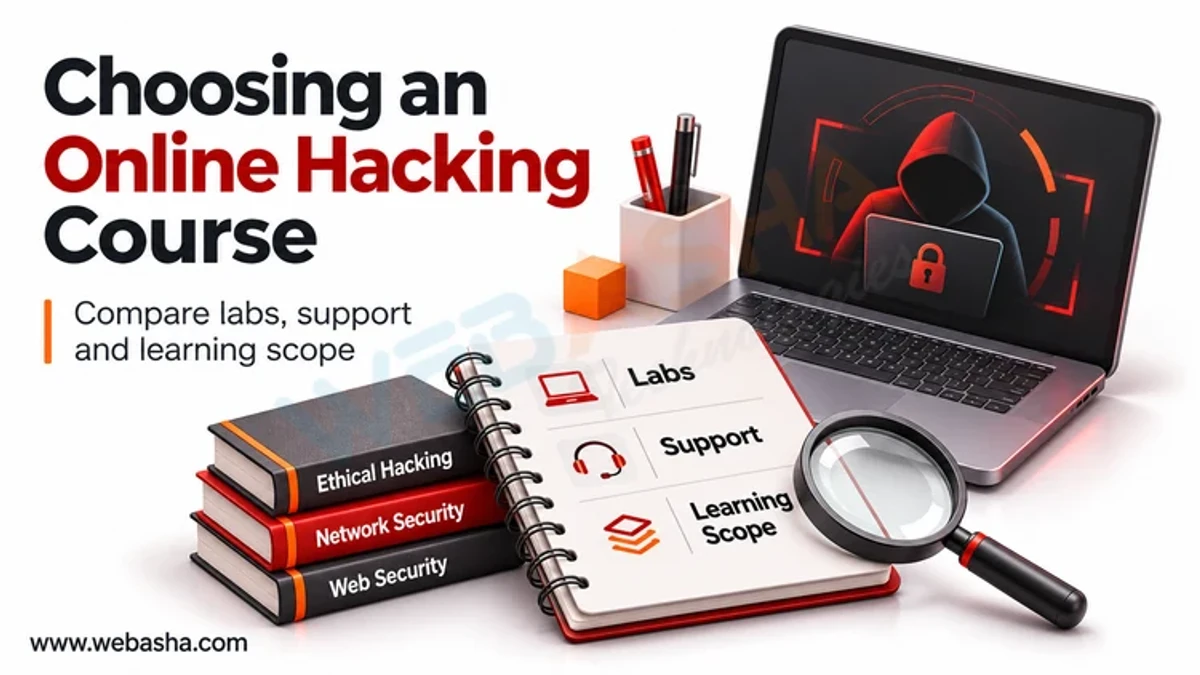
How to Choose an Online Ethical Hacking Course: A Beginner Checklist

Choose an online ethical hacking course by checking seven things: the syllabus covers networking and operating system basics before attacks; you get hands-on labs on targets you are permitted to test; the course teaches authorisation and the law; the instructor's experience can be verified; your work is assessed, with feedback; any certification it prepares for is named with its current exam version; and refund and…

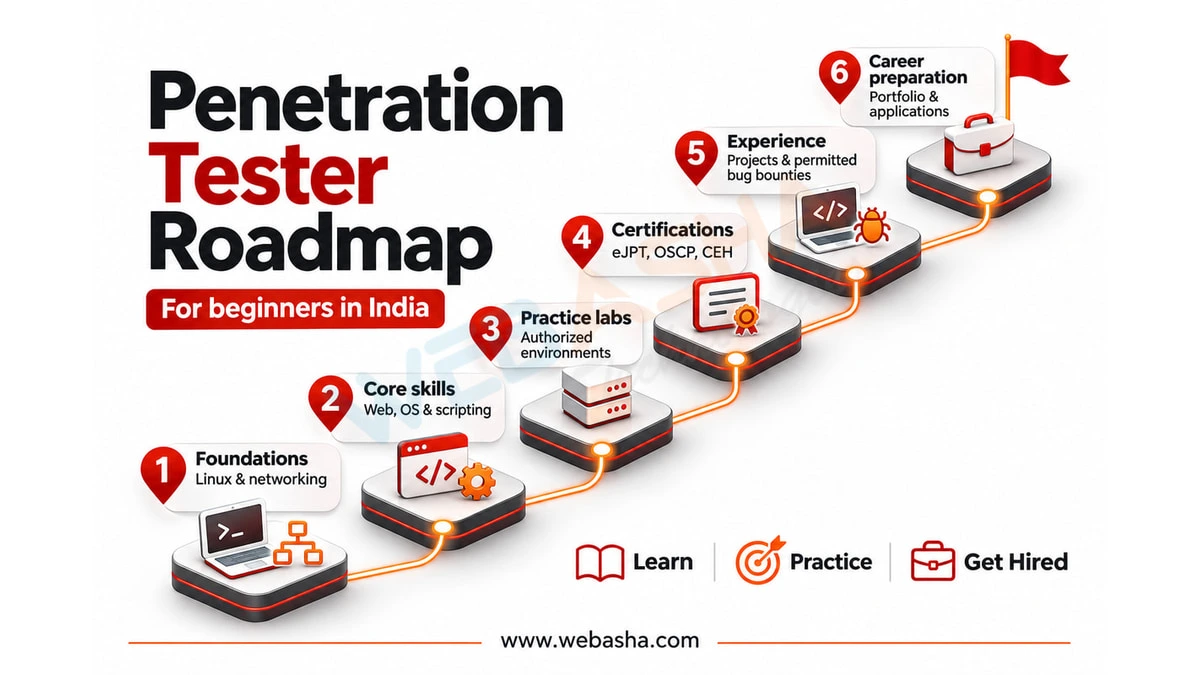
Ethical Hacking Career Roadmap for Beginners: Five Clear Stages

A beginner's ethical hacking roadmap has five stages. First, build IT foundations: networking, Linux, Windows and basic scripting. Second, learn security fundamentals and the law on authorised testing. Third, practise testing methods in your own lab, using public guides from OWASP and NIST. Fourth, earn one certification that fits your target role and assemble a portfolio of written reports.

Ethical Hacker Without a Tech Background? A 90-Day Foundation Plan

Yes, you can become an ethical hacker without a technical background, because the required knowledge can be learned and no law or certification body demands a computer degree for entry-level study. What you cannot skip is the foundation. This guide sets out a 90-day plan in three blocks: how computers and networks work, then Linux and how the web works, then security basics and a first safe lab.

Ethical Hacking for Beginners: What Should You Learn First?

Start an ethical hacking course with networking, operating systems and the web, then practise assessment methods in explicitly authorised labs. Choose a course that connects each tool to a question, an observable result and a written finding. You do not need to buy an advanced examination package before discovering which foundations you lack.

How to Build a Cybersecurity Portfolio Without Work Experience

Build a beginner cybersecurity portfolio around a few well-explained, authorised projects rather than a large tool list. Each project should state the question, scope, environment, evidence, interpretation and limitations, then explain the proposed improvement or retest. Use synthetic data or explicitly permitted labs, remove credentials and personal information, and label training work honestly.

Websites to Learn Cybersecurity: Choose by Learning Goal

Choose cybersecurity learning websites by the task you need to learn. Use official documentation for system behaviour, structured learning paths for foundations and explicitly authorised labs for practice. PortSwigger, OWASP, Microsoft Learn, Cisco, OverTheWire and primary language documentation serve different purposes; none is a complete career plan on its own.

Cybersecurity Prerequisites: A Practical Beginner Self-Check

You can begin learning cybersecurity while building your computing foundations. Before taking a technical course, check that you can manage files and accounts, explain a simple network request and follow basic operating-system documentation. Programming requirements depend on the task, so ask what the course assumes rather than treating coding as a universal entry gate.

Can You Work in Cybersecurity Without Coding?

Some cybersecurity responsibilities involve little routine programming, but the requirement depends on the employer, systems and level of independence. Governance, assurance, learning coordination and certain operational tasks may place more emphasis on evidence, process and communication.

Cybersecurity Careers for Non-Technical Graduates

Non-technical graduates can investigate cybersecurity work that uses research, communication, coordination and evidence evaluation, while building the technical context those tasks require. Possible directions include governance support, security learning and programme coordination, depending on actual employer requirements.