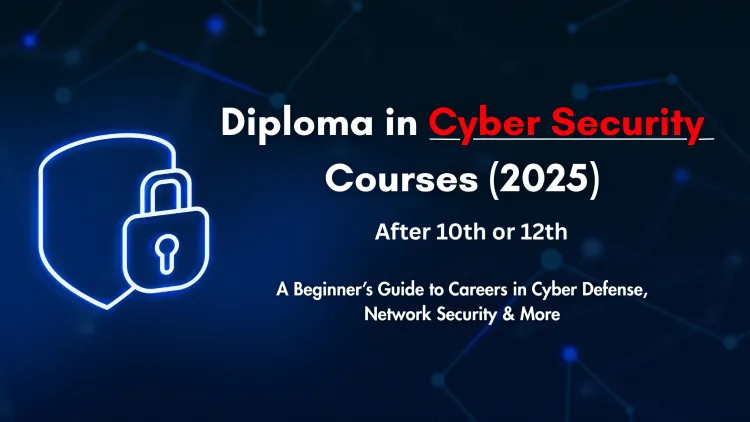
Diploma in Cyber Security After 10th | Best Course for Students to Start a Career in Ethical Hacking and Cyber Defense
A Diploma in Cyber Security after 10th is one of the smartest career choices for students who want to enter the IT industry early and build a career in ethical hacking, network protection, or digital forensics. This beginner-level course focuses on real-world skills like malware analysis, secure networking, penetration testing, and cyber law. Offered by leading institutes like WebAsha Technologies, the diploma is job-ready and ideal for 10th-pass students who want to skip the long academic route and start earning faster in one of the world’s most in-demand tech careers. With basic eligibility, no prior coding knowledge required, and certification options, this course is trending in 2026 as a futuristic skill to learn early.
Quick answer: You do not need a degree to begin in cybersecurity. After class 10 you can take a diploma that teaches hands-on ethical hacking, networking and defence skills, then build towards industry certifications. Starting early gives you early exposure to IT and a strong foundation for a career in digital defence.
Key takeaways
- You do not need a degree to begin learning ethical hacking.
- A diploma after 10th builds basic networking and defence skills for later certifications.
- Plan to continue studying, since many security roles expect more qualifications.
Table of Contents
- Introduction
- Why Choose Cyber Security After 10th?
- Course Overview
- Eligibility Criteria
- What Will You Learn? (Course Modules)
- Institute for Cyber Security Diploma: WebAsha Technologies
- Career Opportunities After Diploma
- Benefits of Starting Early
- Conclusion
Introduction
As cyber threats continue to evolve at lightning speed, so does the demand for skilled professionals who can protect data, networks, and systems. While many people assume cybersecurity careers require college degrees or advanced qualifications, the truth is, you can start a career in cybersecurity right after your 10th grade. A Diploma in Cyber Security after 10th is the perfect gateway for students who are passionate about technology and want to build a high-paying career in the digital defense world.
Let’s explore how this course works, what you’ll learn, the best institutes offering it (like WebAsha Technologies), career scope, and more.
Why Choose Cyber Security After 10th?
With the internet becoming the foundation of every business, government system, and daily activity, cybersecurity has become one of the most in-demand fields globally. Attacks like phishing, ransomware, data breaches, and identity theft have grown rapidly, and this has created a major gap in trained professionals.
Starting early with a diploma course after class 10 gives students:
-
Early exposure to a booming IT career
-
Practical, hands-on skills in hacking, networking, and defense
-
A strong foundation for certifications like CEH, CompTIA Security+, and more
-
Opportunities to earn and learn at the same time
Course Overview
A Diploma in Cyber Security after 10th is a practical, job-oriented program designed to introduce students to the core concepts of cybersecurity, ethical hacking, and digital defense systems. These programs often last 6 months to 1 year and are ideal for tech-savvy learners ready to jumpstart their careers.
Eligibility Criteria
-
Must have passed 10th grade from a recognized board
-
Basic computer knowledge is an advantage, but not mandatory
-
Interest in ethical hacking, computers, or information technology
What Will You Learn? (Course Modules)
| Module No. | Topic Covered |
|---|---|
| 1 | Fundamentals of Cyber Security |
| 2 | Computer Networks & Protocols |
| 3 | Operating Systems (Windows & Linux) |
| 4 | Ethical Hacking Basics |
| 5 | Malware, Viruses, Ransomware |
| 6 | Penetration Testing & Vulnerability Scan |
| 7 | Web Application Security |
| 8 | Cyber Law & Digital Ethics |
| 9 | Cloud & Email Security |
| 10 | Tools like Kali Linux, Wireshark, Nmap |
Institute for Cyber Security Diploma: WebAsha Technologies
WebAsha Technologies is one of India’s top IT training platforms, known for its hands-on, real-time cybersecurity diploma programs. Here's why WebAsha stands out:
-
Beginner-friendly courses designed for 10th pass students
-
Real-time labs, live project training, and advanced tools
-
Placement support and resume-building assistance
-
Experienced trainers from the cyber defense industry
-
Certifications that are recognized by hiring companies
To know more, visit WebAsha Cybersecurity Course Page
Career Opportunities After Diploma
After completing a Cyber Security Diploma, students can start working in junior roles like:
-
Cybersecurity Technician
-
SOC Analyst (Security Operations Center)
-
Network Support Executive
-
Junior Ethical Hacker
-
Cybersecurity Assistant
With experience, you can advance into senior roles or pursue more certifications such as:
-
CEH (Certified Ethical Hacker)
-
CompTIA Security+
-
CISSP (Certified Information Systems Security Professional)
Benefits of Starting Early
-
Learn practical skills while your peers are still exploring options
-
Build a strong cybersecurity resume from an early age
-
Start freelancing or internships in tech support or IT security
-
Save time and get ahead in the job market
Conclusion
If you’ve just finished 10th grade and are wondering what career path to take, Cybersecurity is the future. A Diploma in Cyber Security after 10th not only opens doors to well-paying job opportunities but also gives you the satisfaction of protecting people, businesses, and nations in the digital world.
With leading institutes like WebAsha Technologies, you can get the right guidance, tools, and mentorship to make your mark in one of the fastest-growing industries of the decade.
To take this further with guided labs and an instructor, see our cyber security training.
Related reading
- Best CEH Diploma Course in India | Eligibility, Fees, Duration, Career Scope & Top Institutes Offering Ethical Hacking Training in 2026
- How to Start a Cybersecurity Career After 12th? A Step-by-Step Guide for Beginners
- Comprehensive Guide to WebAsha’s Diploma in Cybersecurity and Ethical Hacking | Career-Oriented Training with Global Certifications in 2026
Frequently Asked Questions
What's Your Reaction?
 Like
0
Like
0
 Dislike
0
Dislike
0
 Love
0
Love
0
 Funny
0
Funny
0
 Wow
0
Wow
0
 Sad
0
Sad
0
 Angry
0
Angry
0

Vaishnavi is a skilled tech professional at the Ethical Hacking Training Institute in Pune, responsible for managing and optimizing the technical infrastructure that supports advanced cybersecurity education. With deep expertise in network security, backend operations, and system performance, she ensures that practical labs, online modules, and assessments run smoothly and securely. Her behind-the-scenes contributions play a vital role in delivering a seamless and secure learning experience for aspiring ethical hackers.