AI vs Machine Learning: The Difference Explained With an Example
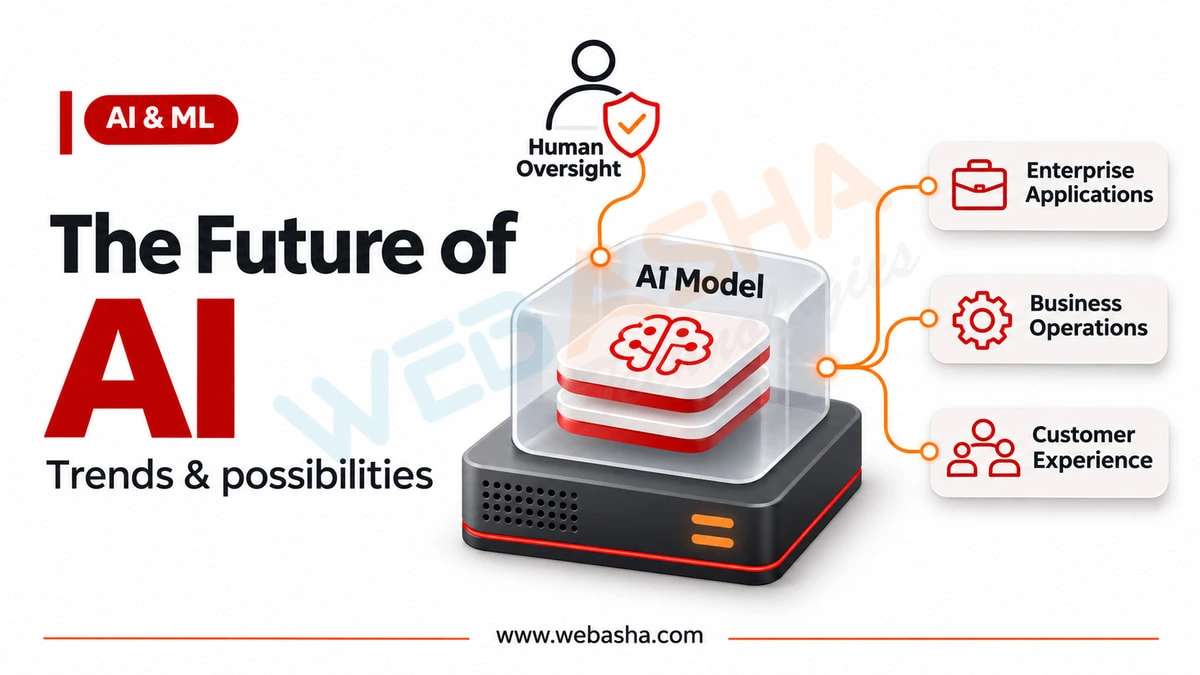
Artificial intelligence is the broad goal of making computers do tasks that normally need human intelligence, such as understanding language, recognising images or making decisions. Machine learning is one way of achieving it, in which the system learns patterns from data instead of following rules a programmer wrote.
Topic: Machine Learning in AI & Data · Comparison
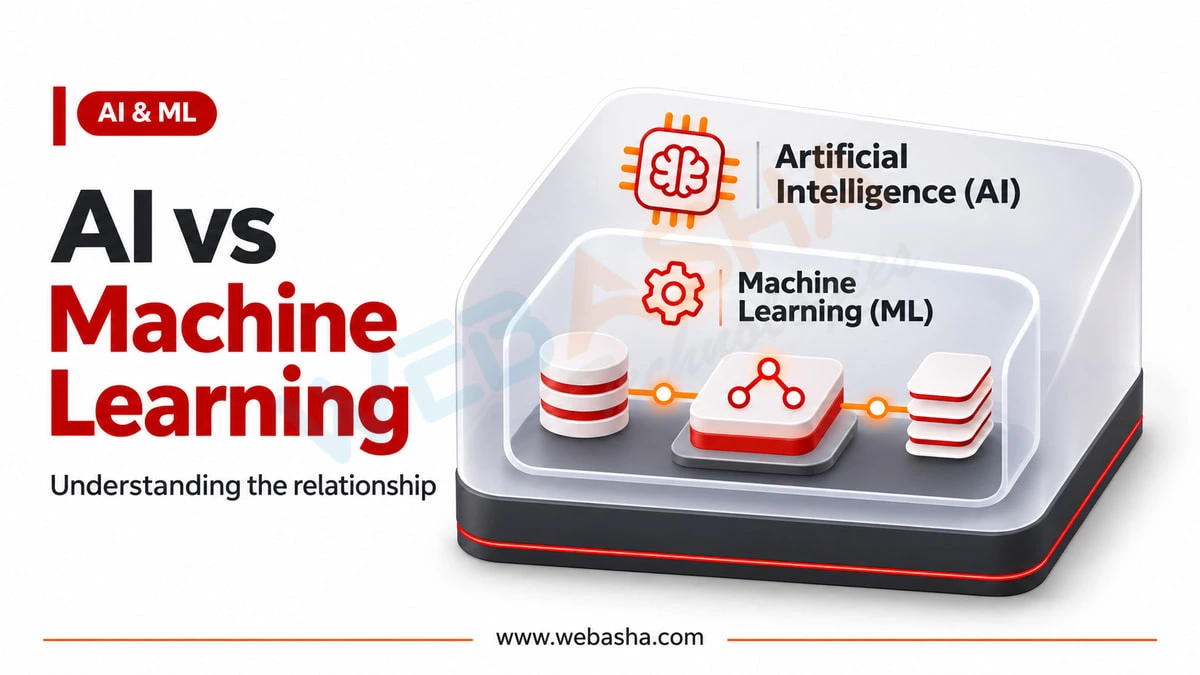
Quick answer: Artificial intelligence is the broad goal of making computers do tasks that normally need human intelligence, such as understanding language, recognising images or making decisions. Machine learning is one way of achieving it, in which the system learns patterns from data instead of following rules a programmer wrote. All machine learning is AI, but not all AI is machine learning: a chess engine built on search, or an expert system of if-then rules, is AI without learning. Deep learning is a subset of machine learning, and today's generative AI is built on deep learning.
Key takeaways
- AI is the goal; machine learning is the most successful method of reaching it today.
- The practical difference: rules written by people versus rules learned from examples.
- Deep learning uses many-layered neural networks and needs more data and computing power.
- Generative AI, such as large language models, is a kind of deep learning that produces new content.
- Job titles blur these lines, so read the job description, not the title.
Table of Contents
- What Is the Difference Between AI and Machine Learning?
- What Does the Difference Look Like in Code?
- Is All AI Machine Learning?
- What Is Deep Learning and How Does It Differ?
- Where Does Generative AI Fit?
- Where Is Each Approach Used in Practice?
- How Do Standards and Laws Define AI?
- Which Should You Learn First?
- What Should You Be Able to Explain in an Interview?
- References
What Is the Difference Between AI and Machine Learning?
| Artificial intelligence | Machine learning | |
|---|---|---|
| What it is | The goal: intelligent behaviour by machines | A method: learning patterns from data |
| Scope | Broad, includes rules, search, planning and learning | Narrower, a subset of AI |
| Where the rules come from | People or data, depending on the approach | Data |
| Needs training data | Not always | Always |
| Example | A route planner, a chess engine, a chatbot | A spam filter, a fraud model, a recommendation system |
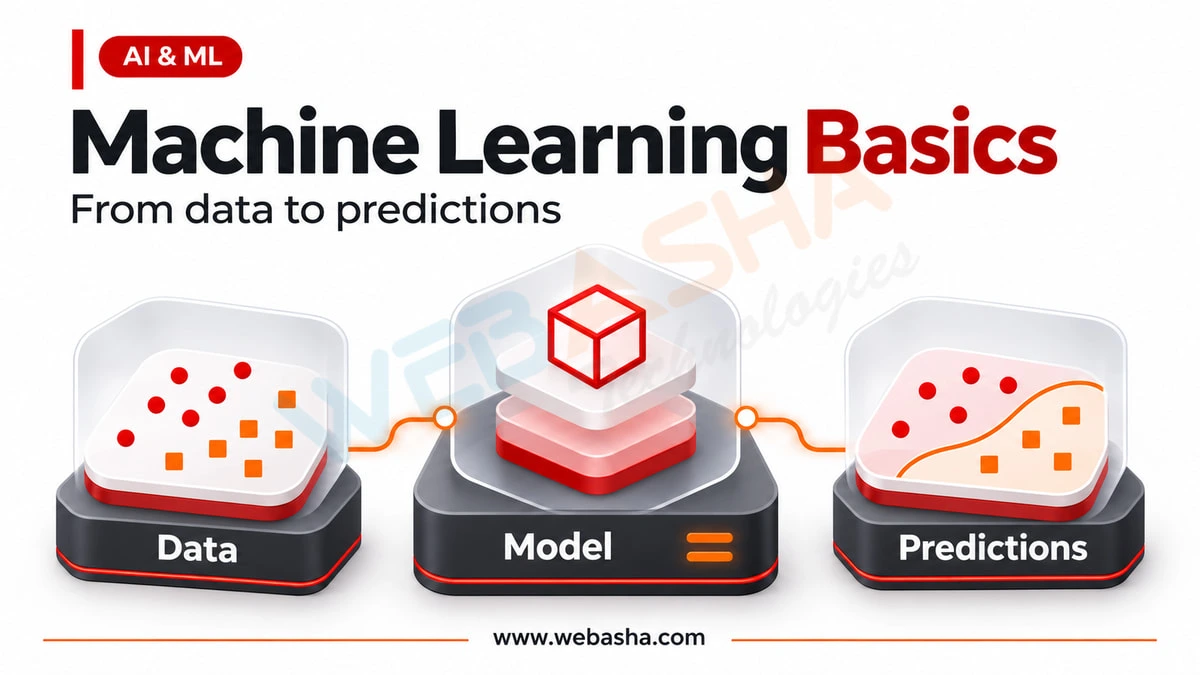
The cleanest way to think about it: traditional programming takes rules and data and produces answers. Machine learning takes data and answers and produces the rules.
What Does the Difference Look Like in Code?
Take one task, deciding whether a message is spam, and solve it twice. First with rules a person wrote:
def is_spam_rules(message):
    words = ['free', 'winner', 'urgent', 'prize']
    text = message.lower()
    return sum(w in text for w in words) >= 2

print(is_spam_rules('You are a WINNER, claim your FREE prize'))   # True
print(is_spam_rules('Meeting moved to 3 pm'))                     # False
This is AI in the old sense, and it works until spammers change their words. Someone then has to update the list by hand, forever.
Now with machine learning, using scikit-learn. Nobody writes the word list; the model learns which words matter from labelled examples. This is a toy dataset, enough to show the idea:
from sklearn.feature_extraction.text import CountVectorizer
from sklearn.linear_model import LogisticRegression

messages = ['claim your free prize now', 'urgent winner reply now',
            'free entry win cash', 'lunch at 1 pm?',
            'project review moved to friday', 'please send the report']
labels = [1, 1, 1, 0, 0, 0]          # 1 = spam, 0 = not spam

vec = CountVectorizer()
X = vec.fit_transform(messages)
model = LogisticRegression().fit(X, labels)

print(model.predict(vec.transform(['win a free prize'])))        # [1]
print(model.predict(vec.transform(['report for friday'])))       # [0]
To keep the model current, you give it more labelled examples and retrain. Real systems use thousands or millions of examples and careful evaluation, but the shift is exactly this: from writing rules to curating data.
Is All AI Machine Learning?
No. Many AI systems use no learning at all:
- Search and planning, such as route-finding in maps or classic chess engines exploring possible moves.
- Expert systems, encoding specialist knowledge as if-then rules, once common in diagnosis and configuration.
- Optimisation, such as scheduling algorithms that find the best timetable under constraints.
Modern systems often combine both: a learned model to recognise something, and rules or search to decide what to do about it.
What Is Deep Learning and How Does It Differ?
Deep learning is machine learning with neural networks of many layers. Its advantage is that it learns useful features from raw data such as pixels, audio or text, where classical machine learning usually needs people to design those features. The cost is more data, more computing power and models that are harder to explain.
| Family | Learns from data | Typical data | Example tools |
|---|---|---|---|
| Rule-based AI | No | Expert knowledge | Business rules engines |
| Classical machine learning | Yes | Tables of numbers and categories | scikit-learn, XGBoost |
| Deep learning | Yes | Images, audio, text, large datasets | PyTorch, TensorFlow |
| Generative AI | Yes, at very large scale | Text, images, code | Large language and image models |
For tabular business data, such as transactions or customer records, classical machine learning is often as accurate as deep learning and far cheaper to run and explain.
Where Does Generative AI Fit?
Generative AI is deep learning trained to produce new content: text, images, code or audio. Large language models learn patterns from very large amounts of text and generate likely continuations. They are machine learning, so everything above applies: they are only as good as their training data, and they can be confidently wrong, which is why their output needs checking. Our explainer on generative AI versus traditional AI goes further.
Where Is Each Approach Used in Practice?
- Banking: machine learning for fraud scoring, rules for regulatory limits that must be applied exactly.
- Cyber security: rules for known attack signatures, machine learning for spotting unusual behaviour.
- Healthcare: deep learning for reading medical images, with clinicians making the decision.
- Customer service: generative AI for drafting replies, with rules deciding when to hand over to a person.
How Do Standards and Laws Define AI?
Formal definitions focus on behaviour, not technique. The NIST AI Risk Management Framework describes AI systems as engineered or machine-based systems that generate outputs such as predictions, recommendations or decisions for given objectives. The EU AI Act defines an AI system in its Article 3 in similar terms, as a machine-based system that infers from its input how to generate outputs. Both deliberately include learning and non-learning approaches.
Which Should You Learn First?
- Python and basic data handling.
- Classical machine learning: training, testing, overfitting and evaluation, using scikit-learn. Our guide to machine learning basics covers this.
- Deep learning once the fundamentals are solid.
- Working with generative AI: using models through APIs, retrieval, evaluation and safety.
The free Google Machine Learning Crash Course is a well-structured start.
What Should You Be Able to Explain in an Interview?
- The nesting: AI contains machine learning, which contains deep learning.
- Rules versus learning, with an example like the spam filter above.
- Supervised, unsupervised and reinforcement learning, with one use case each.
- Why a model that scores well on training data can fail on new data.
- When you would not use deep learning.
Talk to a WebAsha training advisor about AI and machine learning courses, batches and current fees.
References
- NIST AI Risk Management Framework (AI 100-1)
- Regulation (EU) 2024/1689, the AI Act
- scikit-learn documentation
- Google Machine Learning Crash Course
Related reading
Frequently Asked Questions
What's Your Reaction?
 Like
0
 Dislike
0
 Love
0
 Funny
0
 Wow
0
 Sad
0
 Angry
0

I am dedicated to staying up-to-date on the most current technology trends and like to craft content that informs and inspires. Whether through detailed analysis, informative guides, or exact opinion articles, I desire to create engaging content for both technology lovers and industry experts.