How AI is Revolutionizing Social Engineering Attacks | Risks, Techniques, and Prevention
rtificial Intelligence (AI) is revolutionizing the way cybercriminals conduct social engineering attacks. AI-powered phishing emails, deepfake scams, and automated chatbots make cyber deception more effective than ever. Attackers use AI to craft highly convincing phishing attempts, clone voices, generate fake videos, and extract sensitive data from unsuspecting victims. AI-driven reconnaissance further allows hackers to gather intelligence and create personalized attacks that are difficult to detect. While AI enhances cybersecurity defenses, it also empowers cybercriminals with advanced hacking tools. The rise of AI-driven phishing, voice cloning fraud, and deepfake impersonation poses significant threats to businesses and individuals. This blog explores how AI is making social engineering attacks more dangerous, the techniques used, and the best strategies for protection. To stay ahead of these evolving threats, organizations must implement AI-driven cybersecurity solutions, deepfa
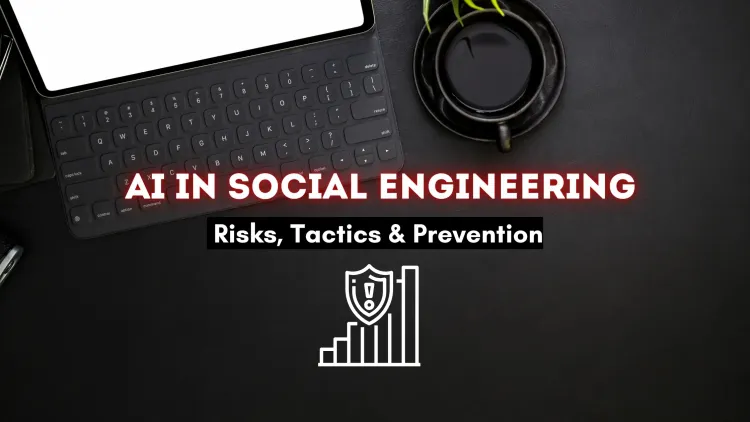
Quick answer: AI makes social engineering more dangerous by producing personalised phishing messages, deepfake audio and video, and automated conversations that can fool careful users. Defend with multi-factor authentication, out-of-band verification of payment or access requests, strict approval processes, and regular training with realistic examples.
Key takeaways
- Deepfake audio and video can fool careful users.
- Use code words and call-backs for payment requests.
- Train staff on current examples.
Table of Contents
- Introduction
- How AI Enhances Social Engineering Attacks
- Why AI-Powered Social Engineering Attacks Are More Dangerous
- How to Defend Against AI-Powered Social Engineering
- Conclusion
Introduction
Social engineering attacks have long been one of the most effective tactics used by cybercriminals. These attacks rely on manipulating human psychology rather than exploiting technical vulnerabilities. However, with the rise of Artificial Intelligence (AI), social engineering has become even more dangerous. AI-powered tools can now generate highly personalized phishing emails, deepfake audio and video, and automated hacking attempts that deceive even the most cautious users.
Here is how AI is changing social engineering attacks, the risks it poses, and how individuals and organizations can defend against these advanced cyber threats.
How AI Enhances Social Engineering Attacks
AI has significantly improved the effectiveness, speed, and scalability of social engineering attacks. Cybercriminals no longer rely solely on manual efforts; instead, they use AI to automate and refine their deception techniques. Here’s how AI is making social engineering more dangerous:
AI-Generated Phishing Emails
Traditional phishing attacks often include spelling errors, generic greetings, and poorly written messages. AI-powered phishing tools, such as FraudGPT and WormGPT, generate perfectly crafted emails that sound more convincing and personalized to the target.
Deepfake Audio & Video Scams
Cybercriminals use AI-driven deepfake technology to create realistic fake videos and voice recordings that impersonate executives, government officials, or even friends and family members. This allows attackers to conduct CEO fraud, financial scams, and identity theft with alarming accuracy.
Automated Chatbots for Social Engineering
AI chatbots, powered by Natural Language Processing (NLP), can engage with victims in real-time conversations to extract sensitive information. These bots can mimic customer support agents, HR representatives, or financial advisors to manipulate users into revealing credentials.
AI-Driven Reconnaissance for Targeted Attacks
Before launching a social engineering attack, cybercriminals gather intelligence using AI-powered Open-Source Intelligence (OSINT) tools. These tools analyze social media, public records, and leaked data to create highly customized attacks tailored to each target.
Spear Phishing & Business Email Compromise (BEC)
AI enables hyper-personalized spear phishing attacks by scanning publicly available data to craft messages that look authentic. Attackers can mimic internal communications within a company, tricking employees into transferring funds or sharing sensitive information.
AI-Powered Voice Cloning for Fraud
Cybercriminals use AI-based voice cloning software to impersonate family members or business executives over the phone. Victims believe they are speaking with someone they trust and unknowingly send money or disclose confidential details.
Why AI-Powered Social Engineering Attacks Are More Dangerous
The integration of AI into cybercrime has created more sophisticated and effective social engineering attacks. Here’s why these AI-driven threats are more dangerous:
- Higher Success Rates – AI eliminates human errors and creates more convincing attacks.
- Scalability – Attackers can target thousands of victims simultaneously using AI automation.
- Faster Execution – AI can quickly generate real-time responses that deceive users.
- Adaptive Learning – AI models analyze past attacks and improve their strategies, making them harder to detect.
- Lower Costs for Hackers – AI tools reduce the effort required for cybercriminals to launch sophisticated attacks.
How to Defend Against AI-Powered Social Engineering
Organizations and individuals must adopt proactive security measures to combat AI-driven social engineering threats. Here are some key strategies:
Employee Training & Awareness
- Conduct regular security awareness training to help employees recognize phishing emails, deepfakes, and AI-driven scams.
- Educate staff about AI-generated fraud tactics and how to verify suspicious requests.
Multi-Factor Authentication (MFA)
- Enforce MFA for all sensitive accounts to prevent unauthorized access.
- Use biometric authentication or hardware security keys for enhanced protection.
AI-Powered Cybersecurity Solutions
- Deploy AI-driven fraud detection systems to identify anomalous behavior.
- Use behavioral analysis tools to detect suspicious activities before an attack occurs.
Deepfake Detection Technology
- Invest in deepfake detection software to verify audio and video content before acting on it.
- Use watermarking and blockchain-based authentication to prevent deepfake misuse.
Strict Verification Protocols
- Always verify financial transactions and sensitive requests through multiple communication channels.
- Avoid sharing confidential information via email, phone, or chat without verification.
Limiting Public Information Exposure
- Reduce personal and company data shared on social media to minimize OSINT-based attacks.
- Implement privacy settings to protect sensitive information from cybercriminals.
Conclusion
AI has undeniably made social engineering attacks more dangerous, scalable, and effective. Phishing, deepfake fraud, voice cloning, and AI-driven reconnaissance are becoming powerful tools in the hands of cybercriminals. However, by implementing strong security measures, advanced AI-driven defense systems, and continuous employee training, organizations and individuals can mitigate these evolving threats.
While AI poses risks, it also provides solutions. Cybersecurity professionals must stay ahead by using AI for threat detection, behavior analysis, and deepfake identification. The key to fighting AI-driven cyber threats is leveraging AI for defense while maintaining strong human oversight.
In the age of AI-powered cybercrime, awareness and vigilance are the strongest defenses against social engineering attacks.
Related reading
- The Role of AI in Social Engineering Attacks | How Hackers Use Artificial Intelligence to Deceive Victims
- AI for Social Engineering & OSINT | How Artificial Intelligence is Shaping Cyber Threats and Cybersecurity Defense
- How AI is Used in Social Engineering Attacks | Advanced Cyber Threats & Protection Strategies
Frequently Asked Questions
What's Your Reaction?
 Like
0
Like
0
 Dislike
0
Dislike
0
 Love
0
Love
0
 Funny
0
Funny
0
 Wow
0
Wow
0
 Sad
0
Sad
0
 Angry
0
Angry
0

Vaishnavi is a skilled tech professional at the Ethical Hacking Training Institute in Pune, responsible for managing and optimizing the technical infrastructure that supports advanced cybersecurity education. With deep expertise in network security, backend operations, and system performance, she ensures that practical labs, online modules, and assessments run smoothly and securely. Her behind-the-scenes contributions play a vital role in delivering a seamless and secure learning experience for aspiring ethical hackers.