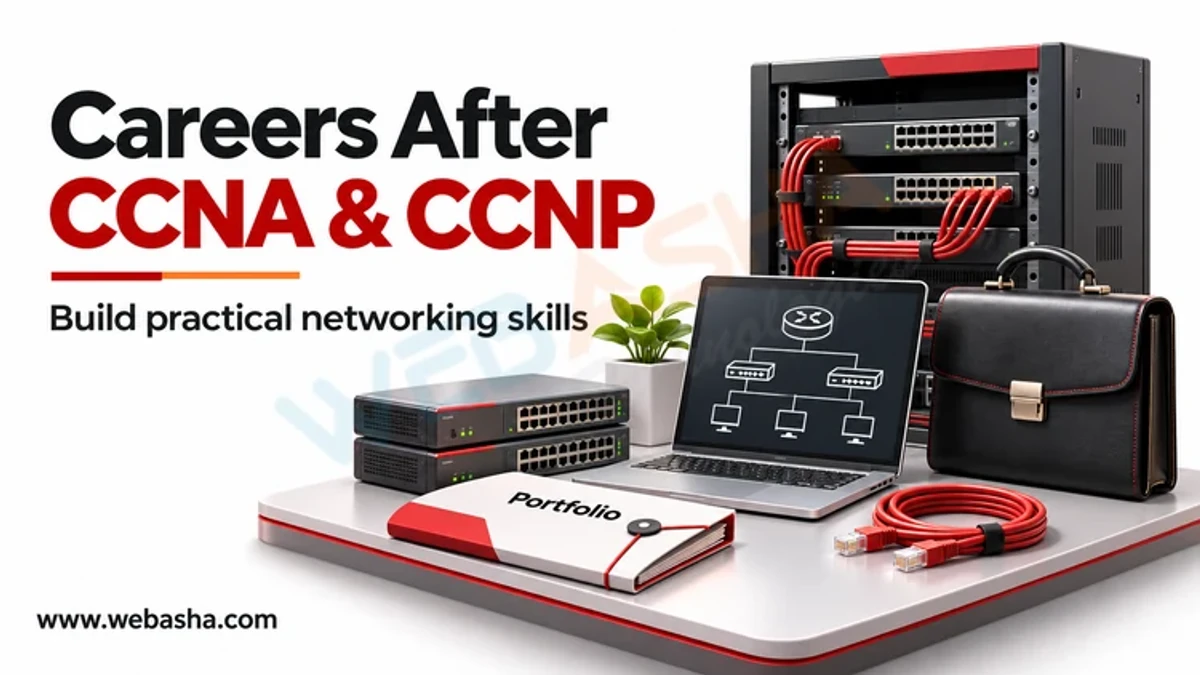
Careers After CCNA and CCNP: Roles, Skills and How to Progress
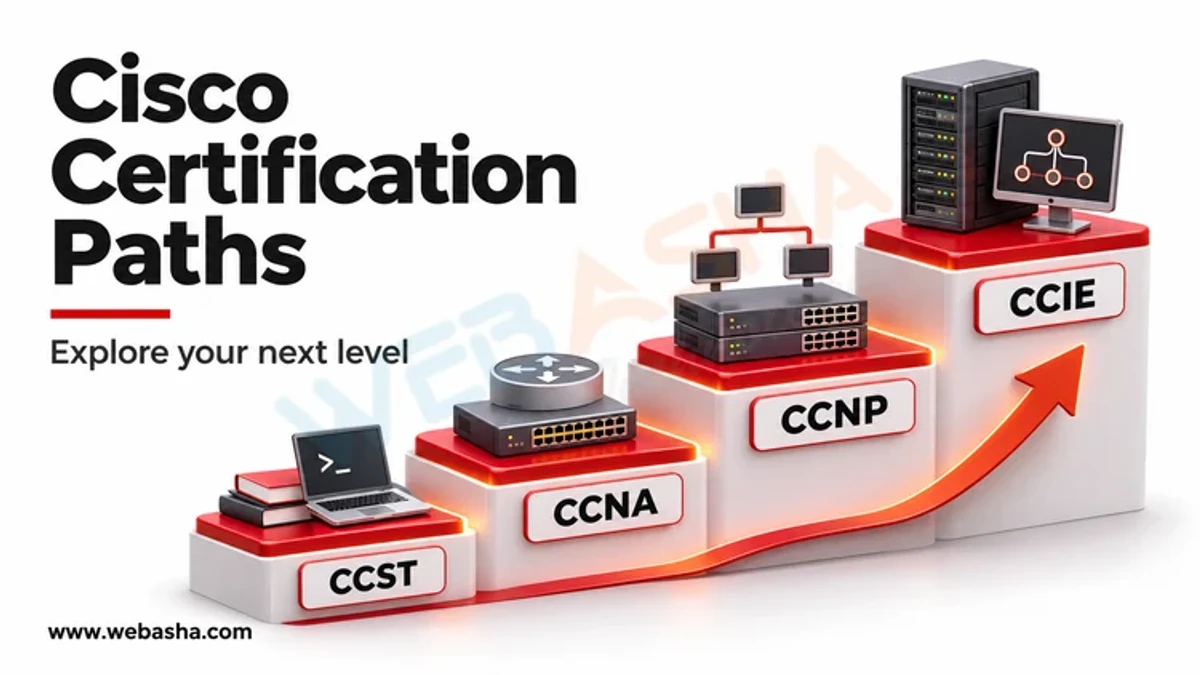
After CCNA (exam 200-301), typical first roles are network support engineer, NOC engineer, technical support engineer and junior network administrator. After a CCNP, common roles include network engineer, network security engineer, SD-WAN or wireless engineer, network automation engineer and, with experience, network architect.
Topic: Networking in IT Infrastructure · Certification preparation
Quick answer: After CCNA (exam 200-301), typical first roles are network support engineer, NOC engineer, technical support engineer and junior network administrator. After a CCNP, common roles include network engineer, network security engineer, SD-WAN or wireless engineer, network automation engineer and, with experience, network architect. Since February 2026 Cisco also offers CCNA and CCNP Automation and CCNA and CCNP Cybersecurity, which lead toward automation and SOC roles. Pay depends heavily on city, employer, experience and extra skills such as cloud, Linux, scripting and firewalls, so check current job listings rather than averages.
Key takeaways
- CCNA opens entry roles; experience plus CCNP opens engineering roles.
- Cisco's associate level now has CCNA, CCNA Automation and CCNA Cybersecurity.
- Employers value lab skills and troubleshooting as much as the certificate.
- Cloud networking, Python and security skills widen your options.
- A clear twelve-month plan beats collecting certificates.
Table of Contents
- What Jobs Can You Get After CCNA?
- What Jobs Can You Get After CCNP?
- How Did the 2026 Renames Change the Options?
- What Does the Work Actually Involve?
- Which Skills Matter Beyond the Certificate?
- How Should You Think About Pay?
- What Is a Realistic Progression Plan?
- Which Projects Impress Interviewers?
- References
What Jobs Can You Get After CCNA?
| Role | Typical tasks |
|---|---|
| NOC engineer | Monitor network health, respond to alerts, open and escalate tickets |
| Network support engineer | Configure switches and routers, fix connectivity problems, document changes |
| Technical support engineer (vendor or ISP) | Troubleshoot customer networks, replicate issues in a lab |
| Junior network administrator | Manage VLANs, Wi-Fi, user access and backups of device configurations |
| Field or implementation engineer | Install and configure equipment at customer sites |
The CCNA 200-301 covers network fundamentals, access, IP connectivity, IP services, security fundamentals, and automation and programmability.
What Jobs Can You Get After CCNP?
| CCNP track | Roles |
|---|---|
| Enterprise | Network engineer, SD-WAN engineer, wireless engineer, senior network administrator |
| Security | Network security engineer, firewall engineer, identity and NAC engineer |
| Data Center | Data centre network engineer, ACI engineer |
| Service Provider | ISP core network engineer, MPLS engineer |
| Automation | Network automation engineer, NetDevOps engineer |
| Cybersecurity | Senior SOC analyst, incident responder, threat hunter |
| Collaboration, Wireless | Voice and video engineer, wireless specialist |
Architect roles usually need several years of hands-on work plus design experience; a certificate alone rarely leads straight there.
How Did the 2026 Renames Change the Options?
On 3 February 2026 Cisco renamed DevNet Associate to CCNA Automation and DevNet Professional to CCNP Automation, and moved the cybersecurity operations certifications under the CCNA and CCNP names as CCNA Cybersecurity and CCNP Cybersecurity. Existing holders were moved across automatically. The practical effect: three associate-level starting points, each leading to a matching professional track, as listed on Cisco's certifications page.
What Does the Work Actually Involve?
A typical NOC or support day includes checking dashboards, investigating an interface flapping, confirming a change window, and writing up what was done. Common commands you will run daily:
show interfaces status
show interfaces Gi1/0/12 | include errors|drops|line protocol
show spanning-tree vlan 20
show ip route 10.20.0.0
show logging | last 50
ping 10.20.5.1 source Vlan10
traceroute 8.8.8.8
Engineers at CCNP level design changes, plan migrations, write method-of-procedure documents and act as escalation points.
Which Skills Matter Beyond the Certificate?
- Linux: network tools, log reading and running services.
- Python: automating show commands, backups and reports with libraries such as Netmiko.
- Cloud networking: VPCs, routing tables, security groups and VPN gateways in AWS or Azure.
- Firewalls: at least one vendor's firewall and its policy model.
- Security basics: the frameworks in the NICE Workforce Framework help map security roles.
- Communication: clear tickets, change requests and incident notes.
How Should You Think About Pay?
Pay varies widely by city, company type (service provider, enterprise, vendor, consultancy), shift work and the skills you add. Published averages mix all of these. For a realistic view, compare current job listings for your target role and city, talk to people in those roles, and look at official labour statistics where they exist, such as the US Bureau of Labor Statistics data for network administrators. Experience and troubleshooting ability usually move pay more than an extra certificate.
What Is a Realistic Progression Plan?
- Months 0 to 3: pass CCNA and build a home lab.
- Months 3 to 12: get a NOC or support role; log every problem you solve.
- Year 2: learn Python basics and one cloud platform; take on change work.
- Years 2 to 3: choose a CCNP track that matches the work you enjoy and the roles you want.
- After that: specialise (security, automation, data centre or design) and consider CCIE if deep expertise fits your goals.
Which Projects Impress Interviewers?
- A documented lab with VLANs, OSPF, ACLs and a site-to-site VPN, including diagrams.
- A Python script that backs up device configurations and reports changes.
- A troubleshooting write-up: symptom, investigation, root cause, fix.
- A cloud lab connecting a VPC to an on-premises router over IPsec.
Prepare with our CCNA interview questions, compare CCNP Enterprise and Security, or talk to a WebAsha training advisor.
References
Frequently Asked Questions
What's Your Reaction?
 Like
0
 Dislike
0
 Love
0
 Funny
0
 Wow
0
 Sad
0
 Angry
0

Vaishnavi is a skilled tech professional at the Ethical Hacking Training Institute in Pune, responsible for managing and optimizing the technical infrastructure that supports advanced cybersecurity education. With deep expertise in network security, backend operations, and system performance, she ensures that practical labs, online modules, and assessments run smoothly and securely. Her behind-the-scenes contributions play a vital role in delivering a seamless and secure learning experience for aspiring ethical hackers.