
Is AI Going to Replace Ethical Hackers?
Explore whether AI is poised to replace ethical hackers in cybersecurity. This article looks at the roles of AI and human hackers, examining the capabilities, limitations, and potential for synergy between AI tools and ethical hacking expertise.
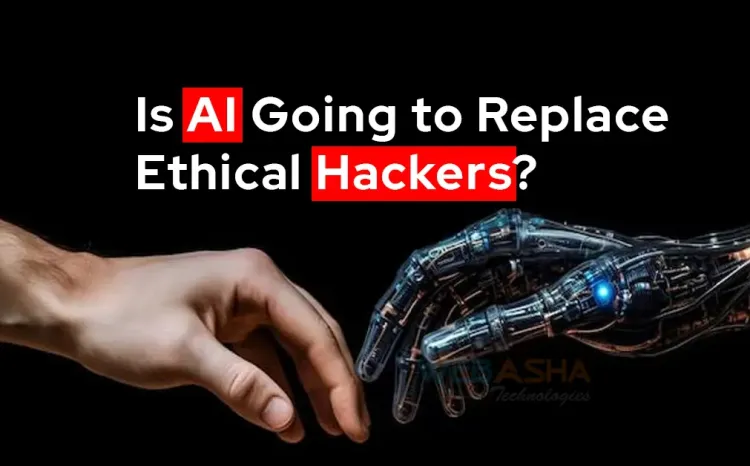
Quick answer: AI will not fully replace ethical hackers. It automates scanning, log analysis and routine testing well, but ethical hacking needs judgement, creativity, business context and responsibility for authorised testing. The likely future is hackers who use AI tools to work faster, so learning both security fundamentals and AI-assisted methods is the safest path.
Key takeaways
- AI speeds up scanning and log review, while judgement and scoping stay human.
- Attackers also use AI, so defenders need AI-literate testers.
- Learn to use AI tools with checks rather than fear them.
As artificial intelligence (AI) continues to advance, its applications in various fields are growing exponentially. One area of significant interest is cybersecurity, particularly ethical hacking. Ethical hackers, also known as white-hat hackers, are professionals who assess and improve the security of systems by identifying vulnerabilities before malicious hackers can exploit them. With AI’s capabilities in automating tasks and analyzing large data sets, a pertinent question arises: is AI going to replace ethical hackers?
What Is the Role of Ethical Hackers?
Ethical hackers matter for cybersecurity. They use their expertise to conduct penetration tests, simulate attacks, and identify security flaws in systems, networks, and applications. By doing so, they help organizations strengthen their defenses and prevent potential breaches. Ethical hacking involves a deep understanding of system architecture, programming, networking, and human psychology, making it a highly specialized field.
What Are the Capabilities of AI in Cybersecurity?
AI has made significant strides in cybersecurity, offering tools and solutions that can perform various tasks traditionally done by humans. Some of the capabilities of AI in cybersecurity include:
-
Threat Detection: AI can analyze vast amounts of data to detect anomalies and potential threats in real-time. Machine learning algorithms can identify patterns and recognize unusual behavior that might indicate a cyber attack.
-
Vulnerability Scanning: AI-powered tools can automate vulnerability scanning, identifying weaknesses in systems and applications much faster than manual methods.
-
Incident Response: AI can assist in incident response by quickly analyzing the nature of an attack, determining its impact, and suggesting appropriate remediation steps.
-
Behavioral Analysis: AI can monitor user behavior and detect deviations that may signify compromised accounts or insider threats.
-
Automated Patching: AI can automate the process of applying patches and updates to systems, reducing the window of opportunity for attackers.
What Are the Limitations of AI in Replacing Ethical Hackers?
Despite its impressive capabilities, AI has limitations that prevent it from fully replacing ethical hackers:
-
Human Ingenuity and Creativity: Ethical hacking requires creativity and ingenuity to think like a malicious hacker. Human hackers can devise unique attack vectors and strategies that AI might not anticipate. AI is excellent at pattern recognition but lacks the ability to think outside the box in the way humans can.
-
Understanding Context: Ethical hackers often rely on contextual understanding and intuition to identify potential security issues. They can assess the broader implications of vulnerabilities within the specific context of an organization’s operations, something AI still struggles to do effectively.
-
Adapting to New Threats: Cyber threats evolve rapidly, with new attack methods and vulnerabilities emerging continuously. While AI can learn and adapt, it often requires updated data and retraining to recognize new threats. Human ethical hackers can more quickly adapt their strategies to novel threats.
-
Ethical and Legal Judgments: Ethical hacking involves making ethical and legal judgments about what actions are permissible. Humans can better navigate the ethical and legal complexities of penetration testing and vulnerability disclosure, ensuring that their actions align with laws and ethical standards.
-
Complex Social Engineering Attacks: Social engineering attacks exploit human psychology and behavior to gain unauthorized access to systems. Ethical hackers can simulate these attacks and train employees to recognize them. AI, however, cannot replicate the nuanced understanding of human behavior required for effective social engineering.
The Synergy Between AI and Ethical Hackers
Rather than replacing ethical hackers, AI is more likely to complement their work, enhancing their capabilities and efficiency. Here are some ways AI can work alongside ethical hackers:
-
Enhanced Efficiency: AI can handle repetitive and time-consuming tasks such as scanning for vulnerabilities, allowing ethical hackers to focus on more complex and creative aspects of their work.
-
Data Analysis: AI can process and analyze large volumes of data quickly, identifying patterns and potential threats that might be missed by human analysts. Ethical hackers can then use these insights to conduct more targeted investigations.
-
Improved Detection: AI-powered tools can enhance threat detection and incident response, providing ethical hackers with more accurate and timely information to act upon.
-
Continuous Monitoring: AI can provide continuous monitoring of systems, offering real-time alerts and reducing the time it takes to detect and respond to security incidents.
-
Training and Simulation: AI can create realistic attack simulations for training purposes, helping ethical hackers and security teams improve their skills and readiness for real-world threats.
Conclusion
AI may change many parts of cybersecurity, but it is unlikely to replace ethical hackers entirely. Current AI technology cannot match the creativity, intuition, and contextual understanding that ethical hackers bring. More likely, AI and ethical hackers will work together, with AI making human professionals more capable and efficient, and that should give organizations stronger defenses against changing cyber threats.
As AI advances, ethical hackers must keep up with new technologies and bring AI tools into their workflows. Combining AI with human ingenuity helps the cybersecurity field handle the complex challenges it faces.

To take this further with guided labs and an instructor, see our CEH v13 AI training.
Related reading
- AI vs. Human Hackers | Who Holds the Upper Hand in Cybersecurity Battles?
- Machine Learning and Ethical Hacking | The Future of Cyber Defense
- What is the role of AI in malware analysis and can it replace human analysts in cybersecurity?
Reference
For the authoritative details, see MITRE ATT&CK.
Frequently Asked Questions
What's Your Reaction?
 Like
0
Like
0
 Dislike
0
Dislike
0
 Love
0
Love
0
 Funny
0
Funny
0
 Wow
0
Wow
0
 Sad
0
Sad
0
 Angry
0
Angry
0

With a passion for staying on the cutting edge of technology trends, I am dedicated to delivering content that not only informs but also inspires. Whether you need in-depth analysis pieces, informative guides, or thought-provoking opinion pieces, I craft content that resonates with tech enthusiasts and professionals alike.









