AI-Powered Hacking | What Are the Ethical Boundaries?
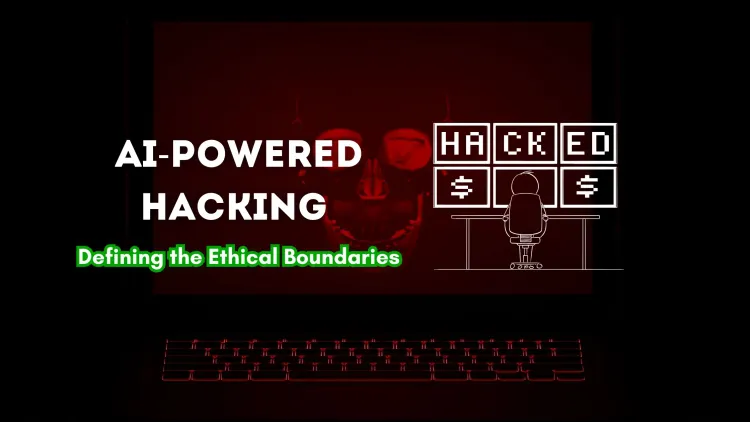
AI is transforming the world of cybersecurity, but its use in hacking raises ethical concerns. AI-powered tools help ethical hackers strengthen security, but cybercriminals also exploit AI to launch automated and sophisticated attacks. This article explores the dual role of AI in hacking, the ethical challenges, and how organizations can use AI responsibly. Key topics include AI in penetration testing, AI-driven cyberattacks, AI-generated phishing scams, and deepfake cyber fraud. Additionally, we discuss current regulations, responsible AI practices, and how security professionals can prevent AI misuse in hacking.
Quick answer: Ethical use of AI-powered hacking tools means testing only systems you have written permission to test, staying within the agreed scope, protecting any data you touch and reporting findings responsibly. Using AI to attack systems without authorisation is illegal, however clever the tool is. Consent, scope and accountability are the boundaries.
Key takeaways
- Written permission and a defined scope are the legal line.
- Do not feed client data to public AI tools.
- Log what AI tools did during the test.
Table of Contents
- Introduction
- The Dual Nature of AI in Hacking
- Key Ethical Questions in AI-Powered Hacking
- The Role of Regulations in AI-Powered Hacking
- How Organizations Can Ensure Ethical AI Hacking
- Conclusion
Introduction
Artificial Intelligence (AI) has transformed various industries, including cybersecurity. However, AI’s role in hacking and penetration testing raises critical ethical questions. While AI-powered tools help cybersecurity professionals identify vulnerabilities, the same technology can be exploited by cybercriminals to launch automated and highly sophisticated attacks.
The ethical boundaries of AI-powered hacking matter, organizations can use AI responsibly, and there are potential risks of AI being misused for unethical hacking practices.
The Dual Nature of AI in Hacking
AI matters for both offensive and defensive cybersecurity. Organizations use AI-powered hacking tools for ethical penetration testing, vulnerability assessments, and automated reconnaissance. However, the same tools can be exploited by hackers to launch AI-driven cyberattacks, create malware, and bypass security measures.
Ethical Uses of AI in Hacking
Organizations use AI-driven penetration testing and cybersecurity tools to strengthen their digital security:
- AI-Powered Vulnerability Scanning – AI identifies weaknesses in systems before attackers do.
- Automated Ethical Hacking – AI can simulate cyberattacks to test security defenses.
- Threat Hunting & Anomaly Detection – AI detects suspicious activities and responds to threats in real time.
- AI in Red Teaming – Security teams use AI to mimic cybercriminal tactics to improve defenses.
Unethical Uses of AI in Hacking
Hackers use AI to automate and optimize cyberattacks, leading to:
- AI-Generated Phishing Emails – AI crafts personalized phishing messages that bypass spam filters.
- Deepfake Attacks – AI creates realistic fake voices and videos for fraud and misinformation.
- AI-Powered Malware – AI helps malware adapt to avoid detection and encryption-based defenses.
- Automated Brute-Force Attacks – AI speeds up password-cracking attempts using machine learning.
- AI-Driven Social Engineering – AI chatbots impersonate real individuals to steal sensitive data.
Key Ethical Questions in AI-Powered Hacking
1. Should AI Be Used for Offensive Hacking?
AI is a powerful tool for penetration testers and ethical hackers, but who decides where to draw the line? Should AI simulate attacks for training, or does it cross an ethical boundary when used for real offensive operations?
2. How Can We Ensure AI Is Used Ethically in Cybersecurity?
- Regulations and AI Governance – Governments and organizations must establish clear guidelines for AI use in ethical hacking.
- Responsible AI Development – Developers should limit AI models from being misused for illegal hacking activities.
- Ethical AI Pentesting – Security professionals should ensure AI tools are used for defensive purposes only.
3. Can AI Be Controlled Once It’s Out in the Wild?
Once an AI-powered hacking tool is released, it can be exploited by cybercriminals. Open-source AI hacking frameworks, like ChatGPT-based hacking assistants and AI-driven reconnaissance tools, pose a major ethical risk.
4. What Happens If AI Outperforms Human Hackers?
AI is evolving rapidly, and soon, it may surpass human hackers in finding and exploiting vulnerabilities. The ethical dilemma is whether we should continue developing AI for cybersecurity if it also empowers cybercriminals.
The Role of Regulations in AI-Powered Hacking
Current AI and Cybersecurity Regulations
Governments worldwide are working on AI policies to prevent unethical AI use in hacking. Some notable regulations include:
- EU AI Act – Regulates high-risk AI applications, including cybersecurity tools.
- U.S. National AI Strategy – Focuses on responsible AI development for cybersecurity.
- ISO/IEC 27001 Compliance – Ensures organizations follow ethical AI cybersecurity practices.
Future AI Governance in Hacking
- AI Transparency Laws – Requiring AI cybersecurity tools to disclose ethical use cases.
- Ethical AI Certifications – Companies may need certification before deploying AI-powered hacking tools.
- Stricter Cybercrime Penalties – Governments could introduce harsher penalties for AI-assisted cybercrimes.
How Organizations Can Ensure Ethical AI Hacking
1. Implement AI Ethics Policies
Organizations must create strict AI usage policies, ensuring AI tools are used only for security assessments, not offensive hacking.
2. Train Cybersecurity Teams on AI Ethics
Ethical hacking teams should be trained to use AI responsibly, avoiding any unethical exploitation of AI capabilities.
3. Restrict Access to AI-Powered Hacking Tools
Companies should control who has access to AI-based pentesting frameworks to prevent unauthorized or unethical use.
4. Monitor AI for Malicious Behavior
AI cybersecurity tools should include built-in monitoring mechanisms to prevent their misuse in unethical hacking activities.
5. Advocate for Responsible AI Development
AI developers and researchers should work towards building AI that prioritizes security and prevents unethical hacking.
Conclusion
AI-powered hacking is a double-edged sword that presents both opportunities and risks. While AI can enhance penetration testing, vulnerability scanning, and cyber defense strategies, it also empowers cybercriminals to launch more sophisticated attacks.
The ethical boundaries of AI hacking depend on responsible development, strict regulations, and ethical cybersecurity practices. Organizations, policymakers, and security professionals must collaborate to ensure AI is used for protection, not exploitation.
By enforcing AI governance and ethical hacking standards, we can using AI without crossing into dangerous territories.
To take this further with guided labs and an instructor, see our Certified Ethical Hacker exam centre.
Related reading
- The Ethics of Using AI for Hacking and Security | Balancing Protection and Risk
- AI in Hacking | Ethical Innovation or Dangerous Threat? Understanding the Dual Nature of AI in Cybersecurity
- Is AI Making Hacking Easier for Attackers? Exploring the Threats and Countermeasures
Reference
For the authoritative details, see Ministry of Electronics and IT (India).
Frequently Asked Questions
What's Your Reaction?
 Like
0
Like
0
 Dislike
0
Dislike
0
 Love
0
Love
0
 Funny
0
Funny
0
 Wow
0
Wow
0
 Sad
0
Sad
0
 Angry
0
Angry
0

Vaishnavi is a skilled tech professional at the Ethical Hacking Training Institute in Pune, responsible for managing and optimizing the technical infrastructure that supports advanced cybersecurity education. With deep expertise in network security, backend operations, and system performance, she ensures that practical labs, online modules, and assessments run smoothly and securely. Her behind-the-scenes contributions play a vital role in delivering a seamless and secure learning experience for aspiring ethical hackers.

![Top 10 Famous Ethical Hackers in India [Updated 2026]](https://www.webasha.com/blog/uploads/images/202608/image_450x280_b3317756e192c8d5e1fb674259f1a0c3.jpg)