The Ethics of Using AI for Hacking and Security | Balancing Protection and Risk
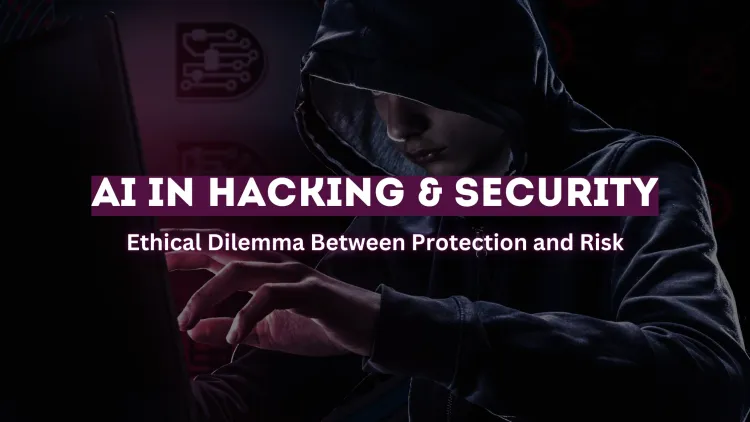
Artificial Intelligence (AI) is reshaping cybersecurity by enhancing threat detection, automating security measures, and improving overall cyber defense. However, AI is also being weaponized by hackers to launch automated attacks, create deepfake scams, crack passwords, and evade detection. This dual-use of AI raises significant ethical concerns, such as privacy violations, bias in AI security systems, lack of accountability, and the potential for AI-driven cyber warfare. To ensure responsible AI usage in cybersecurity, organizations must implement ethical AI policies, strengthen regulations, and invest in transparency and fairness in AI-driven security tools. While AI remains a powerful asset for both ethical hackers and cybercriminals, governments, corporations, and cybersecurity professionals must collaborate to prevent AI from becoming a tool for large-scale cyber threats.
Quick answer: AI is dual-use: the same capability that protects systems can be used to attack them. The key ethical concerns are privacy, bias, misuse, accountability and lack of transparency. Organisations keep AI use responsible with clear policies, written authorisation for testing, human oversight, audit trails and ongoing review of how models are used.
Key takeaways
- Authorisation separates ethical from criminal use.
- Protect client data when using AI tools.
- Be transparent with clients on AI use.
Table of Contents
- Introduction
- What Is the Role of AI in Cybersecurity and Hacking?
- The Ethical Dilemma: AI for Protection vs. AI for Attacks
- Key Ethical Concerns in AI-Driven Cybersecurity
- Ensuring Ethical Use of AI in Cybersecurity
- Conclusion
Introduction
Artificial Intelligence (AI) is changing cybersecurity by enhancing threat detection, automating responses, and strengthening defenses against cyberattacks. However, AI is also being exploited for hacking, enabling cybercriminals to launch automated, sophisticated, and hard-to-detect cyberattacks. This dual-use nature of AI presents an ethical dilemma: How can AI be used responsibly in cybersecurity without enabling malicious activities?
This post covers the ethical considerations of using AI for hacking and security, the risks it poses, and how organizations and policymakers can ensure AI is deployed responsibly.
What Is the Role of AI in Cybersecurity and Hacking?
How Is AI Used in Cybersecurity?
AI is an invaluable asset in defensive security operations, helping organizations combat cyber threats through:
- Threat Detection & Prevention: AI-powered Intrusion Detection Systems (IDS) and Intrusion Prevention Systems (IPS) monitor network traffic for suspicious behavior.
- Automated Incident Response: AI-powered Security Orchestration, Automation, and Response (SOAR) tools respond to security incidents faster than humans.
- Vulnerability Management: AI identifies weaknesses in systems and recommends patches before attackers exploit them.
- Fraud Detection: AI analyzes transaction patterns to detect fraudulent activities in banking and e-commerce.
- Phishing Detection: AI filters emails and analyzes sender behavior to block phishing attempts.
How Is AI Used for Hacking?
While AI strengthens cybersecurity, cybercriminals also exploit AI for offensive hacking tactics, such as:
- AI-Powered Malware: Attackers use AI to create malware that adapts to detection methods.
- Deepfake Attacks: AI-generated deepfakes deceive people, enabling fraud, identity theft, and misinformation campaigns.
- Automated Phishing & Social Engineering: AI enhances spear-phishing attacks by personalizing messages and bypassing email security filters.
- Password Cracking: AI-driven brute-force attacks can crack passwords much faster than traditional methods.
- Evasion Techniques: AI helps attackers evade antivirus software and endpoint detection tools.
The use of AI in both cyber defense and cyber offense creates ethical challenges that need to be addressed.
The Ethical Dilemma: AI for Protection vs. AI for Attacks
AI's role in cybersecurity presents a dual-use problem, meaning it can be used for both good and bad purposes. Here are some key ethical considerations:
| Ethical Concern | Challenges |
|---|---|
| Dual-Use of AI | AI can be used to enhance security or develop autonomous hacking tools. Who controls AI deployment? |
| AI Bias & Discrimination | AI models may unintentionally discriminate against certain groups, leading to unfair cybersecurity policies. |
| Privacy Violations | AI-powered surveillance may infringe on individuals' privacy rights. Where is the boundary between security and intrusion? |
| Lack of Accountability | Who is responsible when AI-driven cybersecurity tools make a wrong decision or cause harm? |
| Weaponization of AI | Governments and organizations may use AI for offensive cyber warfare, leading to global security threats. |
Ethical AI development in cybersecurity must ensure transparency, accountability, and responsible use while preventing misuse by bad actors.
Key Ethical Concerns in AI-Driven Cybersecurity
1. Ethical Hacking vs. Malicious Hacking
- Ethical hackers (white-hat hackers) use AI for penetration testing and security audits to strengthen defenses.
- Malicious hackers (black-hat hackers) use AI to automate cyberattacks, steal data, and disrupt systems.
- Grey-hat hackers operate between legal and illegal domains, raising ethical concerns about whether AI should be used for unauthorized security testing.
2. AI and Privacy Invasion
- AI in cybersecurity relies on analyzing large datasets, but this raises concerns about data privacy and user consent.
- Governments and corporations may use AI-driven surveillance tools to monitor citizens and employees, leading to ethical concerns about misuse.
3. Bias in AI Cybersecurity Systems
- AI models can inherit biases from training data, leading to false positives or discrimination.
- Biased AI-driven security measures may wrongly flag individuals or disproportionately impact specific groups.
4. AI in Cyber Warfare and State-Sponsored Attacks
- Governments are using AI to develop autonomous cyber weapons for national security.
- The rise of AI-powered cyber warfare raises global security risks and ethical concerns about uncontrolled AI-based attacks.
5. Accountability and Regulation Challenges
- Who is responsible when AI makes a wrong decision, such as locking out a legitimate user or missing a critical cyber threat?
- AI-driven cybersecurity tools require strict governance, transparency, and regulatory oversight to prevent unethical use.
Ensuring Ethical Use of AI in Cybersecurity
Organizations and policymakers must implement ethical frameworks to ensure AI is used responsibly. Key steps include:
- Developing Ethical AI Guidelines: Implement AI governance policies to prevent misuse in hacking and surveillance.
- Ensuring Transparency in AI Models: AI cybersecurity systems should be explainable and free from bias.
- Strengthening Cybersecurity Laws: Governments should enforce AI security regulations to prevent unauthorized AI-driven cyberattacks.
- Investing in AI Security Research: Ethical AI development must focus on secure AI models that resist manipulation by hackers.
- Balancing Privacy and Security: AI-driven security tools should be privacy-friendly and compliant with GDPR, CCPA, and cybersecurity standards.
Conclusion
AI is transforming cybersecurity by enhancing threat detection, automating responses, and improving defense mechanisms. However, the same AI capabilities are being exploited by hackers to launch sophisticated attacks. This dual-use nature of AI presents ethical challenges that require careful regulation, responsible AI development, and international cooperation.
While AI will continue to be a key player in cybersecurity, it must be used ethically and responsibly to protect digital assets without violating privacy or enabling cybercriminals. The future of AI-driven cybersecurity depends on finding the right balance between technological advancements and ethical considerations to ensure AI remains a force for good in cybersecurity.
To take this further with guided labs and an instructor, see our practical LLM security labs.
Related reading
- AI-Powered Hacking | What Are the Ethical Boundaries?
- The Ethics of Using AI in Cybersecurity Research | Balancing Innovation and Responsibility
- The Future of AI in Cybersecurity | Ethical Challenges, Risks, and Solutions
Reference
For the authoritative details, see Ministry of Electronics and IT (India).
Frequently Asked Questions
What's Your Reaction?
 Like
0
 Dislike
0
 Love
0
 Funny
0
 Wow
0
 Sad
0
 Angry
0

Vaishnavi is a skilled tech professional at the Ethical Hacking Training Institute in Pune, responsible for managing and optimizing the technical infrastructure that supports advanced cybersecurity education. With deep expertise in network security, backend operations, and system performance, she ensures that practical labs, online modules, and assessments run smoothly and securely. Her behind-the-scenes contributions play a vital role in delivering a seamless and secure learning experience for aspiring ethical hackers.