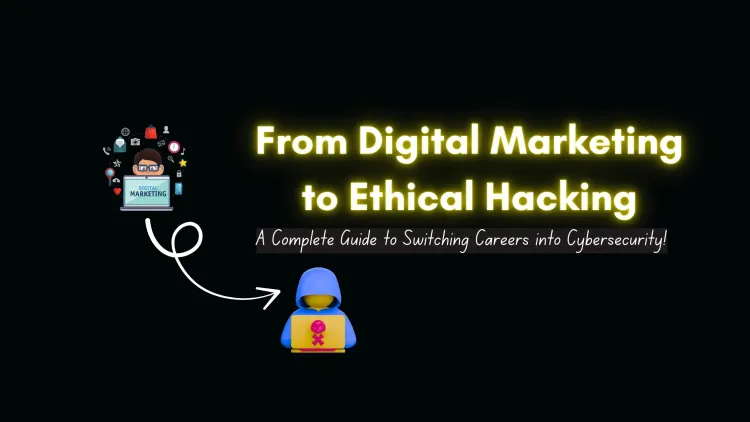
Can a Digital Marketer Switch to Ethical Hacking? A Complete Guide to Transitioning from Marketing to Cybersecurity
With the rise of cyber threats and data breaches, cybersecurity has become a highly lucrative career path. Many professionals, including digital marketers, are considering a switch to ethical hacking due to its growing demand and high salaries. But can a digital marketer successfully transition into ethical hacking? Yes! While digital marketing and ethical hacking are vastly different fields, some transferable skills—such as analytical thinking, problem-solving, and technical familiarity—can ease the transition. This guide explores the key differences between digital marketing and ethical hacking, essential skills needed, certifications, learning resources, and a step-by-step plan to move from marketing to cybersecurity. It also covers common challenges, career opportunities, and frequently asked questions to help digital marketers make a smooth transition into ethical hacking. If you're a digital marketer with an interest in cybersecurity, this blog will provide a roadmap to buildin
Quick answer: Yes, a digital marketer can switch to ethical hacking. Your analytical habits and web knowledge help, but you must build technical basics from scratch: networking, Linux, web technologies and security tools. Plan a gradual path of study and lab practice, then target junior security roles. Expect a steep first few months.
Key takeaways
- Your web analytics and tracking knowledge helps you understand how websites collect data, which is useful in web testing.
- Build networking and Linux basics first, because they are new to most marketers.
- Consider application security or GRC roles as a bridge before pentesting.
Table of Contents
- Introduction
- Understanding the Differences: Digital Marketing vs. Ethical Hacking
- Why Digital Marketers Can Transition to Ethical Hacking
- Step-by-Step Guide: How to Switch from Digital Marketing to Ethical Hacking
- Challenges Digital Marketers May Face in Ethical Hacking
- Conclusion
Introduction
With the rise in cybersecurity threats, ethical hacking has become a highly sought-after field. Many professionals from non-technical backgrounds, including digital marketers, are considering a switch to ethical hacking due to its lucrative career prospects and exciting challenges. But is it possible to transition from digital marketing to ethical hacking? The answer is yes, with the right mindset, skills, and dedication, a digital marketer can successfully move into ethical hacking.
In this blog, we will explore:
- The key differences between digital marketing and ethical hacking
- Why digital marketers can switch to ethical hacking
- Essential skills needed for ethical hacking
- Step-by-step guide to transitioning into ethical hacking
- Best certifications and learning resources for beginners
Let’s dive in!
Understanding the Differences: Digital Marketing vs. Ethical Hacking
While digital marketing and ethical hacking are two completely different fields, they do share some common ground, such as analyzing data, understanding networks, and using technical tools. Here’s a comparison:
| Aspect | Digital Marketing | Ethical Hacking |
|---|---|---|
| Main Goal | Promote brands, drive traffic, increase sales | Identify and fix security vulnerabilities |
| Key Skills | SEO, PPC, social media marketing, analytics | Networking, penetration testing, programming |
| Tools Used | Google Analytics, SEMrush, HubSpot, Meta Ads | Metasploit, Nmap, Burp Suite, Wireshark |
| Technical Knowledge | Basic web technologies (HTML, CSS, JavaScript) | Advanced cybersecurity concepts |
| Career Growth | Marketing manager, brand strategist, consultant | Security analyst, penetration tester, red team specialist |
Even though digital marketers don’t work in cybersecurity, they already have some transferable skills that can help in the transition to ethical hacking.
Why Digital Marketers Can Transition to Ethical Hacking
Many digital marketers worry that they lack the technical expertise needed to become ethical hackers. However, certain overlapping skills can make this transition easier:
- Analytical Thinking – Digital marketers analyze campaign performance, while ethical hackers analyze security vulnerabilities.
- Technical Familiarity – Digital marketers work with websites, servers, and online tools, which helps in understanding hacking concepts.
- Problem-Solving Ability – Just as marketers solve customer problems, ethical hackers solve security issues.
- Curiosity for Tech – Many digital marketers already have an interest in technology, which helps in ethical hacking.
- Basic Coding Knowledge – Marketers familiar with HTML, JavaScript, and Python can quickly learn cybersecurity scripting.
With proper training and certifications, digital marketers can build a strong foundation in ethical hacking.
Step-by-Step Guide: How to Switch from Digital Marketing to Ethical Hacking
1. Learn Cybersecurity Fundamentals
Before jumping into ethical hacking, you need to understand the basics of cybersecurity, including:
- Networking concepts (IP addresses, DNS, firewalls, VPNs)
- Cyber threats and vulnerabilities (malware, phishing, SQL injection)
- Security protocols and encryption (SSL/TLS, hashing, cryptography)
2. Get Familiar with Ethical Hacking Tools
Ethical hackers use specialized tools to test security defenses. Some essential tools include:
- Nmap – For network scanning
- Wireshark – For packet analysis
- Burp Suite – For web application security testing
- Metasploit – For penetration testing
- John the Ripper – For password cracking
3. Learn Programming and Scripting
While not mandatory, learning a few programming languages will give you an advantage:
- Python – Useful for automation and scripting attacks
- Bash – Helps in Linux-based security operations
- SQL – Essential for database security and SQL injection testing
4. Gain Hands-on Experience with Ethical Hacking Labs
Practical experience matters in ethical hacking. You can practice legally on platforms like:
- TryHackMe – Beginner-friendly cybersecurity training
- Hack The Box – Advanced penetration testing challenges
- OWASP WebGoat – A platform to learn web security
5. Get Certified in Ethical Hacking
Earning cybersecurity certifications will make you job-ready. Some top certifications include:
- Certified Ethical Hacker (CEH) – Ideal for beginners
- Offensive Security Certified Professional (OSCP) – Advanced penetration testing
- CompTIA Security+ – Entry-level security certification
- Certified Information Systems Security Professional (CISSP) – For security management roles
6. Apply for Ethical Hacking Jobs and Internships
Once you have gained skills and certifications, start applying for:
- Internships in cybersecurity companies
- Entry-level roles like security analyst, SOC analyst
- Bug bounty programs to earn money and gain experience
With time and experience, you can work as a penetration tester, cybersecurity consultant, or ethical hacker.
Challenges Digital Marketers May Face in Ethical Hacking
Transitioning to ethical hacking from digital marketing is possible, but it comes with some challenges:
- Steep Learning Curve – Ethical hacking requires learning complex technical concepts.
- Time Commitment – Acquiring cybersecurity skills takes months of dedicated learning.
- Hands-on Practice – You must gain practical experience in real-world hacking scenarios.
- Certifications Cost – Some ethical hacking certifications can be expensive.
However, with dedication and the right resources, digital marketers can overcome these challenges and build a successful career in cybersecurity.
Conclusion
Switching from digital marketing to ethical hacking is challenging but achievable. Digital marketers already possess skills like data analysis, problem-solving, and basic technical knowledge, which can help in learning cybersecurity. By studying ethical hacking, getting hands-on experience, and obtaining certifications, digital marketers can successfully transition into the exciting world of ethical hacking.
If you are passionate about cybersecurity and willing to put in the effort, this career switch can open new opportunities with high salaries, job security, and a rewarding career path.
To take this further with guided labs and an instructor, see our online CEH v13 training.
Related reading
- Can a Digital Marketer Switch to Cybersecurity? A Complete Guide to Career Transition, Skills, and Job Opportunities
- How to Transition from IT Support to Ethical Hacking | A Complete Guide to Building a Career in Cybersecurity
- Is Ethical Hacking Hard to Learn? A Beginner's Guide to Mastering Ethical Hacking with Ease
Frequently Asked Questions
What's Your Reaction?
 Like
0
Like
0
 Dislike
0
Dislike
0
 Love
0
Love
0
 Funny
0
Funny
0
 Wow
0
Wow
0
 Sad
0
Sad
0
 Angry
0
Angry
0

Vaishnavi is a skilled tech professional at the Ethical Hacking Training Institute in Pune, responsible for managing and optimizing the technical infrastructure that supports advanced cybersecurity education. With deep expertise in network security, backend operations, and system performance, she ensures that practical labs, online modules, and assessments run smoothly and securely. Her behind-the-scenes contributions play a vital role in delivering a seamless and secure learning experience for aspiring ethical hackers.




![Top 10 Famous Ethical Hackers in India [Updated 2026]](https://www.webasha.com/blog/uploads/images/202608/image_450x280_b3317756e192c8d5e1fb674259f1a0c3.jpg)