How to Install Parrot OS in VirtualBox or VMware: Settings, Steps and Lab Safety
Parrot OS is a Debian-based Linux distribution designed for cybersecurity professionals, ethical hackers, and privacy enthusiasts. It provides robust tools for penetration testing, forensics, cryptography, and development. With features like sandboxing, privacy tools, and lightweight design, Parrot OS is a versatile platform for digital security. This guide includes step-by-step instructions for installing Parrot OS on VMware Workstation and a detailed comparison with Kali Linux, highlighting resource usage, user interface, and community support. Parrot OS is a preferred choice for its secure, lightweight, and privacy-conscious environment.
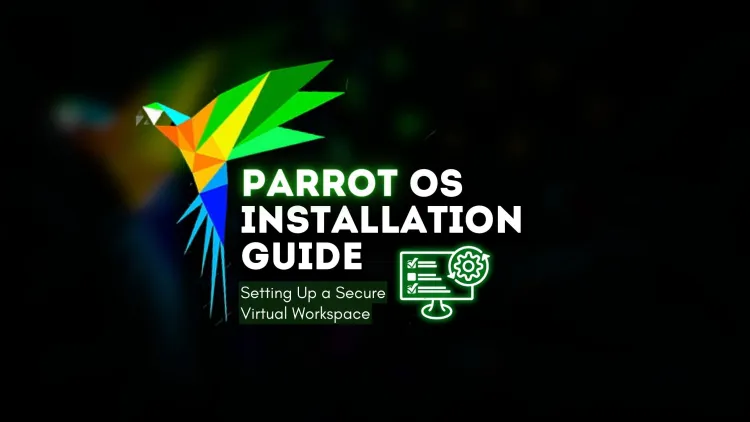
Quick answer: To install Parrot OS in a virtual machine, download the ISO from the official Parrot site, create a Debian 64-bit VM with at least 4 GB RAM, 2 CPUs and 40 GB disk, boot the ISO, run the installer, then update and snapshot. Use it only on your own lab machines or with written permission.
Key takeaways
- Download the ISO only from the official Parrot site and verify its checksum.
- A virtual machine keeps security tools isolated from your main system.
- Use host-only or NAT networks for lab targets; never scan networks you do not own or have written permission to test.
- Take a snapshot after the first update so you can reset the lab.
- Parrot is Debian-based; Kali Linux is a common alternative.
What is Parrot OS?
Parrot OS is a Debian-based Linux distribution from the Parrot Project. It has a Security edition with tools for penetration testing, digital forensics and privacy, and a Home edition for everyday use. Security students use it as a lab operating system, much like Kali Linux. Tools should be used only on systems you own or have written permission to test; unauthorised access is an offence under India's Information Technology Act, 2000.
What do you need before you start?
- A computer with virtualisation enabled in the BIOS or UEFI.
- VirtualBox or VMware Workstation.
- The Parrot ISO from the official site, parrotsec.org, and its published checksum.
- Enough free space: at least 40 GB for the virtual disk is a sensible starting point.
What VM settings should you use?
These are practical starting values for a lab, not official requirements. Check the Parrot documentation for current recommendations.
| Setting | Suggested value |
|---|---|
| Type and version | Linux, Debian 64-bit |
| Memory | 4 GB (2 GB can work for light use) |
| CPUs | 2 |
| Disk | 40 GB or more, dynamically allocated |
| Graphics | Enable 3D acceleration only if the display is stable; allocate video memory generously |
| Network | NAT for internet; host-only or an internal network for attack-and-defence labs |
How do you install it in VirtualBox?
- Download the ISO and verify its checksum with
sha256sumor the equivalent on your system. - In VirtualBox, choose New, name the machine, select the ISO, and set type Linux and version Debian 64-bit.
- Assign memory, CPUs and a dynamically allocated disk using the table above.
- Start the VM and choose the installer from the boot menu.
- Select language, location and keyboard layout.
- Choose guided partitioning using the entire virtual disk. This only affects the virtual disk, not your real computer.
- Create a user and a strong password. Avoid easy default credentials.
- Finish, remove the ISO when asked and reboot.
How is VMware Workstation different?
The steps are the same in outline: create a new virtual machine, point it to the ISO, choose a Debian 64-bit guest type and allocate resources. VMware Tools or open-vm-tools gives better display and clipboard features. Check which VMware desktop products are currently available and how they are licensed, since the offering has changed.
What should you do after the first boot?
sudo apt update
sudo apt full-upgrade- Reboot after the update.
- Install guest additions or open-vm-tools if the screen size or clipboard does not work.
- Take a snapshot called "clean install".
- Create a separate lab network with intentionally vulnerable machines you set up yourself, such as those from a vulnerable-by-design project, and keep it away from real devices.
What if something goes wrong?
| Problem | Likely fix |
|---|---|
| Black screen after boot | Change graphics settings, disable 3D acceleration or choose a different display controller |
| Cannot see 64-bit guest options | Enable virtualisation in firmware; disable conflicting hypervisor features on Windows if needed |
| Very slow performance | Allocate more memory, use an SSD, close other virtual machines |
| No network | Check the adapter type and restart networking |
Common mistakes
- Downloading ISOs from unofficial mirrors.
- Using bridged networking on a shared network and scanning devices that are not yours.
- Skipping the snapshot.
- Using the lab for anything beyond authorised practice.
Next steps
Read Parrot OS for beginners for essential tools. To study the field with guidance, see the ethical hacking course or the cyber security course.
Related reading
Frequently Asked Questions
What's Your Reaction?
 Like
0
Like
0
 Dislike
0
Dislike
0
 Love
0
Love
0
 Funny
0
Funny
0
 Wow
0
Wow
0
 Sad
0
Sad
0
 Angry
0
Angry
0

Vaishnavi is a skilled tech professional at the Ethical Hacking Training Institute in Pune, responsible for managing and optimizing the technical infrastructure that supports advanced cybersecurity education. With deep expertise in network security, backend operations, and system performance, she ensures that practical labs, online modules, and assessments run smoothly and securely. Her behind-the-scenes contributions play a vital role in delivering a seamless and secure learning experience for aspiring ethical hackers.