
What is the Importance of Certifications in Cyber Security Career
Discover the importance of certifications in cyber security training and explore some of the most valuable certifications available today, including CISSP, CEH, CISM, CCSP, and CompTIA Security+. Enhance your skills and advance your career in the field of information security.
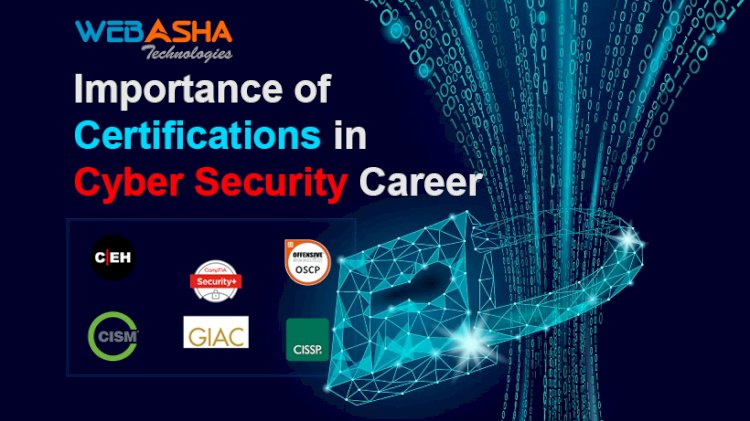
Quick answer: Certifications matter in cyber security because they prove, to employers and clients, that you have specific skills, tested against a common standard. They help you stand out when hiring is competitive and show you keep up with new threats. They work best together with hands-on practice, since employers also want real lab or job experience.
Key takeaways
- Certifications show employers you hold a defined skill set, but they do not replace practical ability.
- Choose one matching the job: CEH for awareness, OSCP for practical testing, CISSP for management.
- Certifications expire or require renewal, so plan for that.
Cyber security professionals need to stay up to date with the latest skills, techniques and knowledge. One way to demonstrate that knowledge and expertise is through certifications. Here is why certifications matter in cyber security training, and some of the most valuable certifications available today.
What are Certifications?
Certifications are a way to demonstrate knowledge and proficiency in a specific area. They are typically awarded by professional organizations or vendors in the field, and are recognized as a way to validate a person's expertise. Certifications can be earned through a combination of education, training, and experience, and often require passing a rigorous exam.
Why are Certifications Important in Cyber Security Training?
Cyber security is a constantly evolving field, with new threats emerging on a regular basis. In order to stay ahead of these threats, cyber security professionals must have up-to-date knowledge and skills. Certifications are a way to demonstrate that knowledge and skillset to potential employers, clients, and colleagues. They can also help professionals stand out in a crowded job market and advance their careers.
Another reason certifications are important in cyber security training is that they provide a standardized way to measure a person's knowledge and skills. This is particularly important in a field where there are many different specialties and areas of expertise. For example, a certification in ethical hacking demonstrates that a person has a deep understanding of hacking techniques and can use them in an ethical manner to identify vulnerabilities in a company's network. Similarly, a certification in cloud security shows that a person has the knowledge and skills to secure cloud-based systems and protect sensitive data stored in the cloud.
Some certifications also require continuing education to maintain the credential. This ensures that professionals are staying up to date with the latest trends and technologies in the field, and are continuously improving their skills.
Most Valuable Certifications in Cyber Security Training
There are many certifications available in the field of cyber security, but some are more valuable than others. Here are some of the most highly regarded certifications in the industry:
1. Certified Information Systems Security Professional (CISSP)
The CISSP certification is offered by the International Information System Security Certification Consortium (ISC)². It is widely recognized as one of the most valuable certifications in the field of cyber security. To earn the CISSP certification, candidates must have at least five years of experience in two or more of the eight CISSP domains, which include security and risk management, asset security, security architecture and engineering, and more. They must also pass a rigorous exam.
2. Certified Ethical Hacker (CEH)
The CEH certification is offered by the International Council of Electronic Commerce Consultants (EC-Council). It is designed for professionals who want to learn how to use hacking techniques to identify vulnerabilities in a company's network. To earn the CEH certification, candidates must attend official CEH training or have at least two years of experience in the field of information security. They must also pass an exam.
3. Certified Information Security Manager (CISM)
The CISM certification is offered by ISACA and is designed for professionals who are responsible for managing, designing, and assessing an organization's information security program. To earn the CISM certification, candidates must have at least five years of experience in information security management, including three years in the role of a security manager. They must also pass an exam.
4. Certified Cloud Security Professional (CCSP)
The CCSP certification is offered by (ISC)² and is designed for professionals who work with cloud computing. To earn the CCSP certification, candidates must have at least five years of experience in information technology, including three years of experience in information security and one year of experience working with cloud computing. They must also pass an exam.
5. CompTIA Security+
The CompTIA Security+ certification is an entry-level certification that demonstrates foundational knowledge in the field of cyber security. It is widely recognized as a valuable certification for professionals looking to start their career in cyber security. To earn the Security+ certification, candidates must pass an exam that covers topics such as threat management, cryptography, identity management, and more.
Conclusion
Certifications are a valuable way to demonstrate knowledge, expertise, and credibility. They provide a standardized way to measure a person's skills and knowledge, and can help professionals stand out in a crowded job market. The certifications mentioned here are among the most highly regarded in the industry, but there are many other certifications available as well. By earning one or more of these certifications, professionals can demonstrate their commitment to the field of cyber security and improve their career opportunities.
Related reading
- Cyber Security Training and Certification | Options for Online and In-Person Classes
- SOC Analyst Certification Requirements 2026
- Top 10 Cybersecurity Certifications to Boost Your Career in 2026
Reference
For the authoritative details, see ISC2 certifications.
Frequently Asked Questions
What's Your Reaction?
 Like
0
Like
0
 Dislike
0
Dislike
0
 Love
0
Love
0
 Funny
0
Funny
0
 Wow
0
Wow
0
 Sad
0
Sad
0
 Angry
0
Angry
0

With a passion for staying on the cutting edge of technology trends, I am dedicated to delivering content that not only informs but also inspires. Whether you need in-depth analysis pieces, informative guides, or thought-provoking opinion pieces, I craft content that resonates with tech enthusiasts and professionals alike.