Online or Classroom Cybersecurity Training: How to Choose
Choose cybersecurity training by the work you need to learn, the practice and feedback it provides, and whether you can reliably use its delivery arrangement. Online courses can be live, recorded or independent; classroom courses can also differ in lab time and support. Neither label proves quality or leads automatically to a professional credential.
Topic: Cybersecurity Careers & Certifications in Cybersecurity & Ethical Hacking · Certification preparation
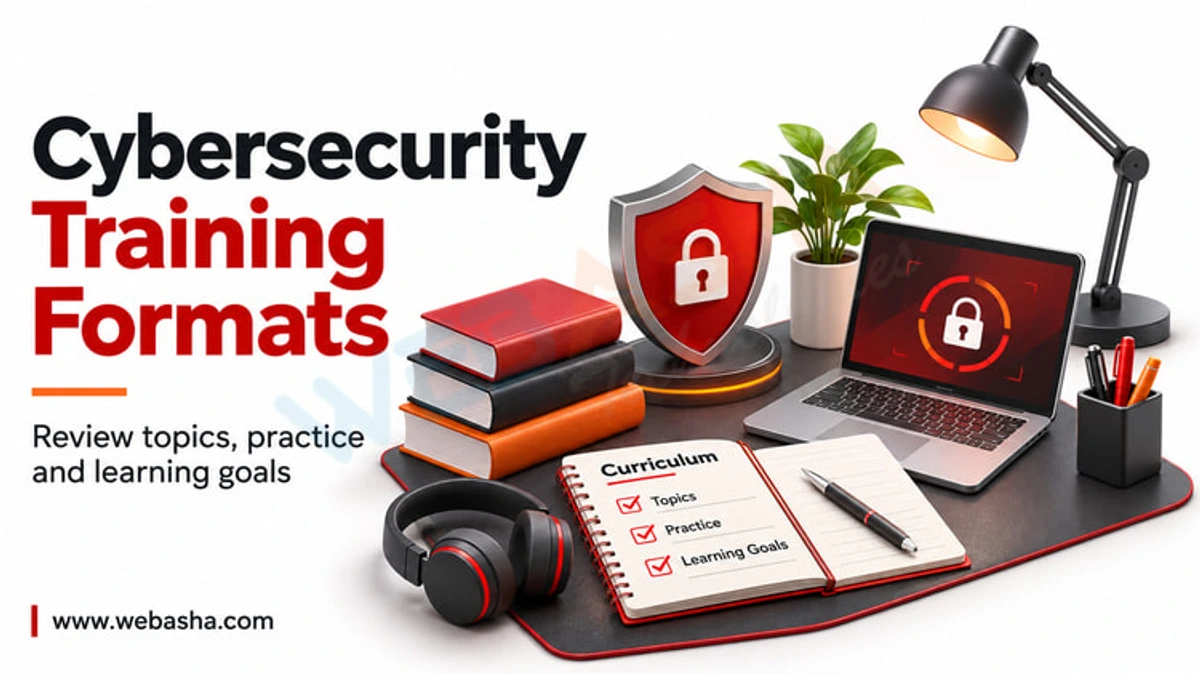
Quick answer: Choose cybersecurity training by the work you need to learn, the practice and feedback it provides, and whether you can reliably use its delivery arrangement. Online courses can be live, recorded or independent; classroom courses can also differ in lab time and support. Neither label proves quality or leads automatically to a professional credential. A fictional learner with an unstable connection compares how two programmes handle interrupted exercises, feedback and later correction before deciding which format fits.
Key takeaways
- Compare learner tasks and feedback rather than format labels alone.
- Check computer, connection, accessibility and attendance requirements.
- Find out how interrupted exercises can be resumed or repeated.
- Separate training, examination entry and professional award conditions.
- Review the actual written package before committing.
Table of Contents
- Which learning outcome should guide the format decision?
- What do online, classroom and blended courses actually mean?
- What would the interrupted-exercise comparison reveal?
- How should practical exercises and feedback be evaluated?
- How do examination and award requirements affect the choice?
- What should you check about materials, tools and support?
- How do you make the final comparison without false promises?
- References
Which learning outcome should guide the format decision?
Start with one task you want to perform or explain. Examples include interpreting supplied logs, reviewing a permitted configuration or documenting an assessment observation. Define the output and the feedback you need.
The NIST NICE task and skill framework describes cybersecurity work through tasks, knowledge and skills. A syllabus should connect subjects to outputs that can be reviewed, instead of presenting a long list of product names as the whole learning plan.
For a beginner, the outcome may be explaining networking and access concepts accurately. An experienced learner may need practice on a specific platform or a deeper investigation method. Those needs can call for different course depth even when the advertised certification name is the same.
What do online, classroom and blended courses actually mean?
A live online class requires you to join at scheduled times and use the proposed communication tools. Recorded material offers different flexibility, but individual review or question support may be limited or separately arranged.
A classroom can provide direct discussion and equipment access, while travel, fixed attendance and shared devices can affect usable practice time. A blended course combines elements, so confirm which parts are live, independent or tied to a location.
Ask what an ordinary study week looks like: teaching time, personal exercise time, submissions and feedback. A statement that two formats use the same syllabus does not establish equal access, attention or learning outcomes. Compare the actual arrangements rather than assuming either mode is universally better.
| Format | Potential advantage | Condition to verify |
|---|---|---|
| Live online | Interaction without travelling | Connection, schedule and individual lab access |
| Recorded or independent | More control over study timing | Feedback, update and access arrangements |
| Classroom | Direct discussion and equipment | Individual practice time and attendance needs |
| Blended | Different tasks in suitable settings | Which activities require which mode or location |
What would the interrupted-exercise comparison reveal?
Fictional learner Asha can attend evening classes but sometimes loses her home connection. One online offer includes interactive exercises; its sample resets an unfinished attempt when the session ends. Asha keeps notes but cannot reopen that exact practice state. A classroom alternative provides fixed lab sessions that conflict with one recurring work shift.
Neither offer is automatically unusable. Ask the online provider whether exercise inputs can be retained safely, attempts repeated and feedback attached to a fresh submission. Ask the classroom provider about a permitted make-up session or an equivalent exercise outside the missed class.
Try a small supplied task before choosing. Disconnect only your own training session if the provider permits that test, or ask the instructor to demonstrate its supported resume process. Record whether the important work and feedback remain available. Do not infer recovery behaviour from a promise of recorded lectures.
How should practical exercises and feedback be evaluated?
Look for an instruction, permitted input, learner attempt, clear assessment criteria and useful feedback. A demonstration and a submitted exercise can both teach, but they provide different evidence of independent understanding.
The PortSwigger Web Security Academy offers a concrete example of an independently operated platform with interactive labs and progress tracking. Its availability does not establish what another provider includes or how that provider will review your work.
The NIST workplace proficiency guide connects competence with workplace responsibility and impact. A learner who follows instructions may still need practice choosing a method and explaining a limit. Ask for feedback on those decisions, not only whether a final screen matches a screenshot.
| Sample check | Useful evidence |
|---|---|
| Can the task be attempted individually? | A learner-created output rather than only a watched demonstration |
| Can an interruption be handled? | Supported repeat/resume arrangement with known limits |
| Does feedback explain an error? | Specific correction tied to the task criteria |
| Can the result be revised? | A clear resubmission or follow-up practice route |
How do examination and award requirements affect the choice?
Training can prepare you for an examination without including the examination itself. Confirm the exact assessment, issuer, voucher or booking entitlement, access conditions and any retake provisions in the actual package.
The EC-Council application and eligibility policy distinguishes official training and self-study application routes. Do not assume that any course using a certification name counts as official training for eligibility.
The ISC2 CISSP experience guide lists experience requirements for the professional award, while the ISACA CISM award guide distinguishes examination success from its experience and application requirements. These examples show why passing a test and receiving a credential need separate checks. A beginner should not purchase an unsuitable pathway based solely on a course completion promise.
What should you check about materials, tools and support?
Compare the proposed material with the current issuer objectives for the intended assessment. The EC-Council CEH AI programme page identifies the current AI-branded CEH programme; an old course label or demonstration does not automatically establish the examination version you will book.
Ask about software access, supported operating systems, equipment, accessibility, captions or written instructions where needed. Find out whether the fee includes required lab use and whether materials remain available through the intended study period.
Also ask who handles technical access problems and who answers subject questions. A general helpdesk and an instructor reviewing an exercise are different services. Use a sample question or submission to understand the offered feedback process before relying on it.
How do you make the final comparison without false promises?
List the two offers against the same goal and realistic weekly schedule. Separate teaching, labs, feedback, materials, examination entitlement, travel and other stated costs. Do not count a bundled service as a saving if you cannot use it.
For Asha, the decision depends on whether the online repeat process preserves enough evidence for meaningful feedback and whether the classroom missed session has a workable alternative. Obtain those answers in writing. If neither arrangement fits, ask for another schedule or choose a different programme rather than assume that determination alone will remove the constraint.
Keep the syllabus and terms with your decision. Revisit the plan if work hours, accessibility needs or the issuer’s assessment change. Good preparation means using a suitable learning arrangement consistently and correcting specific gaps; it does not guarantee an examination pass or employment outcome.
Related reading: course and workshop evidence checks; CEH Master preparation.
References
Frequently Asked Questions
What's Your Reaction?
 Like
0
 Dislike
0
 Love
0
 Funny
0
 Wow
0
 Sad
0
 Angry
0

With a passion for staying on the cutting edge of technology trends, I am dedicated to delivering content that not only informs but also inspires. Whether you need in-depth analysis pieces, informative guides, or thought-provoking opinion pieces, I craft content that resonates with tech enthusiasts and professionals alike.