
Welcome!

Unlock your personalized experience.
Sign Up
Tag

AI for social engineering detection Articles, Guides & Tutorials

3 posts

How AI is Shaping the Future of Ethical Hacking | Enhancing Cybersecurity with Intelligent Automation

AI is rapidly transforming ethical hacking by introducing automated vulnerability detection, AI-powered penetration testing, and predictive threat intelligence. With machine learning, natural language processing, and automation, AI enables ethical hackers to identify security gaps faster and more efficiently than traditional methods. However, while AI enhances cybersecurity defenses, it also raises ethical and regulatory concerns, such as the risk of adversarial AI attacks and over-reliance on automation. This blog covers how AI is changing ethical hacking, the benefits and challenges of AI-driven security testing, and the future of AI in ethical hacking. We also discuss how AI is helping red and blue teams improve cyber defense and how AI-powered self-healing systems could change cybersecurity.

How AI is Changing Ethical Hacking | Automating Security Testing, Threat Detection, and Cyber Defense

AI is transforming ethical hacking and cybersecurity by automating vulnerability scanning, penetration testing, and threat intelligence. Traditional manual security testing is being replaced by AI-driven systems that detect threats in real time, adapt to new attack methods, and improve cybersecurity defenses. AI enhances social engineering detection, malware analysis, and OSINT (Open-Source Intelligence) gathering, making security audits more efficient. However, cybercriminals are also using AI for advanced attacks, raising concerns about its ethical and legal implications. The future of AI in ethical hacking involves autonomous penetration testing, AI-powered zero-day vulnerability detection, and AI vs. AI cybersecurity battles, requiring responsible implementation to ensure cybersecurity remains a step ahead of evolving threats.

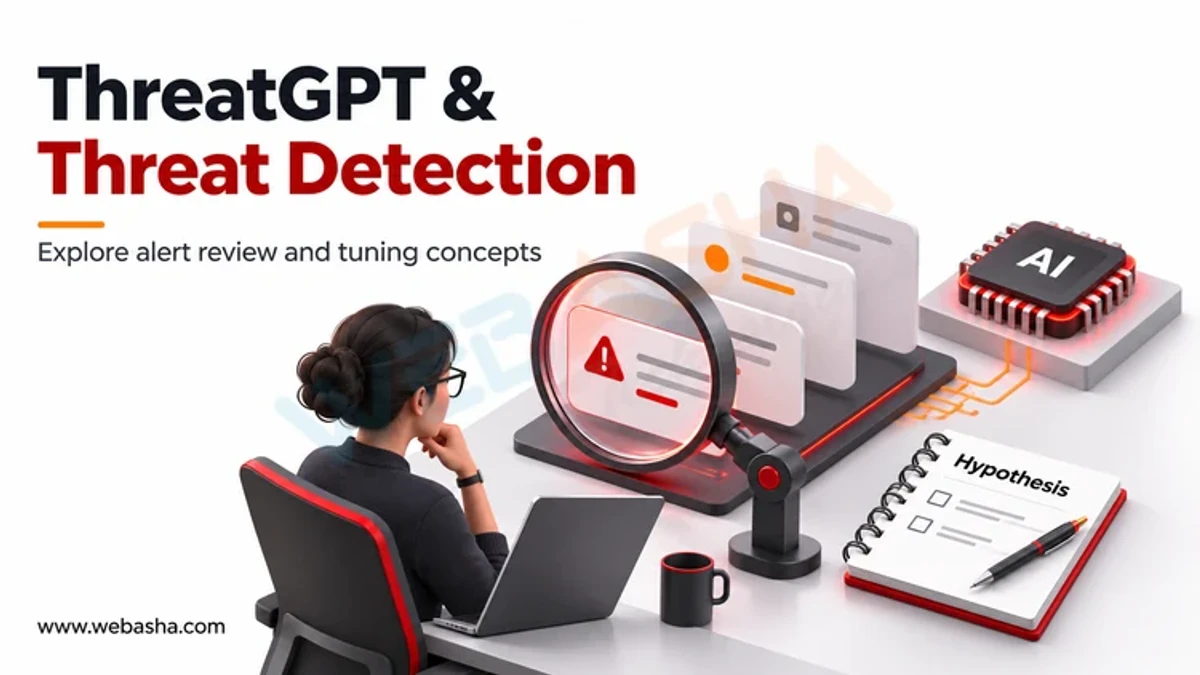
What Is ThreatGPT? How AI-Based Threat Detection Works, With an Alert Tuning Example

As cyber threats continue to evolve, traditional security methods are struggling to keep up. ThreatGPT is an AI-powered cybersecurity tool designed to detect, analyze, and mitigate cyber threats in real time. It uses machine learning, natural language processing (NLP), and threat intelligence to identify vulnerabilities, predict attacks, and automate security responses. ThreatGPT offers automated malware detection, network anomaly identification, phishing prevention, and AI-driven security intelligence, making it an essential tool for organizations looking to enhance their cyber defense strategies. While it significantly improves threat detection speed and accuracy, concerns around AI misuse, false positives, and compliance need to be addressed. This post covers how ThreatGPT works, its key features, ethical considerations, and why AI-driven threat detection is the future of cybersecurity.