OSINT Tools for Cybersecurity and Investigations: A Practical Guide
Open source intelligence (OSINT) means collecting and analysing publicly available information. In cybersecurity it is used to map an organisation's internet exposure, find leaked credentials, investigate phishing infrastructure and support threat intelligence.
Topic: Security Tools, Authorized Labs & CTFs in Cybersecurity & Ethical Hacking · Tools
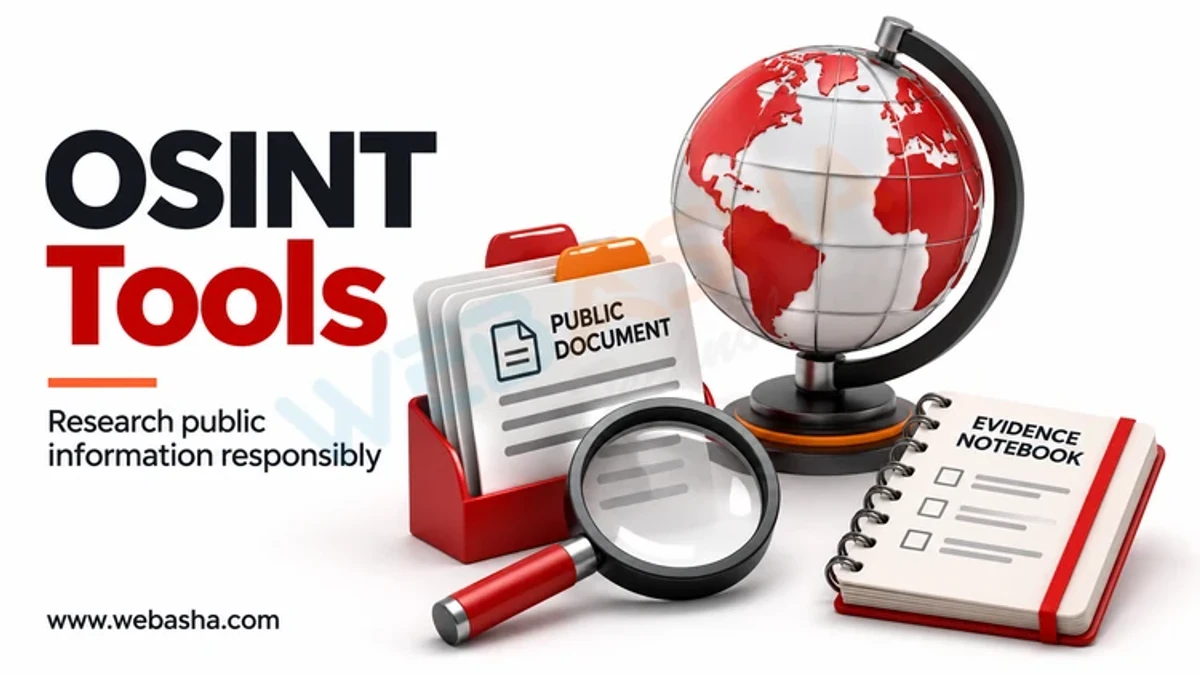
Quick answer: Open source intelligence (OSINT) means collecting and analysing publicly available information. In cybersecurity it is used to map an organisation's internet exposure, find leaked credentials, investigate phishing infrastructure and support threat intelligence. Widely used tools include theHarvester and SpiderFoot for automated collection, Maltego for link analysis, Shodan and Censys for internet-connected devices, crt.sh for certificate transparency records, and Have I Been Pwned for breach exposure. Good OSINT follows a documented method, protects the investigator, and stays within the law: public does not always mean free to collect or use.
Key takeaways
- Start with a clear question and scope, not with tools.
- Certificate transparency and DNS records reveal much of an organisation's infrastructure.
- Verify findings from more than one source before acting.
- Use separate accounts and environments to protect the investigator.
- Collecting personal data has legal limits, including under India's DPDP Act.
Table of Contents
- How Is OSINT Used in Cybersecurity?
- Which Tools Fit Which Task?
- How Do You Map an Organisation's Infrastructure?
- How Do Automated Tools Like SpiderFoot Help?
- What Is a Sound OSINT Method?
- How Do Investigators Protect Themselves?
- What Are the Legal and Ethical Limits?
- References
How Is OSINT Used in Cybersecurity?
- Attack surface management: finding forgotten subdomains, exposed services and leaked documents.
- Penetration testing reconnaissance: within an authorised scope.
- Threat intelligence: tracking phishing domains and attacker infrastructure.
- Incident response: checking whether stolen data or credentials have appeared publicly.
- Fraud and brand protection: spotting fake apps, pages and lookalike domains.
Which Tools Fit Which Task?
| Task | Tools |
|---|---|
| Domains, subdomains, DNS | crt.sh, theHarvester, Amass, dig, whois |
| Internet-exposed devices | Shodan, Censys |
| Email addresses and staff names | theHarvester, company websites, professional networks |
| Usernames across sites | Sherlock, WhatsMyName |
| Breach exposure | Have I Been Pwned (domain search for verified owners) |
| Link analysis | Maltego, SpiderFoot |
| Images and geolocation | Reverse image search, EXIF tools, satellite imagery |
| Tool directories | OSINT Framework |
How Do You Map an Organisation's Infrastructure?
# Subdomains from certificate transparency logs
curl -s "https://crt.sh/?q=%25.example.com&output=json" | jq -r '.[].name_value' | sort -u

# Emails, hosts and names from public sources (theHarvester)
theHarvester -d example.com -b crtsh,duckduckgo,bing -l 200

# DNS records
dig +short example.com MX
dig +short TXT example.com
Compare the results with your asset inventory; anything unknown is a finding. For an automated pipeline, see recon automation with Amass, Subfinder and Nuclei.
How Do Automated Tools Like SpiderFoot Help?
SpiderFoot runs many modules against a target (domain, IP, email or name) and correlates the results:
pip install -r requirements.txt     # from the SpiderFoot repository
python3 sf.py -l 127.0.0.1:5001     # then open the web UI locally
Use passive modules for organisations you are not authorised to test, and add API keys for richer sources.
What Is a Sound OSINT Method?
- Define the question, scope and authority for the investigation.
- Collect from multiple sources and record where and when each item was found.
- Preserve evidence: screenshots with URLs and timestamps, archived pages, hashes.
- Verify and corroborate; treat single-source claims as leads.
- Analyse and report with confidence levels.
The UN-backed Berkeley Protocol sets out professional standards for digital open source investigations.
How Do Investigators Protect Themselves?
- Use a dedicated virtual machine or browser profile.
- Do not log in with personal accounts or interact with targets.
- Be aware that visiting some sites reveals your IP address to the operator.
- Store collected data securely and delete it when no longer needed.
What Are the Legal and Ethical Limits?
Public availability does not remove privacy obligations. India's Digital Personal Data Protection Act 2023 governs processing of personal data, with exemptions for some publicly made available data; get legal advice for systematic collection about individuals. Never access accounts, bypass logins or use breached credentials. In security testing, stay within the written scope. Related: Recon-ng for OSINT. WebAsha offers OSINT and ethical hacking training.
References
Frequently Asked Questions
What's Your Reaction?
 Like
0
 Dislike
0
 Love
0
 Funny
0
 Wow
0
 Sad
0
 Angry
0

Vaishnavi is a skilled tech professional at the Ethical Hacking Training Institute in Pune, responsible for managing and optimizing the technical infrastructure that supports advanced cybersecurity education. With deep expertise in network security, backend operations, and system performance, she ensures that practical labs, online modules, and assessments run smoothly and securely. Her behind-the-scenes contributions play a vital role in delivering a seamless and secure learning experience for aspiring ethical hackers.