What Does a Data Analyst Do Day to Day? Tasks, Tools and Skills
A data analyst spends the day turning questions into answers backed by data. Typical tasks include clarifying a request with a manager, pulling data with SQL, cleaning it in Excel or Python, checking it for errors, analysing trends, building or updating dashboards in Power BI or Tableau, and explaining findings in plain language. Much of the time goes into cleaning and checking data rather than building charts.
Topic: Data Analytics & Data Science in AI & Data · Certification preparation
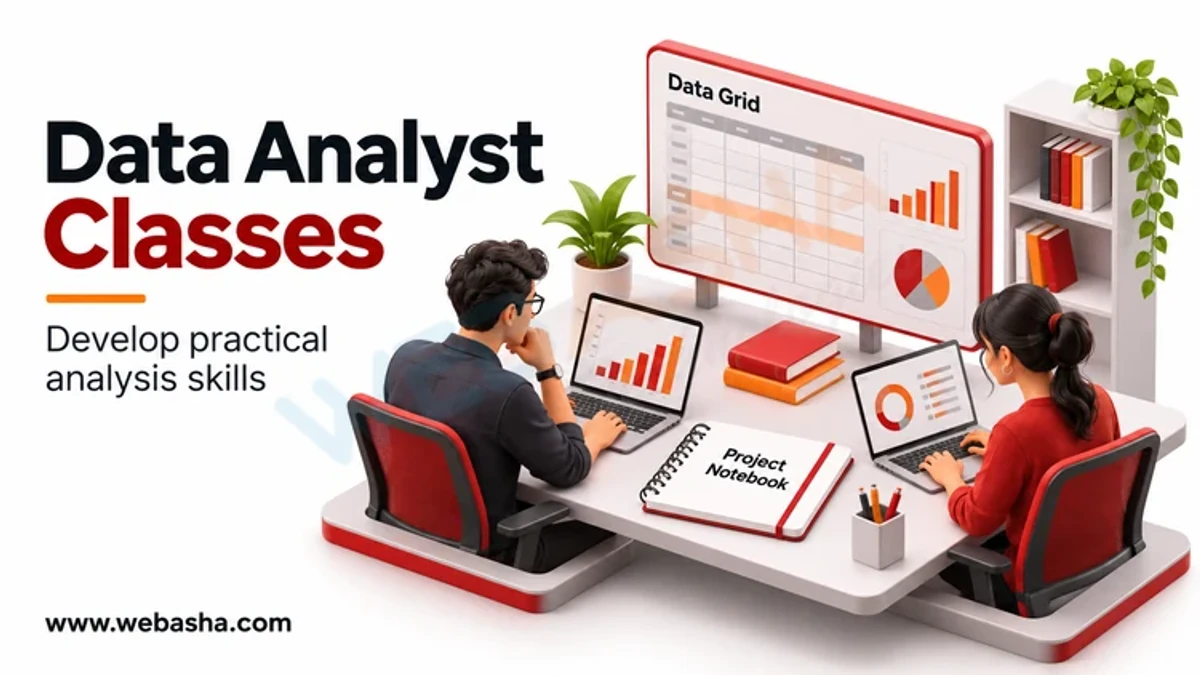
Quick answer: A data analyst spends the day turning questions into answers backed by data. Typical tasks include clarifying a request with a manager, pulling data with SQL, cleaning it in Excel or Python, checking it for errors, analysing trends, building or updating dashboards in Power BI or Tableau, and explaining findings in plain language. Much of the time goes into cleaning and checking data rather than building charts. Analysts also maintain recurring reports, answer ad hoc questions and handle data carefully, since personal data in India falls under the Digital Personal Data Protection Act 2023.
Key takeaways
- The job starts with understanding the question, not the tool.
- Cleaning and validating data takes a large share of the work.
- SQL is used almost daily in most analyst roles.
- Dashboards and short written summaries are the main outputs.
- Clear communication matters as much as technical skill.
Table of Contents
- What Is the Basic Workflow?
- What Might a Typical Day Look Like?
- Why Does Cleaning Take So Long?
- Which Tools Are Used for Which Task?
- How Much of the Job Is Communication?
- How Do Analysts Handle Sensitive Data?
- Is This Work a Good Fit for You?
- References
What Is the Basic Workflow?
O*NET lists analyst tasks such as collecting, analysing and reporting data to support decisions (see business intelligence analysts), and the BLS describes similar work for data-focused roles. Most requests follow the same loop:
- Clarify the question and how the answer will be used.
- Find and extract the data.
- Clean and validate it.
- Analyse and visualise.
- Explain the result, including limitations.
What Might a Typical Day Look Like?
This is an illustrative day for an analyst in a retail or services company. Real days vary by employer.
| Time | Task |
|---|---|
| Morning | Check overnight data loads and that scheduled dashboards refreshed correctly |
| Late morning | Team stand-up, then clarify a new request from the sales manager |
| Midday | Write SQL to pull orders and returns for the request |
| Afternoon | Clean data, check totals against the finance report, analyse |
| Late afternoon | Update the dashboard and write a short summary of findings |
| End of day | Document queries and assumptions for the next person |
Why Does Cleaning Take So Long?
Real data has missing values, duplicates, inconsistent spellings and dates in different formats. Analysts look at distributions first, following ideas from exploratory data analysis, then fix issues. A common first check in pandas:
import pandas as pd
df = pd.read_csv("orders.csv")
print(df.isna().sum())          # missing values per column
print(df.duplicated().sum())    # exact duplicate rows
df = df.drop_duplicates()
The pandas guide to working with missing data covers the options in detail.
Which Tools Are Used for Which Task?
| Task | Common tools |
|---|---|
| Extracting data | SQL on databases such as PostgreSQL, SQL Server, MySQL |
| Quick analysis | Excel, pivot tables |
| Repeatable cleaning | Python with pandas |
| Dashboards | Power BI, Tableau |
| Sharing findings | Slides, short written notes, email |
These map directly to the modules in our data analytics syllabus map.
How Much of the Job Is Communication?
A lot. Analysts ask follow-up questions, push back on vague requests, and explain uncertainty without jargon. A good summary states the answer first, then the evidence, then the caveats. Roles that lean further into decisions and recommendations are covered in our comparison of business analytics and data analytics.
How Do Analysts Handle Sensitive Data?
Analysts often see customer or employee records. Good practice is to use only the fields needed, work on anonymised extracts where possible, and follow company access rules. In India, personal data processing is governed by the Digital Personal Data Protection Act 2023.
Is This Work a Good Fit for You?
You will likely enjoy it if you like solving puzzles, are comfortable with detail, and can explain things simply. If you want to build these skills with guided projects, ask about WebAsha data analyst training.
References
Frequently Asked Questions
What's Your Reaction?
 Like
0
 Dislike
0
 Love
0
 Funny
0
 Wow
0
 Sad
0
 Angry
0

Vaishnavi is a skilled tech professional at the Ethical Hacking Training Institute in Pune, responsible for managing and optimizing the technical infrastructure that supports advanced cybersecurity education. With deep expertise in network security, backend operations, and system performance, she ensures that practical labs, online modules, and assessments run smoothly and securely. Her behind-the-scenes contributions play a vital role in delivering a seamless and secure learning experience for aspiring ethical hackers.