DO288 Training and EX288 Certification: Course, Exam Format and Preparation
DO288 and EX288 explained: current course and exam names, OpenShift version, 4-hour hands-on format, objectives and how to prepare.
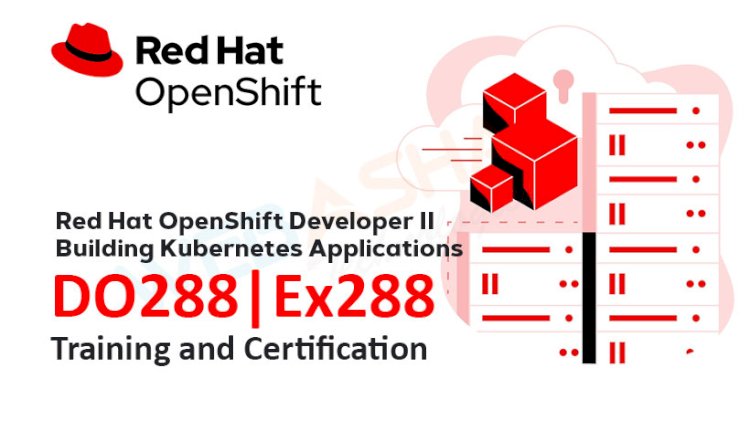
Quick answer: DO288 is Red Hat's course for building and deploying applications on OpenShift. Its current title is Red Hat OpenShift Developer II: Building and Deploying Cloud-native Applications, and it is based on Red Hat OpenShift 4.22. EX288 is the matching hands-on exam, now titled the Red Hat Certified Advanced Developer in Cloud-native Applications exam. It runs for 4 hours on Red Hat OpenShift Container Platform 4.22, and passing it is required for the Red Hat Certified Advanced Developer in Cloud-native Applications certification. Red Hat does not list prices on these pages, so check current fees with Red Hat for your country.
Key takeaways
- EX288 is a 4-hour, hands-on, practical exam on live systems.
- The current course and exam are based on Red Hat OpenShift 4.22 at the time of review.
- Expect builds, image streams, configuration maps and secrets, source-to-image, templates, OpenShift Pipelines and Operators.
- Be comfortable with containers and Kubernetes basics before you start.
Red Hat OpenShift is a container application platform built on Kubernetes. Red Hat's developer track for it centres on the DO288 course and the EX288 exam. This post covers what each one is, the exam format, the objectives and how to prepare. WebAsha offers its own DO288 training for people who want instructor-led preparation.
What is DO288?
DO288 is listed on Red Hat's site as Red Hat OpenShift Developer II: Building and Deploying Cloud-native Applications. The course page says it is based on Red Hat OpenShift 4.22. Its stated outcomes include containerizing applications, using different build and deployment methods, deploying multi-container applications, adding health checks and creating automated pipelines.
The prerequisite on the course page is the Red Hat OpenShift Development I: Introduction to Containers with Podman course (DO188), or equivalent knowledge. Red Hat notes that RHCSA or higher is helpful but not required.
What is EX288?
Red Hat's exam page is titled Red Hat Certified Advanced Developer in Cloud-native Applications exam | EX288. Earning a passing score is a requirement for the Red Hat Certified Advanced Developer in Cloud-native Applications certification. Older posts, including the first version of this one, call it the Red Hat Certified Specialist in OpenShift Application Development exam.
| Item | EX288 at the time of review |
|---|---|
| Product version | Red Hat OpenShift Container Platform 4.22 |
| Format | Hands-on, practical exam on a live system |
| Time limit | 4 hours |
| Reference material | Relevant product documentation is provided; no outside assistance |
| Results | Emailed from Red Hat Certification Central, usually within 3 U.S. business days, as a total score only |
| Fee | Not listed on the exam page; check Red Hat for your country |
Red Hat's page lists application developers, DevOps engineers and site reliability engineers who work with OpenShift as the intended audience.
EX288 objective areas
At the time of review, Red Hat groups the objectives under these headings:
- Work with Red Hat OpenShift Container Platform
- Deploy multi-container applications
- Work with container images in OpenShift Container Platform
- Troubleshoot application builds and deployment issues
- Work with image streams
- Work with configuration maps and secrets
- Work with the source-to-image (S2I) framework
- Work with build hooks and build triggers
- Work with templates
- Work with OpenShift Pipelines
- Work with Operators accessible for users to run in their applications
Check the exam page for the detailed points under each heading, since Red Hat updates them when the product version changes.
Recommended path
The EX288 page recommends DO180 (Red Hat OpenShift I: Containers & Kubernetes), DO188 (Red Hat OpenShift Development I: Introduction to Containers with Podman) and DO288. A typical order is to learn containers with Podman first, then OpenShift basics, then the DO288 material.
Fees
Neither the DO288 course page nor the EX288 exam page lists a price, and Red Hat pricing varies by country, delivery format and bundle. Check the course or exam page on redhat.com for your region before you budget, and confirm whether a retake is included in what you buy.
How to prepare
- Get access to an OpenShift 4 cluster for practice. The DO288 page says the course applies to all versions of Red Hat OpenShift, but use a release close to 4.22 to match the exam.
- Work through each objective with your own sample application: build it with S2I, deploy it, add a configuration map and a secret, then add health checks.
- Practise with the
occlient and the web console, and learn where things are in the product documentation, since that is what you get during the exam. - Time yourself on mixed tasks so 4 hours feels manageable.
Red Hat's exam rules forbid sharing exam content. Mock tests and practice tasks from any training provider are original practice material, and none of them are copies of the real exam.
Training with WebAsha
WebAsha runs instructor-led OpenShift developer training aligned to the DO288 topics, with lab practice and mock tests. Contact WebAsha for current batch dates and course fees.
Related reading
- How to pass the Red Hat OpenShift EX288 certification exam in first attempt
- How to pass OpenShift EX280 certification exam in 1st attempt
References
- Red Hat: Red Hat Certified Advanced Developer in Cloud-native Applications exam (EX288)
- Red Hat: Red Hat OpenShift Developer II: Building and Deploying Cloud-native Applications (DO288)
- Red Hat Training and Certification
Last reviewed: 18 October 2026.
Frequently Asked Questions
What's Your Reaction?
 Like
0
 Dislike
0
 Love
0
 Funny
0
 Wow
0
 Sad
0
 Angry
0

With a passion for staying on the cutting edge of technology trends, I am dedicated to delivering content that not only informs but also inspires. Whether you need in-depth analysis pieces, informative guides, or thought-provoking opinion pieces, I craft content that resonates with tech enthusiasts and professionals alike.