How AI is Helping Ethical Hackers Identify Vulnerabilities | A New Era of Cybersecurity
As cyber threats continue to evolve, ethical hackers must keep pace by using advanced technologies like Artificial Intelligence (AI). AI-driven tools are transforming ethical hacking by automating vulnerability assessments, detecting threats faster, and improving penetration testing methods. AI helps identify zero-day vulnerabilities, detect anomalies, enhance password security, and analyze malware behaviors. It also helps prevent phishing attacks, social engineering threats, and cyber fraud. However, while AI enhances cybersecurity defenses, it also presents challenges such as false positives, adversarial AI risks, and data privacy concerns. By integrating AI and machine learning into ethical hacking, security professionals can predict, prevent, and respond to cyber threats more effectively. The future of cybersecurity will be shaped by a collaborative approach between AI automation and human expertise to ensure a strong and resilient security framework.
Topic: Ethical Hacking in Cybersecurity & Ethical Hacking · Explainer
Also covers: AI in Cybersecurity, Cyber Threats, Scams & Online Safety
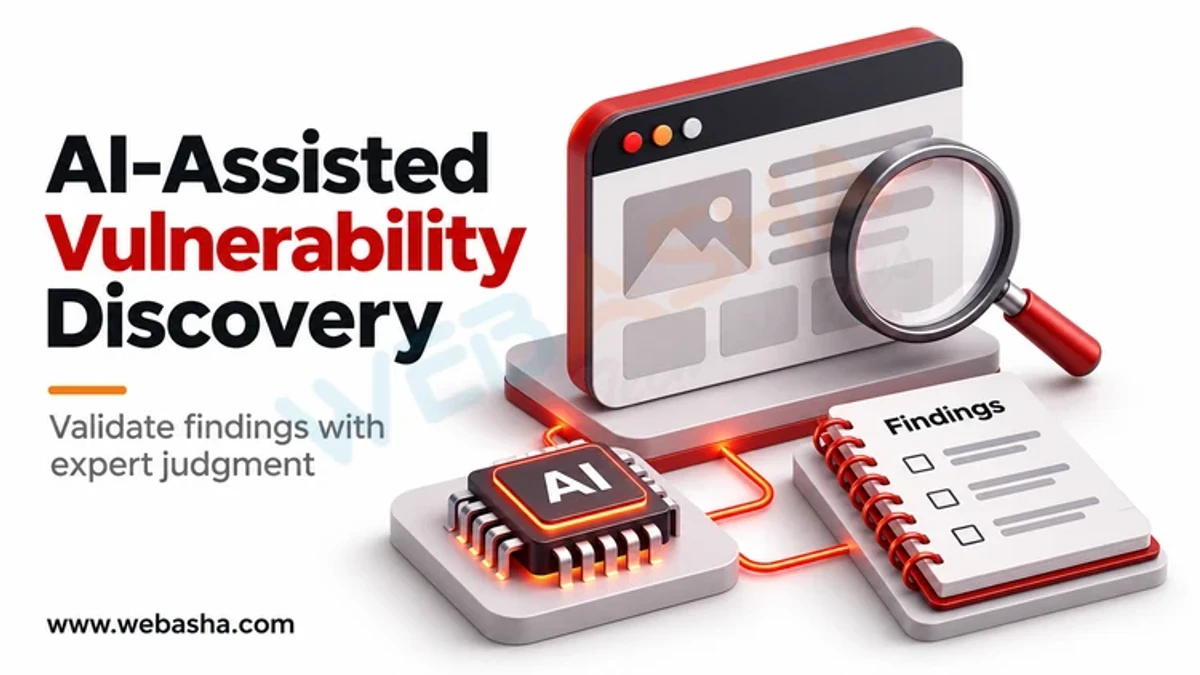
Quick answer: AI helps ethical hackers find vulnerabilities by automating scanning, spotting patterns in code and traffic, and prioritising what is most risky. It speeds up routine checks so testers can spend time on complex issues. It can produce false positives, so each finding needs manual verification and testing must stay within authorised scope.
Key takeaways
- AI ranks findings so you test the riskiest first.
- Always validate manually.
- Record tool output in your report.
Table of Contents
- Introduction
- How Is AI Transforming Ethical Hacking?
- Benefits of AI in Ethical Hacking
- Challenges and Ethical Considerations
- The Future of AI in Ethical Hacking
- Conclusion
Introduction
With the rise of cyber threats, ethical hackers, also known as white-hat hackers, matter for identifying security vulnerabilities before they can be exploited by malicious attackers. Traditional methods of penetration testing and vulnerability scanning are time-consuming and often fail to detect sophisticated threats. This is where Artificial Intelligence (AI) is changing cybersecurity by automating and enhancing the process of identifying vulnerabilities.
AI-driven tools enable faster threat detection, deeper analysis, and proactive security measures. By using machine learning (ML), deep learning, and predictive analytics, ethical hackers can detect weaknesses more accurately and efficiently.
How Is AI Transforming Ethical Hacking?
1. What Is AI-Powered Vulnerability Scanning?
- AI automates vulnerability detection, reducing manual efforts.
- Uses machine learning to identify hidden threats and security loopholes.
- Continuously adapts to new attack patterns, making scanning more effective.
2. AI-Driven Penetration Testing
- AI helps simulate cyberattacks more efficiently.
- Automated reconnaissance tools gather data on potential vulnerabilities.
- AI-based attack simulations provide deeper insights into system weaknesses.
3. Threat Detection and Anomaly Analysis
- AI analyzes large datasets to detect unusual patterns in real time.
- Machine learning models improve accuracy by learning from past attacks.
- AI detects zero-day vulnerabilities and security breaches faster than traditional methods.
4. Password Security Enhancement
- AI evaluates password strength and suggests stronger alternatives.
- Simulates brute-force and dictionary attacks to test authentication mechanisms.
- Detects weak credentials that could be exploited by hackers.
5. AI Against Social Engineering Attacks
- AI identifies phishing emails and malicious links.
- Scans and flags fraudulent websites to prevent credential theft.
- Automates employee training by simulating real-world phishing scenarios.
6. Automated Security Audits
- AI-driven security audits assess system configurations for compliance.
- Detects misconfigurations and prioritizes security risks.
- Generates reports to guide security teams in implementing fixes.
7. Malware Detection and Reverse Engineering
- AI analyzes malware behavior to detect and mitigate threats.
- Uses deep learning to identify new malware variants.
- Automates malware sandboxing for faster detection.
How Does Traditional vs. AI-Driven Ethical Hacking Compare?
| Feature | Traditional Ethical Hacking | AI-Powered Ethical Hacking |
|---|---|---|
| Speed | Time-consuming manual processes | Rapid automated scanning and testing |
| Accuracy | Prone to human errors | More accurate due to data-driven analysis |
| Adaptability | Requires frequent manual updates | Continuously learns and evolves with threats |
| Threat Detection | Limited to known vulnerabilities | Can detect zero-day vulnerabilities |
| Efficiency | Requires significant human effort | Reduces workload and enhances productivity |
| Scalability | Challenging for large-scale networks | Easily scalable for enterprise-level security |
Benefits of AI in Ethical Hacking
Speed & Efficiency: AI automates vulnerability assessments, reducing response times.
Improved Accuracy: AI-driven tools minimize human errors in security testing.
Continuous Learning: Machine learning models adapt to emerging cyber threats.
Scalability: AI allows ethical hackers to secure large-scale infrastructures.
Proactive Defense: AI predicts and prevents potential attacks before they occur.
Challenges and Ethical Considerations
1. False Positives & False Negatives
- AI models may generate incorrect alerts.
- Human oversight is essential for validation.
2. Adversarial AI Risks
- Hackers can manipulate AI models to bypass security defenses.
- AI systems must be continuously improved to counteract adversarial attacks.
3. Over-Reliance on AI
- AI cannot replace human intuition and expertise.
- AI should be used as a complementary tool, not a replacement.
4. Data Privacy Concerns
- AI requires vast amounts of data for training, raising privacy issues.
- Organizations must comply with data protection regulations and ethical guidelines.
The Future of AI in Ethical Hacking
Autonomous AI Hacking Tools: AI-driven systems capable of real-time vulnerability detection.
AI-Enhanced Deception Techniques: Advanced honeypots to mislead and study attackers.
AI-Human Collaboration: Ethical hackers using AI to improve security strategies.
Conclusion
AI is changing ethical hacking by automating vulnerability detection, enhancing penetration testing, and improving threat intelligence. While AI-powered tools offer speed, accuracy, and adaptability, ethical considerations and human oversight remain important. By integrating AI into cybersecurity strategies, organizations can strengthen their defenses against evolving cyber threats while maintaining a balanced approach between AI automation and human expertise.
To take this further with guided labs and an instructor, see our CEH v13 AI lab sessions.
Related reading
- XploitGPT | How AI is Transforming Cybersecurity with Automated Penetration Testing & Threat Intelligence
- Choosing the Best AI for Penetration Testing | Features, Tools, and Key Considerations
- The Role of AI in Automated Reconnaissance | How Artificial Intelligence is Transforming Cyber Threat Intelligence and Security
Reference
For the authoritative details, see CVE.
Frequently Asked Questions
What's Your Reaction?
 Like
0
 Dislike
0
 Love
0
 Funny
0
 Wow
0
 Sad
0
 Angry
0

Vaishnavi is a skilled tech professional at the Ethical Hacking Training Institute in Pune, responsible for managing and optimizing the technical infrastructure that supports advanced cybersecurity education. With deep expertise in network security, backend operations, and system performance, she ensures that practical labs, online modules, and assessments run smoothly and securely. Her behind-the-scenes contributions play a vital role in delivering a seamless and secure learning experience for aspiring ethical hackers.