How Digital Forensics Enhances Cybersecurity? Investigations, Recoveries, and Legal Compliance
Digital forensics plays an essential role in modern cybersecurity by investigating, analyzing, and preserving digital evidence related to cybercrimes. It helps organizations detect cyber threats, recover from data breaches, ensure legal compliance, and strengthen overall security measures. While cybersecurity focuses on preventing cyber incidents, digital forensics deals with analyzing and solving issues after they have occurred. By using advanced tools and techniques, digital forensics professionals provide invaluable insights into cybercrimes, ensuring organizations can learn from past incidents to prevent future attacks. It is an ever-evolving field that is crucial for both cyber defense and legal proceedings.
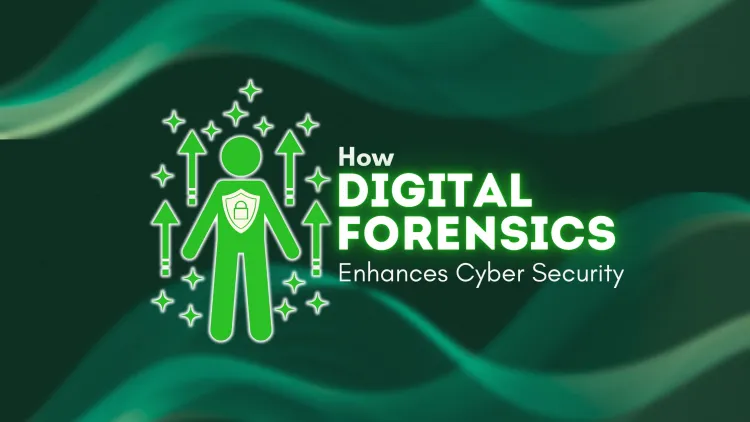
Quick answer: Digital forensics strengthens cybersecurity by showing what actually happened after an attack. Investigators collect and preserve evidence, find the entry point, measure the damage and support legal action. The findings then feed back into defences, so the same weakness is fixed before attackers use it again.
Key takeaways
- Forensics shows what actually happened, so fixes target the real cause.
- Findings feed back into detection rules and policies.
- Recovery of deleted data can support legal action.
Digital forensics is a cornerstone of modern cybersecurity, providing the methods and tools to investigate, understand, and counteract cyber threats. As cyberattacks grow more sophisticated, digital forensics helps minimise their impact and ensure accountability. Digital forensics makes a difference in cybersecurity by improving investigation capabilities, safeguarding sensitive information, and strengthening defenses.
What Is Digital Forensics in Cybersecurity?
Digital forensics is the science of collecting, preserving, analyzing, and presenting digital evidence. It is used to investigate cybercrimes, ensure compliance with legal standards, and recover from security breaches.
Digital Forensics vs. Cybersecurity
While digital forensics and cybersecurity are closely related, they serve different purposes:
| Aspect | Digital Forensics | Cybersecurity |
|---|---|---|
| Objective | Investigate and analyze incidents post-occurrence. | Prevent and protect systems from cyber threats. |
| Focus Area | Evidence recovery, analysis, and legal reporting. | Proactive defense, threat prevention, and risk mitigation. |
| Approach | Reactive: Deals with incidents that have already occurred. | Proactive: Focuses on preventing incidents before they happen. |
| Tools | EnCase, FTK, Autopsy, Cellebrite. | Firewalls, antivirus software, SIEM tools. |
| Timeframe | Post-incident investigation. | Pre-incident and ongoing protection. |
| Legal Component | Strong focus on legal standards and evidence handling. | Emphasis on compliance but less direct interaction with courts. |
Why Digital Forensics Matters in Cybersecurity
Digital forensics helps organizations maintain a strong security posture. Here’s how it makes a difference:
1. Detecting Cyber Threats
Digital forensics enables organizations to identify unusual activities and security incidents. Forensic tools analyze system logs to detect unauthorized access or malware infections.
| Cyber Threat | How Digital Forensics Helps |
|---|---|
| Phishing Attacks | Traces the source of malicious emails. |
| Malware Infections | Identifies and isolates malicious software. |
| Insider Threats | Tracks unauthorized data access by employees. |
2. Investigating Cybercrimes
Digital forensics provides a structured approach to investigate cybercrimes like ransomware, hacking, and fraud. It collects evidence to identify perpetrators and their methods, giving a full understanding of the incident.
3. Strengthening Legal Compliance
Organizations must comply with data protection laws such as GDPR or HIPAA. Digital forensics helps maintain a proper chain of custody for evidence, ensuring it is legally admissible in court. This safeguards organizations against potential legal liabilities.
4. Recovering From Data Breaches
When sensitive data is compromised, digital forensics helps organizations assess the scope of the breach, recover lost data, and restore normal operations.
5. Enhancing Incident Response
Digital forensics is an integral part of the Incident Response Lifecycle, ensuring that incidents are contained, investigated, and mitigated efficiently.
The Role of Tools in Digital Forensics
Forensic investigations rely on specialized tools to analyze systems, recover evidence, and ensure accuracy.
| Tool | Purpose |
|---|---|
| EnCase | Disk imaging and evidence recovery. |
| Wireshark | Network traffic analysis. |
| FTK | Full analysis of emails and files. |
| Autopsy | Open-source tool for forensic investigations. |
| Splunk | Log monitoring and anomaly detection. |
Real-Life Example: Investigating a Ransomware Attack
Let’s illustrate how digital forensics makes a difference with a ransomware scenario:
Incident: An organization’s critical files are encrypted by ransomware.
Steps in the Investigation:
- Detection: Logs show unauthorized access to the server at midnight.
- Containment: The affected systems are isolated from the network.
- Eradication: Malware analysis reveals the ransomware’s origin and encryption method.
- Recovery: Clean backups restore encrypted files.
- Lessons Learned: Security protocols are updated to prevent future attacks.
Digital forensics ensures a thorough investigation, helping the organization recover and fortify its defenses.
Challenges in Digital Forensics
While highly effective, digital forensics faces challenges such as:
- Data Volume: Analyzing massive amounts of data.
- Encryption: Overcoming encrypted files and devices.
- Evolving Threats: Keeping up with new attack techniques.
Future of Digital Forensics
As technology evolves, so does digital forensics. Advancements in artificial intelligence, cloud forensics, and automation will enhance investigative capabilities, making it easier to counteract sophisticated cyber threats.
Conclusion
Digital forensics is indispensable in cybersecurity. It helps detect threats, investigate incidents, ensure compliance, and recover from attacks. With the right skills and tools, professionals can safeguard organizations from cybercrime and make the digital world more secure.
Whether you’re a student exploring this field or a professional honing your expertise, investing in digital forensics will empower you to make a meaningful impact in the fight against cyber threats.
FAQ's
1. What is digital forensics in cybersecurity?
Digital forensics is the process of collecting, preserving, analyzing, and presenting digital evidence from cyber incidents. It helps in understanding the details of cybercrimes, recovering lost data, and ensuring legal compliance.
2. How does digital forensics differ from cybersecurity?
While cybersecurity focuses on preventing cyber threats and attacks, digital forensics deals with investigating and analyzing incidents after they occur, gathering evidence to understand the attack’s source and impact.
3. What tools are used in digital forensics?
Some of the popular tools used in digital forensics include:
- EnCase: For evidence recovery and disk imaging.
- FTK: A toolkit for file analysis and data recovery.
- Wireshark: For network packet analysis.
- Autopsy: Open-source software for forensic investigation.
4. Why is digital forensics important in cybersecurity?
Digital forensics helps organizations investigate cybercrimes, recover lost or compromised data, identify the cause of incidents, and strengthen security protocols to prevent future attacks.
5. What skills are needed for digital forensics in cybersecurity?
Key skills include:
- Strong knowledge of operating systems (Windows, Linux, macOS).
- Familiarity with forensic tools and software.
- Analytical thinking and problem-solving abilities.
- Understanding of legal and ethical guidelines, including chain of custody.
- Cybersecurity knowledge to understand and investigate cyber threats.
6. What types of cybercrimes does digital forensics investigate?
Digital forensics is used to investigate a wide range of cybercrimes, including:
- Data breaches
- Malware attacks
- Phishing scams
- Ransomware attacks
- Insider threats
7. What is the incident response lifecycle in digital forensics?
The incident response lifecycle involves identifying, containing, eradicating, recovering from, and learning from cyber incidents. Digital forensics plays a role in identifying the root cause of incidents and supporting recovery efforts.
8. What challenges does digital forensics face?
Challenges in digital forensics include:
- Dealing with large volumes of data.
- Overcoming encryption to access data.
- Adapting to fast-changing cyber threats and attack techniques.
9. How does digital forensics support legal investigations?
Digital forensics ensures that evidence is collected, preserved, and analyzed in a manner that meets legal standards. This allows the evidence to be admissible in court, supporting criminal and civil investigations.
10. How can I start a career in digital forensics?
To start a career in digital forensics, you can:
- Learn the fundamentals of cybersecurity.
- Gain hands-on experience using forensic tools.
- Pursue certifications like CHFI (Computer Hacking Forensic Investigator) or GCFE (GIAC Certified Forensic Examiner).
- Join cybersecurity communities for networking and mentorship.
To take this further with guided labs and an instructor, see our EC-Council CHFI certification training.
Related reading
- What Is Digital Forensics in Information Security? Techniques, Tools, and Use Cases Explained
- The Role of Digital Forensics in Cybersecurity
- What Tools and Technologies Should I Know for a Cybersecurity Analyst Role? Step-by-Step Guide
Reference
For the authoritative details, see NIST Special Publications.
Frequently Asked Questions
What's Your Reaction?
 Like
0
Like
0
 Dislike
0
Dislike
0
 Love
0
Love
0
 Funny
0
Funny
0
 Wow
0
Wow
0
 Sad
0
Sad
0
 Angry
0
Angry
0

Vaishnavi is a skilled tech professional at the Ethical Hacking Training Institute in Pune, responsible for managing and optimizing the technical infrastructure that supports advanced cybersecurity education. With deep expertise in network security, backend operations, and system performance, she ensures that practical labs, online modules, and assessments run smoothly and securely. Her behind-the-scenes contributions play a vital role in delivering a seamless and secure learning experience for aspiring ethical hackers.
![Top 10 Famous Ethical Hackers in India [Updated 2026]](https://www.webasha.com/blog/uploads/images/202608/image_450x280_b3317756e192c8d5e1fb674259f1a0c3.jpg)








![Top 10 Famous Ethical Hackers in India [Updated 2026]](https://www.webasha.com/blog/uploads/images/202608/image_140x98_da23f65c290cfbf1237d77aec58a2f0f.jpg)