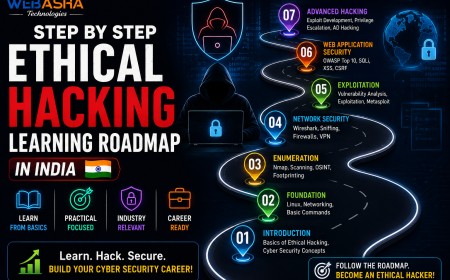
Entry-Level Cybersecurity Salary in India: What Affects Pay and How to Find a Real Range
Cybersecurity is a high-paying field with excellent opportunities for beginners. Entry-level cybersecurity professionals can expect salaries ranging from ₹3.5 - ₹7 LPA in India and $50,000 - $80,000 per year in the USA, depending on factors such as job role, location, certifications, and experience. Roles like Security Analyst, SOC Analyst, Penetration Tester, and Cybersecurity Consultant offer strong career growth and competitive pay. Certifications such as CompTIA Security+, CEH, and OSCP can significantly boost salary potential. Cybersecurity salaries increase with experience, with professionals earning over six figures in advanced roles. WebAsha Technologies provides affordable cybersecurity training with expert mentorship and job placement support, helping freshers start a rewarding cybersecurity career with a high-paying job.

Quick answer: We do not give a single figure, because entry-level cybersecurity pay in India varies widely by role, city, employer, skills and certification, and published averages go stale quickly. SOC analyst, vulnerability analyst and junior penetration tester roles are common starts. Check current job postings and recent offer data for your city to get a realistic range.
Key takeaways
- No single average is reliable, so check current job listings and recent offers for your city.
- Pay depends on role, employer type, city, skills, certifications and lab or project proof.
- Common entry roles are SOC analyst, vulnerability analyst, junior penetration tester and GRC analyst.
- Hands-on skills and a visible portfolio move offers more than certificates alone.
- Treat salary tables in blogs, including older versions of this page, with suspicion unless they cite a source.
How much do entry-level cybersecurity professionals earn in India?
It varies too much for one honest number. An earlier version of this page showed tables of salary ranges in several currencies. We could not trace them to a source, so we removed them. A figure with no source can mislead you when you negotiate.
What we can do is show what moves the number and how to check a current range yourself.
What affects a fresher's cybersecurity salary?
| Factor | Why it matters |
|---|---|
| Role | A technical testing role and a compliance role are paid and hired differently |
| Employer type | Large IT services firms, product companies, banks, startups and consultancies each have their own pay bands |
| City | Cost of living and demand differ between metros and smaller cities |
| Skills you can show | Labs, CTFs, a GitHub write-up and a clear interview matter a lot |
| Certifications | They help to get interviews, but they do not replace skills |
| Shift pattern | SOC roles often include rotating shifts, which can affect pay |
What are common entry-level cybersecurity roles?
- SOC analyst. Monitors alerts and investigates incidents.
- Vulnerability analyst. Scans, triages and tracks fixes.
- Junior penetration tester. Tests with supervision. See entry-level ethical hacking jobs and how to get hired.
- GRC or compliance analyst. Policies, audits and risk.
- IT security support or administrator. Access, patching and endpoint tools.
How can you find a realistic salary range?
- Read ten or more current job listings in your city for the role. Some show a range.
- Ask recent graduates and trainers about current offers, in confidence.
- Check more than one salary site, and note how many reports each uses.
- Compare the whole package: fixed pay, variable pay, shifts, training and notice period.
- Ask the recruiter about the band before you accept an interview slot.
Do certifications raise pay?
They can help you get shortlisted, and some employers prefer them. Common starting points are CompTIA Security+, CEH and CompTIA CySA+ for defence. See the CompTIA certifications page and the EC-Council CEH page for current details. Read best ethical hacking certifications for beginners to choose. Skills proven in a lab matter alongside the certificate.
How do you improve your starting offer?
- Build a small portfolio: three lab write-ups, one project and a clean GitHub.
- Practise explaining an investigation or a finding aloud.
- Apply to many roles, and learn from each interview.
- Negotiate politely with evidence, and never rely on a number you cannot source.
Our guide to getting a cybersecurity job as a fresher has a step-by-step roadmap.
Next steps
Next steps: to build job-ready skills, see our Cyber Security course, and read how to get a cybersecurity job as a fresher.
Related reading
Frequently Asked Questions
What's Your Reaction?
 Like
0
Like
0
 Dislike
0
Dislike
0
 Love
0
Love
0
 Funny
0
Funny
0
 Wow
0
Wow
0
 Sad
0
Sad
0
 Angry
0
Angry
0

Vaishnavi is a skilled tech professional at the Ethical Hacking Training Institute in Pune, responsible for managing and optimizing the technical infrastructure that supports advanced cybersecurity education. With deep expertise in network security, backend operations, and system performance, she ensures that practical labs, online modules, and assessments run smoothly and securely. Her behind-the-scenes contributions play a vital role in delivering a seamless and secure learning experience for aspiring ethical hackers.
![Top 10 Famous Ethical Hackers in India [Updated 2026]](https://www.webasha.com/blog/uploads/images/202608/image_450x280_b3317756e192c8d5e1fb674259f1a0c3.jpg)