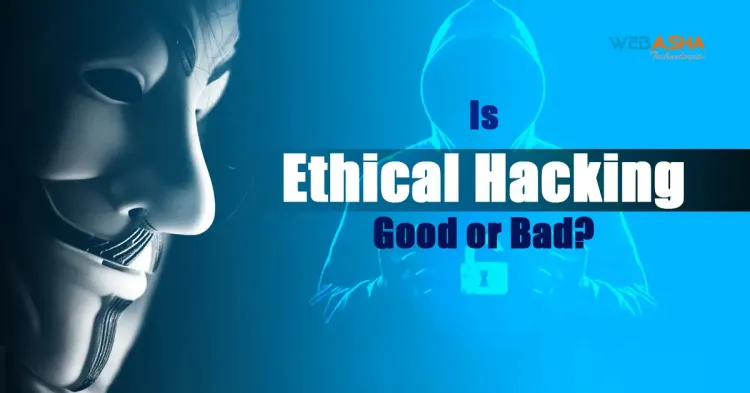
Is Ethical Hacking Good or Bad?
Explore whether ethical hacking is good or bad in this comprehensive guide. Learn about the benefits of ethical hacking, including enhanced security, regulatory compliance, and improved incident response. Understand potential concerns and ethical implications, such as data privacy and scope creep, and discover how ethical hackers contribute positively to cybersecurity.
Quick answer: Ethical hacking is good when it is done with written permission, within an agreed scope, to find security weaknesses and report them so they can be fixed. The same techniques used without permission are illegal. The difference is authorisation, honesty and responsible disclosure, not the tools or skills involved.
Key takeaways
- Ethical hacking is legal only with written permission and a defined scope.
- Without permission, the same action becomes unauthorised access under Indian law.
- The reason it is good is that the findings are reported and fixed.
Ethical hacking, often referred to as penetration testing or white-hat hacking, is a practice that involves intentionally probing computer systems, networks, or applications to identify and fix security vulnerabilities. While the term "hacking" may evoke negative connotations, ethical hacking is part of modern cybersecurity practice. Below we look at whether ethical hacking is good or bad, its benefits, potential concerns and the ethical implications.
What is Ethical Hacking?
Ethical hacking involves the use of hacking techniques and tools to assess the security of systems and identify weaknesses that could be exploited by malicious actors. Ethical hackers, also known as white-hat hackers, are authorized by organizations to conduct these tests to improve security. They operate within legal boundaries and follow a code of conduct that emphasizes responsible disclosure and remediation of vulnerabilities.
The Role of Ethical Hackers
Ethical hackers, often referred to as white-hat hackers or penetration testers, help safeguard digital systems. Their primary responsibility is to identify and address security vulnerabilities within systems, networks, and applications. Unlike malicious hackers, ethical hackers operate within legal and ethical boundaries, working to enhance security rather than compromise it. Below are the roles and responsibilities of ethical hackers and why they matter in cybersecurity.
The Good Side of Ethical Hacking
Enhanced Security:
Vulnerability Identification: Ethical hackers help organizations discover and address security weaknesses before they can be exploited by malicious hackers. This proactive approach significantly strengthens the overall security posture.
Risk Mitigation: By identifying potential threats and vulnerabilities, ethical hackers enable organizations to implement appropriate measures to mitigate risks and protect sensitive data.
Regulatory Compliance:
Meeting Standards: Many industries have regulatory requirements for cybersecurity. Ethical hacking helps organizations comply with these regulations by ensuring their systems are secure and meeting industry standards.
Audit Preparedness: Regular penetration testing can help organizations prepare for security audits and demonstrate their commitment to maintaining a strong security framework.
Improved Incident Response:
Real-World Testing: Ethical hacking simulates real-world attacks, allowing organizations to test their incident response procedures and improve their ability to respond to security incidents effectively.
Training Opportunities: It provides valuable training for IT and security teams, enhancing their skills and preparedness for handling actual security threats.
Increased Trust and Reputation:
Customer Confidence: Organizations that actively engage in ethical hacking demonstrate a commitment to security, which can build trust with customers and stakeholders.
Competitive Advantage: A strong security posture can differentiate a company from its competitors and enhance its reputation in the marketplace.
The Bad Side of Ethical Hacking
Scope Creep:
Defining Boundaries: Ethical hacking must be conducted within clearly defined boundaries to avoid unintended consequences. Uncontrolled testing or exceeding authorized limits can lead to disruptions or data loss.
Permissions: Ethical hackers must obtain explicit permission from organizations before conducting any tests to ensure that their activities are legal and authorized.
Data Privacy:
Sensitive Information: During ethical hacking, testers may come across sensitive or personal data. Ensuring that this information is handled securely and confidentially is essential to prevent misuse.
Disclosure: Ethical hackers must follow responsible disclosure practices, reporting vulnerabilities to the organization and providing recommendations for remediation without exposing sensitive details to unauthorized parties.
Potential Misuse:
Skill Transfer: The skills and knowledge gained through ethical hacking can potentially be misused if individuals with malicious intent gain access to these techniques. Proper training and ethical guidelines help mitigate this risk.
Misunderstandings: There may be misunderstandings or misconceptions about the intent and scope of ethical hacking. Clear communication and documentation keep all parties aligned and informed.
Conclusion
Ethical hacking is overwhelmingly beneficial when conducted responsibly and within the bounds of legality and ethics. It strengthens cybersecurity, improves risk management and supports regulatory compliance. By identifying and addressing vulnerabilities, ethical hackers help create a safer digital environment. However, concerns such as scope creep and data privacy need attention so that ethical hacking is done with integrity and professionalism. Ethical hacking is a useful tool for improving security and should be welcomed as a positive force against cyber threats.
Frequently Asked Questions
1. What is ethical hacking?
Ethical hacking, also known as penetration testing or white-hat hacking, involves deliberately probing computer systems, networks, or applications to identify and address security vulnerabilities. Ethical hackers are authorized by organizations to perform these tests to improve security and protect against malicious attacks.
2. How does ethical hacking differ from malicious hacking?
Ethical hacking is performed with permission and within legal boundaries to improve security, while malicious hacking (black-hat hacking) involves unauthorized access to exploit vulnerabilities for personal gain or damage. Ethical hackers follow a code of conduct and work to enhance security, whereas malicious hackers aim to cause harm or steal information.
3. What are the benefits of ethical hacking?
Ethical hacking offers several benefits, including:
Enhanced Security: Identifies and fixes vulnerabilities before malicious hackers can exploit them.
Regulatory Compliance: Helps organizations meet cybersecurity standards and regulations.
Improved Incident Response: Tests and strengthens incident response procedures.
Increased Trust: Builds customer confidence and enhances reputation by demonstrating a commitment to security.
4. Are there any risks associated with ethical hacking?
While ethical hacking is generally safe and beneficial, there are risks if not managed properly, including:
Scope Creep: Exceeding authorized testing boundaries can cause disruptions.
Data Privacy: Handling sensitive information requires strict confidentiality.
Potential Misuse: Skills and knowledge from ethical hacking could be misused if not properly managed.
5. How is ethical hacking conducted?
Ethical hacking involves several steps:
Planning and Scoping: Define the scope and obtain authorization from the organization.
Reconnaissance: Gather information about the target system or network.
Scanning: Identify vulnerabilities and assess system weaknesses.
Exploitation: Attempt to exploit vulnerabilities to test their impact.
Reporting: Document findings, provide recommendations, and assist in remediation.
6. Who can become an ethical hacker?
Anyone with a background in IT, cybersecurity, or a related field can become an ethical hacker. Formal training and certifications, such as Certified Ethical Hacker (CEH) or Offensive Security Certified Professional (OSCP), can enhance skills and credibility in ethical hacking.
7. What certifications are available for ethical hackers?
Common certifications for ethical hackers include:
Certified Ethical Hacker (CEH): Offered by EC-Council, focuses on various ethical hacking techniques.
Offensive Security Certified Professional (OSCP): Known for its hands-on approach and challenging exam.
Certified Information Systems Security Professional (CISSP): Provides a broader cybersecurity perspective, including ethical hacking.
8. How can organizations benefit from ethical hacking?
Organizations benefit from ethical hacking by:
Identifying and Fixing Vulnerabilities: Enhancing overall security by addressing weaknesses before they can be exploited.
Improving Security Measures: Strengthening incident response and security policies based on test results.
Ensuring Compliance: Meeting regulatory requirements and demonstrating a proactive approach to security.
9. What ethical guidelines should ethical hackers follow?
Ethical hackers should adhere to guidelines such as:
Obtain Authorization: Always have written permission from the organization before conducting tests.
Respect Privacy: Handle sensitive data responsibly and avoid unnecessary exposure.
Report Findings: Provide detailed reports of vulnerabilities and assist in remediation efforts.
Follow Legal Boundaries: Operate within the legal framework and ethical standards of the industry.
10. Can ethical hacking be done remotely?
Yes, ethical hacking can be performed remotely, especially with the use of online tools and technologies. Remote penetration testing allows ethical hackers to assess systems and networks from different locations, though it requires careful coordination with the organization to ensure secure and effective testing.
To take this further with guided labs and an instructor, see our EC-Council CEH v13 certification training.
Related reading
- Ethical Hacking Course Roadmap After B.Cs | Eligibility, Course, Syllabus, Fees, Duration for 2026
- How to become an Ethical hacker in 2026
- Ethical Hacking Career Roadmap After 12th | Eligibility, Course, Fees, and Syllabus for 2026
Reference
For the authoritative details, see Ministry of Electronics and IT (India).
What's Your Reaction?
 Like
0
Like
0
 Dislike
0
Dislike
0
 Love
0
Love
0
 Funny
0
Funny
0
 Wow
0
Wow
0
 Sad
0
Sad
0
 Angry
0
Angry
0

I am passionate about technology, invention and big challenging tasks on my to- do list. In terms of the work I am doing also at Bunnyshell, I am most passionate about the technologies that we are using., I'm devoted to delivering content that not only informs but also inspires. Whether you need in- depth analysis pieces, educational attendants, or study- provoking opinion pieces, I draft content that resonates with tech suckers and professionals likewise.






![Top 10 Famous Ethical Hackers in India [Updated 2026]](https://www.webasha.com/blog/uploads/images/202608/image_140x98_da23f65c290cfbf1237d77aec58a2f0f.jpg)