OSINT in Ethical Hacking: Techniques, Tools and Best Practices
Open Source Intelligence (OSINT) is a critical technique in cybersecurity, ethical hacking, and digital investigations. It involves collecting and analyzing publicly available information to uncover potential threats, security vulnerabilities, and intelligence about targets. OSINT is widely used for penetration testing, threat analysis, social media intelligence, and forensic investigations. This blog covers the importance of OSINT, its role in cybersecurity, and popular OSINT tools like OSINT Framework, Fagan Finder, Maltego, Shodan, SpiderFoot, and Google Dorking. We also provide a step-by-step guide on how ethical hackers use OSINT for reconnaissance, discuss best practices, and highlight legal considerations to ensure responsible usage. By understanding OSINT techniques and using the right tools, cybersecurity professionals can enhance security assessments, identify vulnerabilities, and stay ahead of cyber threats.
Topic: Security Tools, Authorized Labs & CTFs in Cybersecurity & Ethical Hacking · Tools
Also covers: Ethical Hacking
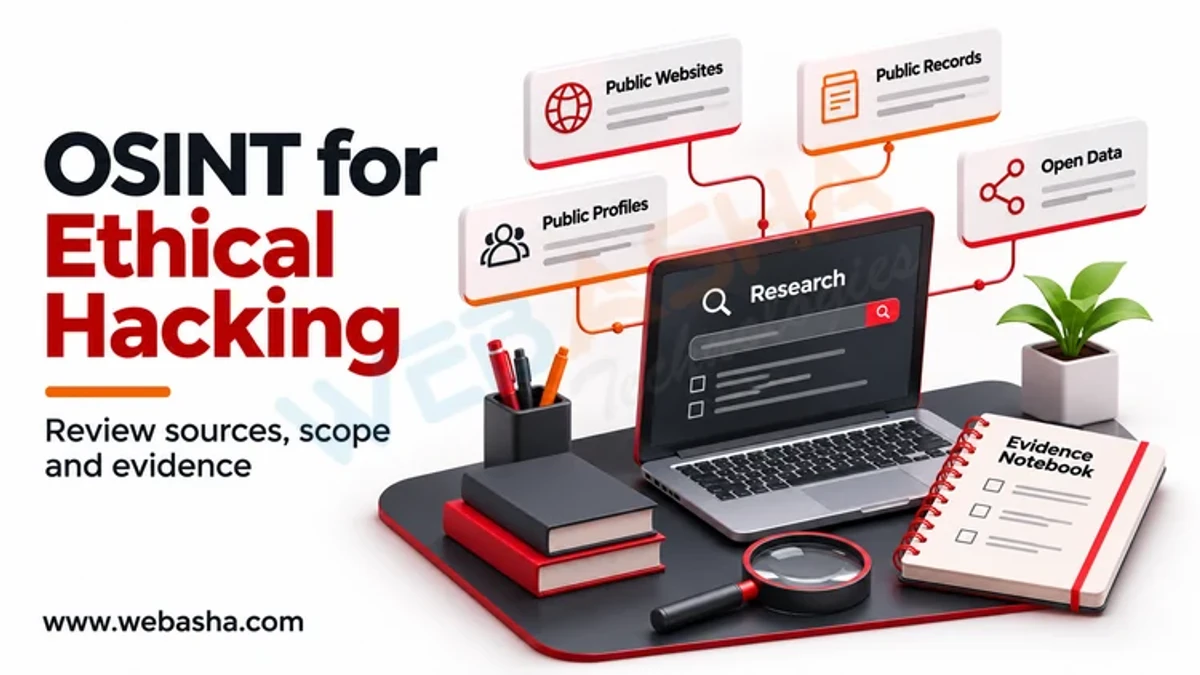
Quick answer: Open source intelligence (OSINT) is the collection and analysis of information from publicly available sources, such as websites, DNS records, public registries and social media. Ethical hackers use it in the reconnaissance phase of an authorised test to map an organisation's exposure before touching any system.
Key takeaways
- OSINT uses only public information, but how you collect and use it can still be unlawful or unethical.
- Passive OSINT never contacts the target. Active reconnaissance does, and needs written permission.
- Good OSINT is a method: define scope, collect, verify, record sources, report.
- Defenders run OSINT on themselves to see what attackers can see.
What is OSINT?
OSINT is intelligence built from information anyone can legally access. No hacking is involved in collecting it. The skill is in knowing where to look, how to connect small facts into a picture, and how to tell reliable data from noise.
Common sources:
| Source type | Examples | What it can reveal |
|---|---|---|
| Websites and archives | Company site, careers pages, cached copies | Technologies, staff roles, office locations |
| DNS and registries | DNS records, WHOIS, certificate transparency logs | Subdomains, mail providers, hosting |
| Search engines | Advanced operators ("site:", "filetype:") | Exposed documents, forgotten pages |
| Social and professional networks | LinkedIn, X, GitHub | Roles, tools in use, leaked keys in repos |
| Public records | Company filings, court and government portals | Ownership and legal facts |
| Code and paste sites | GitHub, public paste services | Hard-coded credentials, config files |
Where OSINT fits in ethical hacking
A penetration test normally starts with reconnaissance. OSINT is the passive part of it: you learn about the target without sending traffic to it. The result guides the later phases, for example which subdomains to include in scope and which employees' public exposure makes social engineering tests realistic.
Passive collection reads third-party sources only. Active reconnaissance, such as port scanning, touches the target and needs written authorisation. Keep the two clearly separate in your notes.
The method
- Scope. Write down what you may investigate and why. For a client test, the scope document decides this.
- Collect. Gather from several source types. Log the source and time for every item.
- Verify. Confirm each important fact from a second, independent source.
- Analyse. Connect the facts: which assets are internet-facing, which are forgotten, which staff details could help an attacker.
- Report. Give findings and fixes; a data dump is not enough.
A hands-on exercise on your own domain
Use a domain you own or a lab domain. You are learning what an attacker can learn.
whois yourdomain.example
dig yourdomain.example any +noall +answer
dig mx yourdomain.example +short
dig txt yourdomain.example +short
Then search a certificate transparency log for the domain to list subdomains, and search GitHub for the domain name to check that no one has committed passwords or keys. Write down every subdomain you did not expect. Each one is something to patch, remove or at least monitor.
Which tools are worth knowing?
- Maltego for graph-based link analysis. The free Community Edition is enough to start.
- Search operators in any major search engine. They cost nothing and teach a lot.
- Command line:
whois,digandnslookupfor DNS. - Nmap is not OSINT, because it contacts the target. Treat it as active scanning. The Nmap guide explains the difference.
What are the legal and ethical limits?
Public does not mean free of rules. In India, unauthorised access to computer systems is an offence under the Information Technology Act, 2000, and personal data handling falls under the Digital Personal Data Protection Act, 2023. Only profile individuals when you have a lawful, proportionate purpose, and get written authorisation before any active testing. If you come across evidence of a crime, report it through cybercrime.gov.in.
Common mistakes
- Mixing passive and active steps without noticing.
- Trusting a single source or an old cached record.
- Collecting personal data you have no need for.
- Failing to log sources, which makes findings impossible to defend later.
Next steps
If you want to build these skills inside a structured path, the CEH v13 AI course covers reconnaissance as part of ethical hacking. To see how AI is changing collection, read the AI-powered OSINT tools post.
Related reading
- AI in Open-Source Intelligence (OSINT) | How It Works, Benefits, and Challenges in Cybersecurity
- Step-by-Step Guide to Performing OSINT on Your Instagram Account | How to Search, Analyze, and Protect Your Digital Footprint Using Google Dorking, Reverse Image Search, and Social Media Lookup Tools
- AI-Powered OSINT | How Artificial Intelligence is Changing Open Source Intelligence
Frequently Asked Questions
What's Your Reaction?
 Like
0
 Dislike
0
 Love
0
 Funny
0
 Wow
0
 Sad
0
 Angry
0

Vaishnavi is a skilled tech professional at the Ethical Hacking Training Institute in Pune, responsible for managing and optimizing the technical infrastructure that supports advanced cybersecurity education. With deep expertise in network security, backend operations, and system performance, she ensures that practical labs, online modules, and assessments run smoothly and securely. Her behind-the-scenes contributions play a vital role in delivering a seamless and secure learning experience for aspiring ethical hackers.