Top AI and Machine Learning Jobs in India: Roles, Skills and How to Start
Are you searching for the highest-paying AI and Machine Learning jobs in India in 2026? You’re at the right place! With industries like finance, healthcare, and retail heavily investing in AI, there’s a huge surge in demand for AI Engineers, Data Scientists, Machine Learning Engineers, and NLP Specialists. Freshers and experienced professionals can secure top roles with salaries ranging from ₹8 LPA to ₹50+ LPA. With the right mix of Python programming, machine learning algorithms, and deep learning expertise, along with professional certifications from trusted institutes like WebAsha Technologies, you can easily step into this booming field. This guide covers the best AI & ML jobs, required skills, salaries, and FAQs to help you make a smart career move in 2026.
Topic: Machine Learning in AI & Data · Career guidance

Quick answer: Common AI and machine learning jobs in India include machine learning engineer, data scientist, data analyst, MLOps engineer, NLP or computer vision engineer, AI application developer and data engineer. Most need Python, statistics, SQL, machine learning libraries and cloud skills, plus projects that show you can build and deploy models.
Key takeaways
- Roles differ: some build models, some run them in production, some prepare data.
- Core skills: Python, SQL, statistics, a library such as scikit-learn or PyTorch and cloud basics.
- Projects and deployment experience matter more than certificates alone.
- Salary figures vary too much to quote reliably; check current listings and ask recruiters.
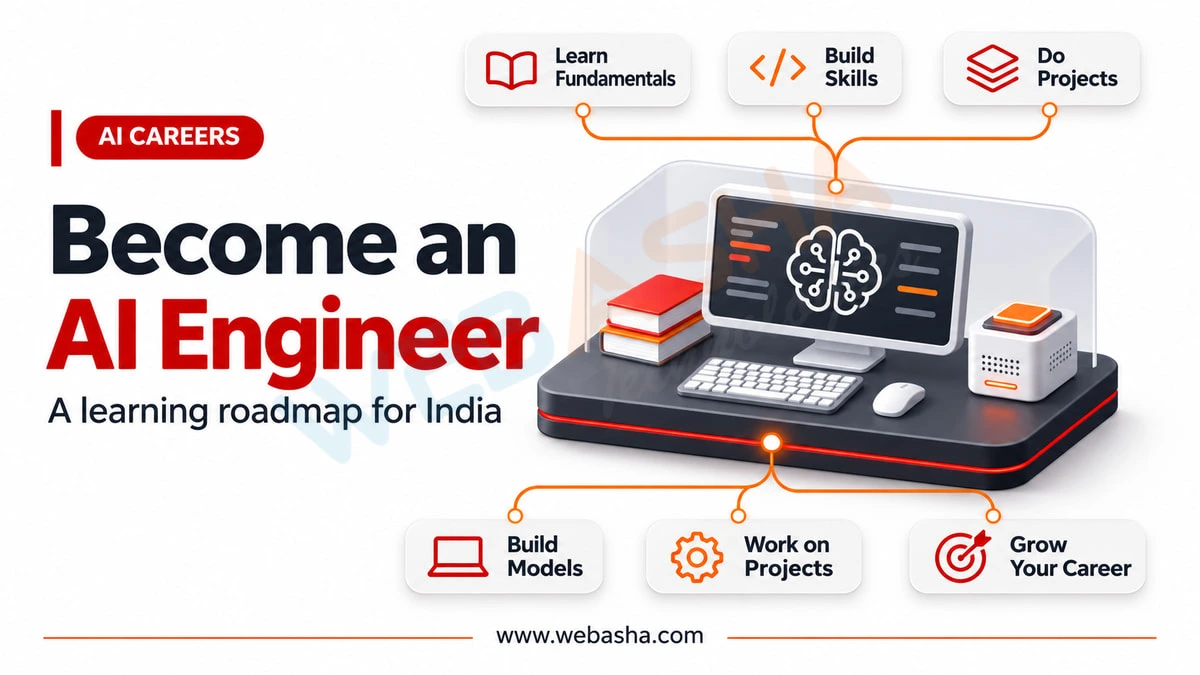
- Start with Python and data analysis, then ML, then deployment and one specialisation.
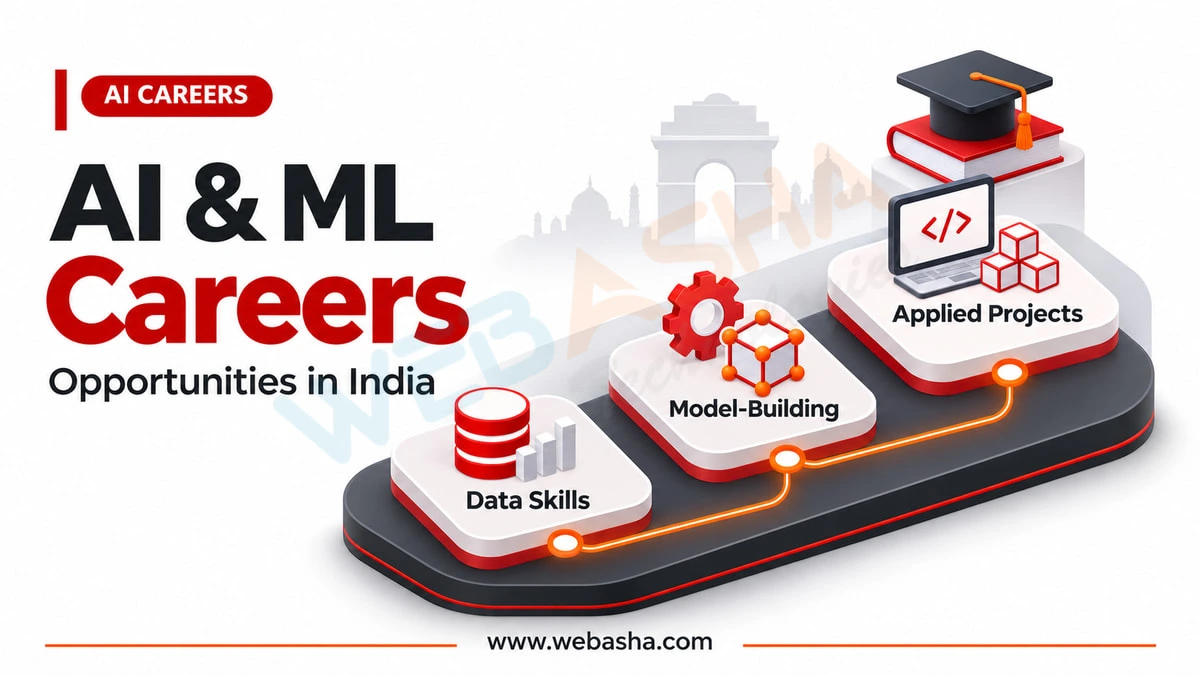
What are the main AI and ML job roles?
| Role | What you do | Skills to emphasise |
|---|---|---|
| Data analyst | Clean data, build reports and find patterns | SQL, Excel, Python, visualisation, statistics |
| Data scientist | Explore data, build and evaluate predictive models | Python, statistics, ML algorithms, experimentation |
| Machine learning engineer | Turn models into reliable software and pipelines | Python, ML libraries, software engineering, APIs |
| MLOps engineer | Deploy, monitor and retrain models in production | Docker, Kubernetes, CI/CD, cloud, monitoring |
| Data engineer | Build data pipelines and warehouses | SQL, Spark or similar, orchestration, cloud data services |
| NLP or LLM application engineer | Build apps with language models, retrieval and agents | Python, APIs, vector search, evaluation, prompt design |
| Computer vision engineer | Build image and video models | Deep learning, OpenCV, PyTorch |
| AI security specialist | Protect AI systems from attacks like prompt injection and data poisoning | Security fundamentals, LLM risks, testing |
Job titles overlap between companies, so read the description rather than the title.
What about salaries?
Pay depends on city, company type, experience and the exact work, and published averages are often outdated or unreliable. This article gives no numbers. To estimate your range, check current job postings that list pay, ask recruiters, and compare roles by the skills they demand.
What skills do employers look for?
- Python with libraries such as NumPy, pandas and scikit-learn. The Python documentation is your base.
- SQL for getting and shaping data.
- Statistics and maths at a practical level: probability, distributions, evaluation metrics, overfitting.
- Machine learning and deep learning with scikit-learn, PyTorch or TensorFlow.
- Data handling and visualisation.
- Cloud and deployment: Docker, an API framework such as FastAPI, and one cloud platform.
- Communication: explaining results to non-technical people.
Which certifications help?
Certificates support your profile but do not replace projects. Cloud providers offer machine learning and AI credentials, for example AWS Certified Machine Learning Engineer Associate and AI Practitioner, Microsoft Azure AI certifications and Google Cloud's machine learning certification. Check each provider's official page, such as AWS Certification and Microsoft Credentials, for current names and requirements.
How do you start?
- Learn Python and SQL properly.
- Study data analysis: clean a real dataset, make charts, write conclusions.
- Learn core machine learning: regression, classification, trees, clustering, cross-validation.
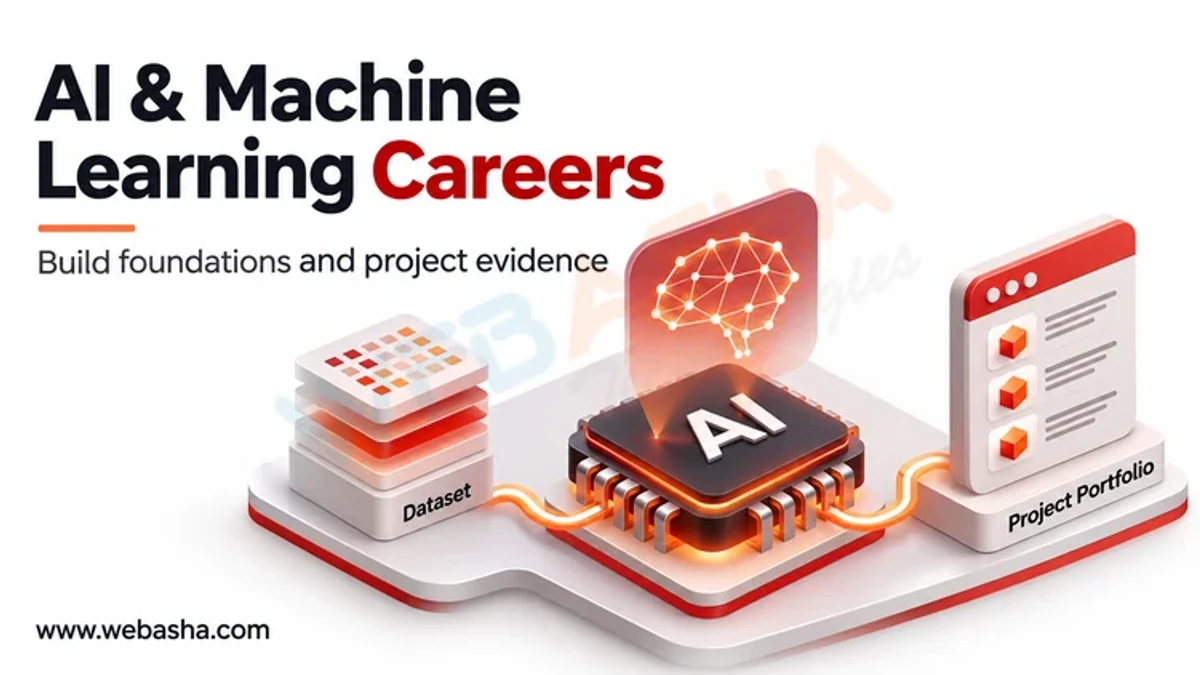
- Build three projects that you can explain: for example, a prediction model on a public dataset, a text classifier, and one project deployed as an API with Docker.
- Add one specialisation: NLP and LLM apps, computer vision, MLOps or data engineering.
- Publish your work on GitHub with a clear README: problem, data, method, result, limits.
- Apply for adjacent roles too, such as analyst or software roles, which often lead into ML.
What do beginners build first?
A good first project is small and complete: choose a public dataset, define a question, split train and test data, train a baseline model, compare it with one better model and write what went wrong. A working end-to-end small project teaches more than a large unfinished one.
Common mistakes
- Jumping to deep learning before understanding basic models and evaluation.
- Collecting certificates without projects.
- Training on test data by accident and reporting inflated results.
- Ignoring deployment, which is where many jobs are.
Next steps
For structured learning, see our machine learning course and data science course. For a related view, read data science jobs in India.
Related reading
Frequently Asked Questions
What's Your Reaction?
 Like
0
 Dislike
0
 Love
0
 Funny
0
 Wow
0
 Sad
0
 Angry
0

Vaishnavi is a skilled tech professional at the Ethical Hacking Training Institute in Pune, responsible for managing and optimizing the technical infrastructure that supports advanced cybersecurity education. With deep expertise in network security, backend operations, and system performance, she ensures that practical labs, online modules, and assessments run smoothly and securely. Her behind-the-scenes contributions play a vital role in delivering a seamless and secure learning experience for aspiring ethical hackers.