60% of Indian Employers to Use AI for Salary Benchmarking and Employee Rewards by 2028 | EY Report
AI is transforming salary benchmarking and compensation strategies. Top companies like Amazon, Google, Microsoft, and JPMorgan Chase are using AI-driven insights to ensure real-time pay adjustments, predictive salary analysis, and personalized compensation. With AI adoption expected to grow by 60% by 2028, businesses across sectors—e-commerce, financial services, IT, and GCCs—are integrating AI to optimize salaries. This blog explores rank-wise industry salary hikes, AI-based pay structures, and future trends in compensation.
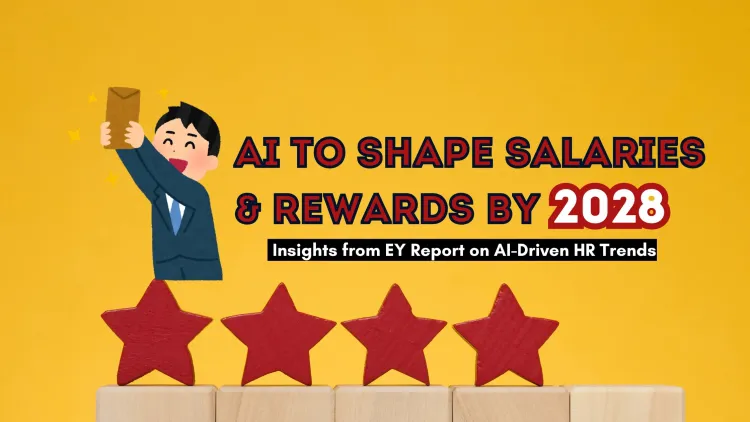
Quick answer: According to the EY Future of Pay 2025 report cited in the post, around 60% of Indian employers plan to use AI for salary benchmarking and rewards by 2028, and an average salary increase of 9.4% is expected in 2026. AI tools can give real-time pay data, but fairness and transparency still need human oversight.
Key takeaways
- The 60% figure comes from an EY report cited in the post, so check the report before quoting it.
- AI benchmarking still needs HR review for fairness.
- Avoid feeding personal pay data into public AI tools.
Table of Contents
- Introduction
- Why Are Companies Using AI for Salary Benchmarking?
- Which Companies Are Using AI for Salary Benchmarking?
- Real-World Scenario: AI in Salary Adjustments
- Industry Trends: AI-Driven Salary Growth (2025 Projections)
- Changing Employee Priorities: AI-Driven Flexibility and Rewards
- CEO Compensation Trends: AI’s Role in Executive Pay
- Future of AI in Salary and Compensation (2025-2028)
- Conclusion: AI is Reshaping Compensation Strategies
Introduction
Artificial Intelligence (AI) is revolutionizing how businesses handle salary benchmarking, employee rewards, and compensation strategies. According to the EY Future of Pay 2025 report, around 60% of Indian employers plan to integrate AI into these processes by 2028.
With an average salary increase of 9.4% expected in 2026, companies are moving beyond traditional pay models. AI-driven compensation tools now enable real-time pay adjustments, predictive analytics, and personalized incentives, ensuring fair and competitive salaries for employees.
In this blog, we’ll explore how AI is transforming salary decisions, which global companies are leading the charge, and the future of AI-driven compensation.
Why Are Companies Using AI for Salary Benchmarking?
Traditional salary benchmarking was slow, manual, and often outdated by the time pay adjustments were made. AI is changing the game by offering real-time, data-driven compensation models that align with market trends.
Key Benefits of AI in Salary Benchmarking:
- Real-Time Pay Adjustments – AI monitors job market trends and suggests salary changes instantly.
- Personalized Compensation – AI tailors salaries and benefits to individual employee skills and performance.
- Pay Equity & Fairness – AI detects and removes biases in salary structures, ensuring equal pay for similar roles.
- Predictive Insights – AI forecasts future salary trends, helping companies plan ahead for pay raises.
Which Companies Are Using AI for Salary Benchmarking?
Amazon – AI-powered payroll & workforce optimization
Amazon uses machine learning algorithms to optimize employee salaries and automate workforce management. AI helps Amazon adjust wages based on job roles, performance metrics, and location-based pay scales.
Google – AI-driven pay equity analysis
Google has implemented AI-powered tools to analyze gender and racial pay gaps. The company uses AI to ensure equal pay for equal work and adjust salaries based on industry benchmarks.
Microsoft – AI-powered performance-based compensation
Microsoft employs AI for real-time salary adjustments and personalized employee rewards. AI helps determine bonuses, promotions, and salary hikes based on performance metrics and industry trends.
Tesla – AI-driven incentive structures
Tesla uses AI to analyze employee performance and productivity, ensuring competitive pay structures. AI helps identify top talent and offers stock-based incentives to retain employees.
JPMorgan Chase – AI for financial sector compensation
JPMorgan Chase utilizes AI to predict salary trends and personalize financial incentives for employees. AI-driven data analytics optimize bonuses, stock options, and retirement benefits.
Infosys & TCS (Indian IT Giants) – AI-powered workforce analytics
Leading Indian IT firms Infosys and TCS use AI to analyze market salaries and upskill employees based on future job trends. AI also helps retention strategies by predicting attrition risks.
Real-World Scenario: AI in Salary Adjustments
Case Study: A Tech Firm Uses AI to Reduce Employee Turnover
A global IT company was struggling with high employee attrition due to non-competitive salaries. Manual benchmarking took months, causing delays in salary adjustments.
How AI Helped:
- AI-based salary benchmarking compared salaries with real-time market data from LinkedIn, Glassdoor, and job postings.
- Personalized pay raises were suggested for high-risk employees before they resigned.
- Performance-based compensation was assigned automatically using AI-driven insights.
Impact:
- 30% drop in employee attrition
- Salary adjustments completed in real-time instead of quarterly reviews
- Higher job satisfaction and engagement
Industry Trends: AI-Driven Salary Growth (2025 Projections)
E-Commerce & Financial Services Leading Salary Growth
- E-commerce salaries are projected to increase by 10.5% in 2026, driven by the rise in digital commerce and AI-powered automation.
- Financial services (banking, fintech) will see a 10.3% hike, fueled by demand for cybersecurity experts and AI-driven banking solutions.
AI in IT & Global Capability Centers (GCCs)
- Global Capability Centers (GCCs) will witness 10.2% salary growth in 2026, as companies expand AI investments.
- IT services salaries will see slower growth, declining from 9.8% in 2024 to 9.6% in 2026, due to automation and cost-cutting.
Changing Employee Priorities: AI-Driven Flexibility and Rewards
- 90% of employees prefer hybrid work models – AI helps companies design flexible compensation structures.
- 50% of employers report a rise in gig and freelance work – AI-driven pay platforms help manage variable salaries.
- 65% of companies believe flexible work options improve talent acquisition – AI helps match pay with remote work models.
Stock-Based Incentives & AI-Driven Compensation
- Stock-based incentives (ESOPs, RSUs, SARs) have increased from 63% in 2020 to 75% in 2024.
- AI helps personalize stock compensation based on employee tenure, role, and performance.
CEO Compensation Trends: AI’s Role in Executive Pay
Performance-Linked CEO Salaries
- CEO salaries in Nifty50 companies surged by 18-20% from 2023 to 2024.
- 70% of CEO pay is now linked to business growth, ESG goals, and long-term sustainability.
AI-Driven Leadership Selection
- AI helps companies analyze CEO performance across industries, ensuring better executive hiring decisions.
- 40-45% of CEO transitions in the last five years have been internal promotions, optimized by AI-driven career tracking.
Future of AI in Salary and Compensation (2025-2028)
AI-Powered Salary Predictions
- AI will enable continuous salary adjustments instead of annual raises.
- AI will help companies predict talent shortages and adjust salaries to stay competitive.
Blockchain & Smart Contracts for Payroll
- AI & blockchain will automate cross-border payments, reducing delays and fraud.
- Smart contracts will ensure instant payroll processing, especially for freelancers and gig workers.
AI-Based Upskilling & Compensation
- AI-driven learning platforms will recommend pay raises based on skill development.
- Employees will get incentives for completing AI-recommended training programs.
Conclusion: AI is Reshaping Compensation Strategies
AI is revolutionizing salary benchmarking, pay structures, and employee benefits. Companies using AI retain top talent, ensure pay equity, and optimize compensation decisions in real-time.
With AI adoption growing, businesses that embrace smart compensation strategies will have a competitive edge in the evolving job market.
What Do You Think?
Do you believe AI will improve salary fairness in the workplace? Share your thoughts in the comments!
Related reading
Frequently Asked Questions
What's Your Reaction?
 Like
0
Like
0
 Dislike
0
Dislike
0
 Love
0
Love
0
 Funny
0
Funny
0
 Wow
0
Wow
0
 Sad
0
Sad
0
 Angry
0
Angry
0

Vaishnavi is a skilled tech professional at the Ethical Hacking Training Institute in Pune, responsible for managing and optimizing the technical infrastructure that supports advanced cybersecurity education. With deep expertise in network security, backend operations, and system performance, she ensures that practical labs, online modules, and assessments run smoothly and securely. Her behind-the-scenes contributions play a vital role in delivering a seamless and secure learning experience for aspiring ethical hackers.














![Top 10 Famous Ethical Hackers in India [Updated 2026]](https://www.webasha.com/blog/uploads/images/202608/image_140x98_da23f65c290cfbf1237d77aec58a2f0f.jpg)