What is Agentic AI and Autonomous Business Analysts: Transforming Modern Enterprises
Agentic AI represents a significant advancement in artificial intelligence, enabling systems to operate autonomously without human intervention. This technology has given rise to Autonomous Business Analysts, AI-driven entities capable of making independent decisions to optimize business processes. Major companies like OpenAI, Dell, and UiPath are at the forefront of integrating Agentic AI into their operations, leading to enhanced efficiency and productivity. This article explains the concept of Agentic AI and its applications in Autonomous Business Analysts, and addresses common questions surrounding this emerging technology.
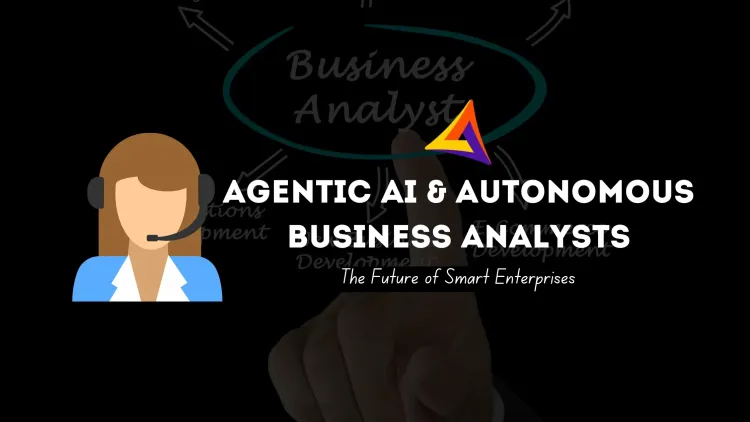
Quick answer: Agentic AI refers to AI systems that pursue a goal on their own, plan multi-step actions, make decisions and act with little human supervision. Autonomous business analyst agents apply this to analysing data and supporting decisions. Unlike traditional AI that follows preset instructions, they adapt to changing conditions, so oversight and clear limits are still important.
Key takeaways
- Agentic AI plans and acts on a goal over several steps, unlike a chatbot that only replies.
- Give agents the least access they need and require approval for risky actions.
- Log every action an agent takes.
Table of Contents
- Introduction
- What is Agentic AI?
- How Agentic AI Powers Autonomous Business Analysts
- Which Industries Are Benefiting from Agentic AI?
- Trending Companies Leading Agentic AI Development
- Future of Agentic AI and Autonomous Business Analysts
- Conclusion
Introduction
Artificial Intelligence (AI) has evolved from rule-based systems to complex machine learning models capable of learning, reasoning, and making decisions. The next step in AI's evolution is Agentic AI, which allows AI to act autonomously, perform multi-step reasoning, and make independent decisions. One of the most impactful applications of Agentic AI is in Autonomous Business Analysts, which are transforming industries by automating decision-making and strategic planning.
What is Agentic AI?
Agentic AI refers to AI systems that can function independently, make real-time decisions, and execute actions without requiring human intervention. Unlike traditional AI models that rely on pre-set instructions, Agentic AI proactively analyzes data, adapts to changing environments, and optimizes processes based on goals.
What Are the Key Features of Agentic AI?
- Autonomy: Functions without continuous human supervision.
- Decision-Making: Evaluates multiple options and selects the best course of action.
- Goal-Oriented Behavior: Works towards predefined objectives with minimal human input.
- Self-Improvement: Learns from past decisions and refines its strategies.
- Multi-Step Planning: Breaks down complex tasks into executable steps.
How Agentic AI Powers Autonomous Business Analysts
Autonomous Business Analysts use Agentic AI to provide real-time business insights, automate workflows, and enhance strategic decision-making across industries. These AI-driven analysts can interpret data, predict trends, and take corrective actions without human involvement.
What Are the Capabilities of Autonomous Business Analysts?
- Predictive Analytics: Forecast market trends and financial risks.
- Automated Reporting: Generate and interpret business performance reports.
- Supply Chain Optimization: Predict demand fluctuations and optimize logistics.
- Fraud Detection: Identify unusual patterns and prevent financial fraud.
- Customer Insights: Analyze behavioral patterns to enhance customer experience.
Which Industries Are Benefiting from Agentic AI?
1. Financial Services & Banking
Use Case: AI-driven investment advisory
- AI analyzes stock market data and provides personalized investment strategies.
- Predicts financial risks and recommends actions.
- Automates loan approvals based on risk assessments.
Companies Leading the Way:
- JP Morgan Chase: Uses AI for fraud detection and automated trading.
- Goldman Sachs: Employs AI-driven investment analysis.
- Betterment: Robo-advisors for automated financial planning.
2. Retail & E-Commerce
Use Case: AI-powered demand forecasting and pricing
- Predicts consumer demand based on historical trends and market signals.
- Automatically adjusts pricing to maximize revenue.
Companies Leading the Way:
- Amazon: Uses AI for real-time price adjustments and inventory management.
- Walmart: Implements AI for demand prediction and supply chain automation.
3. Healthcare & Pharmaceuticals
Use Case: AI-driven diagnostics and treatment planning
- Analyzes patient data and suggests treatments based on medical history.
- Detects potential disease outbreaks through predictive analytics.
Companies Leading the Way:
- IBM Watson Health: AI-driven diagnostics and medical research.
- Google DeepMind: AI-powered medical imaging analysis.
4. Cybersecurity & Risk Management
Use Case: AI-based threat detection and response
- Identifies unusual activity patterns that indicate cyber threats.
- Automates responses such as blocking suspicious IPs and isolating compromised systems.
Companies Leading the Way:
- Darktrace: Uses AI for autonomous cyber threat detection.
- Palo Alto Networks: AI-powered threat intelligence and response.
5. Supply Chain & Logistics
Use Case: AI-powered route optimization and inventory management
- Predicts supply chain disruptions and suggests alternate routes.
- Adjusts inventory levels in real-time to match demand.
Companies Leading the Way:
- Tesla: AI-driven logistics and self-optimizing supply chains.
- DHL: Uses AI for dynamic route planning and delivery efficiency.
Trending Companies Leading Agentic AI Development
- OpenAI: Developing AI agents for business automation.
- Google DeepMind: Advancing self-learning AI models for healthcare and finance.
- Microsoft AI: Enhancing AI-driven business intelligence solutions.
- Amazon AI: Implementing AI-driven analytics for e-commerce and logistics.
- IBM Watson: AI-powered business intelligence and predictive analytics.
Future of Agentic AI and Autonomous Business Analysts
The next phase of AI evolution will see Agentic AI integrated into autonomous decision-making at an enterprise level, allowing businesses to:
- Enhance efficiency and accuracy in operations.
- Reduce human workload by automating complex decision-making.
- Improve real-time adaptability to market and operational changes.
- Strengthen cybersecurity defenses through automated risk assessment.
As businesses increasingly rely on Agentic AI, industries will witness a paradigm shift where AI agents take over high-level business strategy and operations, paving the way for a future of self-governing AI-powered enterprises.
Conclusion
Agentic AI is reshaping how organizations analyze data, make decisions, and respond to dynamic environments. With its ability to operate autonomously, businesses across finance, retail, healthcare, cybersecurity, and logistics are already using Autonomous Business Analysts to drive efficiency and profitability. As AI continues to evolve, Agentic AI is likely to play a larger role across these industries.
To take this further with guided labs and an instructor, see our agentic AI training course.
Related reading
- What Is Agentic AI? Agentic AI vs Generative AI | Key Differences, Use Cases and Future
- How Blockchain and AI Are Merging: Full Guide to Synergy, Benefits & Use Cases (2026)
- What is the role of AI and Machine Learning in modern networking? The Detailed Guide
Reference
For the authoritative details, see NIST Cybersecurity Framework.
Frequently Asked Questions
What's Your Reaction?
 Like
0
 Dislike
0
 Love
0
 Funny
0
 Wow
0
 Sad
0
 Angry
0

Vaishnavi is a skilled tech professional at the Ethical Hacking Training Institute in Pune, responsible for managing and optimizing the technical infrastructure that supports advanced cybersecurity education. With deep expertise in network security, backend operations, and system performance, she ensures that practical labs, online modules, and assessments run smoothly and securely. Her behind-the-scenes contributions play a vital role in delivering a seamless and secure learning experience for aspiring ethical hackers.