What are the new features of OpenAI GPT-5, and how will it impact the AI industry in 2026?
OpenAI's upcoming GPT-5 model is expected to significantly advance artificial intelligence in 2026. While the official release date is still unknown, OpenAI researcher Xikun Zhand confirmed it's coming. GPT-5 will likely feature enhanced reasoning, memory, multimodal capabilities (text, image, video), and autonomous agent-like behavior. It will improve upon GPT-4 and o3, with faster performance, more natural responses, and broader industry use, from education and healthcare to creative fields. The model is anticipated to trigger a major shift in how AI is used globally.
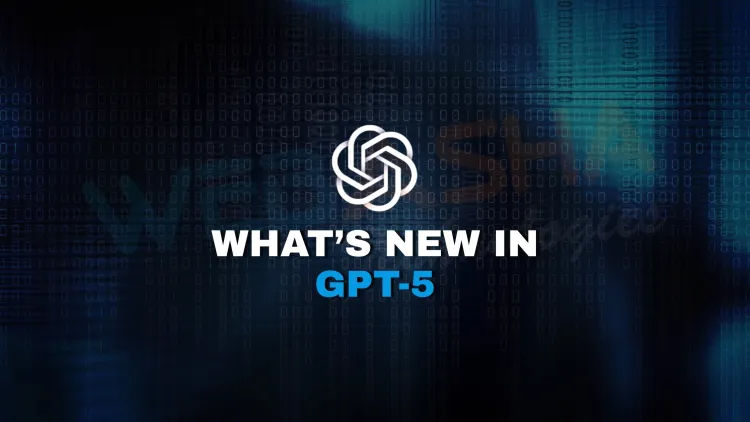
Quick answer: GPT-5 is the OpenAI model that follows GPT-4 and the o3 reasoning model. It was built as a new model, not a small update, with the aim of better reasoning, memory and task handling. For users, that means more capable assistants; for the industry, faster competition among AI labs.
Key takeaways
- GPT-5 follows GPT-4 and the o3 reasoning model.
- Capability claims need checking against OpenAI's own documentation.
- Test it on your own tasks before relying on it.
OpenAI is preparing to launch its next powerful AI model: GPT-5. While there's no exact release date yet, OpenAI has confirmed that it's coming soon.
In a conversation on X (formerly Twitter), OpenAI researcher Xikun Zhand responded to a user asking if GPT-5 would create another shockwave in the AI industry. His reply?
"We will see "
This suggests something big may be coming in artificial intelligence.
What Is GPT-5?
GPT-5 is OpenAI’s upcoming next-generation language model. It's expected to be smarter, faster, and more helpful than GPT-4 or the o3 model currently used in ChatGPT.
Unlike previous versions, GPT-5 will be a completely new model rather than a fine-tuned update. It could bring significant improvements in memory, decision-making, and task handling.
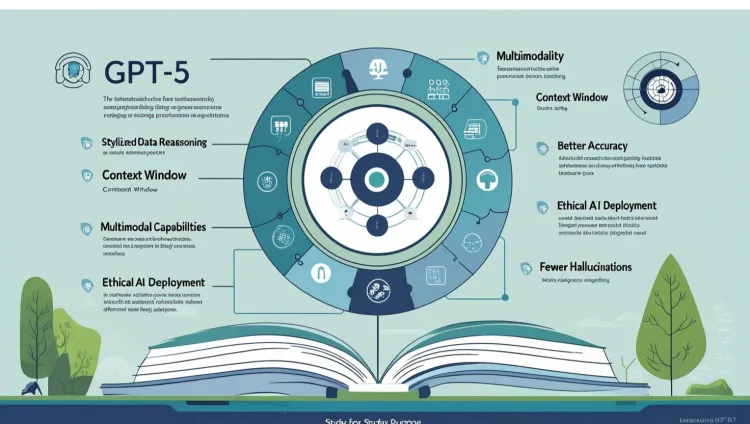
Top Features of GPT-5 (Expected)
| Feature | Description |
|---|---|
| Better Reasoning | Smarter at solving problems, analyzing data, and understanding context. |
| Improved Conversations | More natural, human-like replies that understand your intent better. |
| Advanced Memory | May remember past chats and preferences for personalized interactions. |
| Tool Mastery | Will know how to use digital tools (apps, APIs, etc.) on its own. |
| Agent Capabilities | Can act without step-by-step instructions, like a smart virtual assistant. |
| Multimodal Inputs | Will likely handle images, text, and possibly videos in a single prompt. |
| Stronger Safety Controls | Better filters to avoid harmful content or wrong answers. |
| Faster Performance | Shorter response times, especially in complex queries. |
| Language & Knowledge | Broader support for more languages and updated world knowledge. |
GPT-4 vs. o3 vs. GPT-5 (Expected)
| Feature | GPT-4 | o3 (ChatGPT 2024) | GPT-5 (Expected 2025) |
|---|---|---|---|
| Model Type | Language Model | Fine-tuned GPT-4 | Entirely new model |
| Memory | None | Basic memory (Pro users) | Long-term memory (advanced) |
| Tool Use | Needs plugins | Built-in tools | Autonomous tool execution |
| Multimodal Input | Yes (text + image) | Yes | Text + image + video (likely) |
| Agent Capabilities | Limited | Early-stage | Fully developed agent skills |
| Language Support | Multiple languages | Global support | Expanded multilingual use |
| Speed | Good | Faster than GPT-4 | Fastest yet (expected) |
| Personalization | Minimal | Getting better | Deep personalization |
What Is ChatGPT Agent?
Alongside GPT-5, OpenAI also introduced ChatGPT Agent. It’s not a new model but a system that can:
-
Make decisions by itself
-
Use software tools to complete tasks
-
Act more like a virtual assistant with its own computer
This hints that GPT-5 may support similar features, making AI more autonomous and proactive.
Other OpenAI Projects Coming Soon
Operator Upgrade
OpenAI is updating the Operator, the system that manages file searches, tools, and agent responses inside ChatGPT.
Image Gen Enhancements
The image generator will soon let you choose from multiple styles like:
-
Realistic
-
3D
-
Anime
-
Illustrated
This feature may also work better with ChatGPT Agent or future GPT-5 tools.
Why GPT-5 Matters
GPT-5 could bring another wave of AI innovation, just like GPT-3 and GPT-4 did in the past.
With stronger decision-making, better memory, and multimodal input, GPT-5 could transform industries, including:
-
Education
-
Healthcare
-
Business automation
-
Legal tech
-
Creative design
-
Research and science
Conclusion: A New AI Era?
OpenAI hasn't given a release date yet, but the message is clear: GPT-5 is coming.
With researcher Zhand saying, “we’ll see” and dropping a wink emoji, expectations are high. The future of AI might once again be reshaped by OpenAI’s next move.
Get ready, the next AI wave could arrive any day now.
To take this further with guided labs and an instructor, see our AI application development course.
Related reading
Frequently Asked Questions
What's Your Reaction?
 Like
0
Like
0
 Dislike
0
Dislike
0
 Love
0
Love
0
 Funny
0
Funny
0
 Wow
0
Wow
0
 Sad
0
Sad
0
 Angry
0
Angry
0

Vaishnavi is a skilled tech professional at the Ethical Hacking Training Institute in Pune, responsible for managing and optimizing the technical infrastructure that supports advanced cybersecurity education. With deep expertise in network security, backend operations, and system performance, she ensures that practical labs, online modules, and assessments run smoothly and securely. Her behind-the-scenes contributions play a vital role in delivering a seamless and secure learning experience for aspiring ethical hackers.








![Top 10 Famous Ethical Hackers in India [Updated 2026]](https://www.webasha.com/blog/uploads/images/202608/image_140x98_da23f65c290cfbf1237d77aec58a2f0f.jpg)