
What is cloud computing and why is it important in 2026? The Detailed Guide
Cloud computing is the on-demand delivery of IT resources such as servers, databases, storage, and software via the internet. In 2026, it enables businesses to scale quickly, reduce costs, improve security, and access powerful tools like AI, analytics, and automation without maintaining physical infrastructure. Cloud platforms like AWS, Azure, and Google Cloud have become the backbone of digital transformation across industries including healthcare, finance, education, and manufacturing.
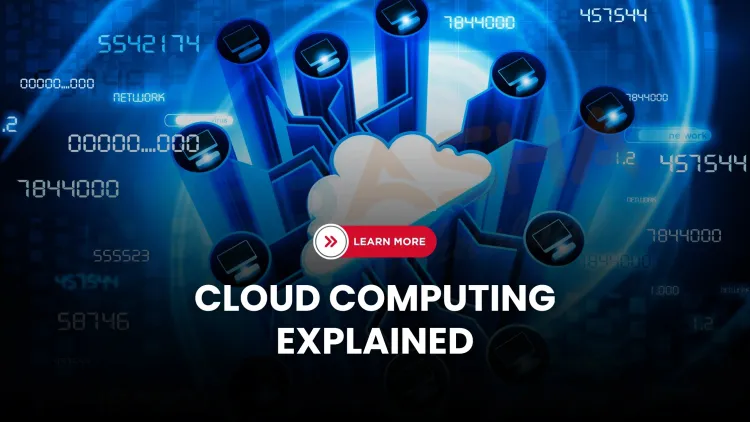
Quick answer: Cloud computing means using servers, storage, databases, networking, software and analytics over the internet instead of owning hardware, and paying only for what you use. The service models are IaaS, PaaS and SaaS, and the deployment models are public, private and hybrid. Major providers include AWS, Microsoft Azure, Google Cloud and Oracle Cloud.
Key takeaways
- The three service models are IaaS, PaaS and SaaS, and they differ by how much you manage.
- Public, private and hybrid describe where the cloud runs.
- Pay-as-you-go cuts upfront cost, but unmanaged usage can raise your bill quickly.
What is Cloud Computing?
Cloud computing is a modern way of using computing services like servers, storage, databases, networking, software, and analytics, all over the internet instead of relying on physical hardware. In 2026, cloud computing helps businesses become faster, more secure, and more flexible by letting them pay only for the resources they use, on demand.
Cloud providers like Amazon Web Services (AWS), Microsoft Azure, Google Cloud, and Oracle Cloud dominate this space, allowing startups to enterprises to operate without investing in expensive infrastructure.
How Does Cloud Computing Work?
Cloud computing works through large data centers managed by service providers. These centers host virtual resources like virtual machines, storage systems, and databases. Users access these services via the internet through web portals or APIs, scaling up or down instantly based on their needs.
Types of Cloud Computing Services (Service Models)
| Model | What It Offers | Best Use Case |
|---|---|---|
| IaaS (Infrastructure as a Service) | Servers, networks, storage | Hosting virtual machines, development environments |
| PaaS (Platform as a Service) | Development platforms, databases | App development, APIs, automation |
| SaaS (Software as a Service) | Complete apps like email, CRM, tools | Collaboration, productivity, CRM, HRMS |
| FaaS / Serverless | Event-triggered functions | IoT, automation, background tasks |
Types of Cloud Deployment Models
| Deployment | Description | Use Case |
|---|---|---|
| Public Cloud | Shared infrastructure via providers | Startups, scalability needs |
| Private Cloud | Dedicated infrastructure for one org | Data-sensitive workloads |
| Hybrid Cloud | Mix of public & private clouds | Data privacy + scalability |
| Multi-Cloud | Use of services from multiple cloud vendors | Avoiding vendor lock-in |
| Community Cloud | Shared infrastructure for specific sectors | Research, education, government sectors |
Benefits of Cloud Computing
-
Scalability: Instantly increase or decrease resources.
-
Cost Efficiency: No need to buy physical servers or infrastructure.
-
Flexibility: Access apps from anywhere, any device.
-
Disaster Recovery: Data backup and redundancy built-in.
-
Security: Cloud providers use high-level encryption and compliance standards.
-
Performance: Optimized hardware and fast content delivery.
Key Challenges of Cloud Computing
| Challenge | Solution |
|---|---|
| Cost Overruns | Monitor usage, automate scaling, use pricing calculators |
| Downtime Risks | Multi-region deployments, use CDNs |
| Vendor Lock-in | Multi-cloud strategy |
| Security Concerns | Zero Trust, encryption, IAM policies |
| Compliance Issues | Choose compliant cloud regions and providers (GDPR, HIPAA, etc.) |
Cloud Computing and Cybersecurity in 2026
Cloud providers use shared responsibility models, meaning they secure the infrastructure, while customers secure their data and apps.
Security techniques in the cloud:
-
Encryption at rest and in transit
-
IAM (Identity and Access Management)
-
Firewall and DDoS protection
-
Zero Trust Architecture
-
Cloud Security Posture Management (CSPM)
Cloud Cost Structure Explained
| Resource | Pricing Model |
|---|---|
| Compute | Pay per second/minute (vCPU & RAM) |
| Storage | Tiered: standard, infrequent, archival |
| Bandwidth | Ingress free, egress billed per GB |
| Managed Services | Database, AI/ML APIs are charged separately |
| Support Plans | Optional, based on response times |
Tip: Use tools like AWS Cost Explorer, Azure Pricing Calculator, or GCP Billing Reports.
Real-World Applications of Cloud Computing
| Industry | Cloud Use Case |
|---|---|
| Healthcare | Store patient records, AI-assisted diagnosis, remote consultation |
| Retail | Personalized product recommendations, inventory tracking |
| Finance | Fraud detection, automated trading, digital wallets |
| Education | Virtual classrooms, LMS platforms, remote labs |
| Manufacturing | IoT-based analytics, smart factories |
| Media | Streaming platforms, live event delivery |
Emerging Trends in Cloud Computing (2025 and Beyond)
-
AI-as-a-Service: Cloud platforms offering ready-to-use AI models.
-
Edge Computing: Processing data closer to users/devices for low latency.
-
Sustainable Cloud: Green data centers using renewable energy.
-
Serverless Architectures: Apps without managing infrastructure.
-
Confidential Computing: Protecting data during processing.
-
FinOps: Cloud financial management for optimizing spend.
-
5G Integration: Cloud-native networks for real-time services.
Best Practices for Adopting Cloud Computing
-
Define your cloud strategy: public, hybrid, or multi-cloud.
-
Choose the right provider: based on compliance, cost, and tools.
-
Invest in training: cloud certifications help in managing environments.
-
Implement security policies: IAM, MFA, and regular audits.
-
Monitor continuously: Use tools like Datadog, New Relic, or AWS CloudWatch.
Conclusion: Why Cloud Computing Matters in 2026
Cloud computing is now the core of digital transformation. Whether you're running an e-commerce store, managing critical healthcare data, or training AI models, the cloud gives you the tools, speed, and reliability to do it better.
In 2026, businesses that embrace cloud computing will outpace those that don’t. It brings scalability, global reach, security, automation, and cost control into one ecosystem. Understanding and adopting cloud computing today means future-proofing your business tomorrow.
To take this further with guided labs and an instructor, see our our AWS cloud classes.
Related reading
- [2026] Top 50+ Cloud Computing Interview Questions and Answers
- [2026] Cloud Computing Interview Questions for Beginners
- What is cloud networking and how does it work compared to traditional networking?
Reference
For the authoritative details, see AWS Certification.
Frequently Asked Questions
What's Your Reaction?
 Like
0
Like
0
 Dislike
0
Dislike
0
 Love
0
Love
0
 Funny
0
Funny
0
 Wow
0
Wow
0
 Sad
0
Sad
0
 Angry
0
Angry
0

Vaishnavi is a skilled tech professional at the Ethical Hacking Training Institute in Pune, responsible for managing and optimizing the technical infrastructure that supports advanced cybersecurity education. With deep expertise in network security, backend operations, and system performance, she ensures that practical labs, online modules, and assessments run smoothly and securely. Her behind-the-scenes contributions play a vital role in delivering a seamless and secure learning experience for aspiring ethical hackers.









![Top 10 Famous Ethical Hackers in India [Updated 2026]](https://www.webasha.com/blog/uploads/images/202608/image_140x98_da23f65c290cfbf1237d77aec58a2f0f.jpg)