IT Certification Courses: What They Can and Cannot Do for Your Career
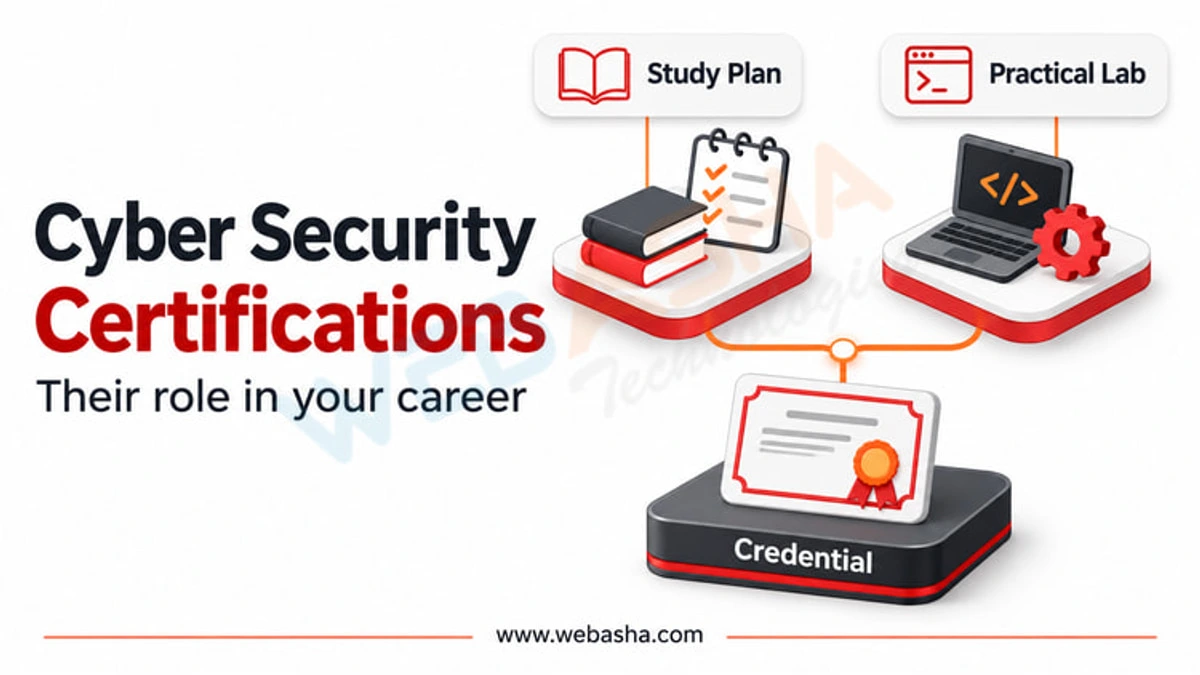
An IT certification course can teach a structured syllabus, prepare you for a proctored exam, and give employers a recognised signal that you met a defined standard on a given day. It helps you pass resume filters for roles that name the certification and gives you a common vocabulary with the team.
Topic: Cybersecurity Careers & Certifications in Cybersecurity & Ethical Hacking · Certification preparation
Also covers: Ethical Hacking, Python for AI & Automation, Cloud Computing: AWS, Azure & GCP
Quick answer: An IT certification course can teach a structured syllabus, prepare you for a proctored exam, and give employers a recognised signal that you met a defined standard on a given day. It helps you pass resume filters for roles that name the certification and gives you a common vocabulary with the team. It cannot replace hands-on experience, prove you can solve unfamiliar problems, or guarantee a job or a particular pay level. Certifications also expire, change or retire. Treat one as a door-opener that is strongest alongside projects, lab evidence and the ability to explain your work in an interview.
Key takeaways
- A course certificate and a vendor certification are different things.
- Accredited, proctored exams carry more weight than attendance certificates.
- Certifications show knowledge on test day, not job experience.
- Many certifications must be renewed, and exams retire.
- Pick certifications that appear in job postings for your target role.
Table of Contents
- What Is the Difference Between a Course and a Certification?
- What Can a Certification Do for You?
- What Can a Certification Not Do?
- Do IT Certifications Expire or Retire?
- Why Are Exam Dumps a Risk?
- How Should You Choose a Certification?
- What Should You Add Alongside a Certificate?
- References
What Is the Difference Between a Course and a Certification?
| Credential | Who issues it | What it shows |
|---|---|---|
| Course completion certificate | Training institute | You attended or finished a course |
| Vendor certification | CompTIA, ISC2, AWS, Microsoft, Cisco | You passed a controlled exam against published objectives |
| Accredited certification | Vendor accredited to ISO/IEC 17024 | The exam process met an independent standard |
CompTIA explains that several of its exams, including Security+, are accredited by ANAB to ISO/IEC 17024, the standard for bodies that certify people. A training course prepares you; the vendor exam is the credential employers usually check.
What Can a Certification Do for You?
- Give you a structured path through a large topic.
- Get your resume past filters for roles that list it.
- Show steady effort and the ability to finish a goal.
- Give you shared terms used by teams and frameworks such as the NIST NICE Framework.
Employers can also confirm a vendor certification directly, usually through the vendor's online verification or a digital badge. Keep your certification ID ready, and list the exact exam name, code and date on your resume so a recruiter can check it in minutes.
What Can a Certification Not Do?
- Prove you can troubleshoot a live system under pressure.
- Replace references from real work, internships or projects.
- Guarantee interviews, offers or a particular pay level.
- Stay current by itself, because technology and exam versions change.
Be wary of any course that promises a guaranteed job. A certification confirms what you knew on exam day; hiring decisions stay with employers.
Do IT Certifications Expire or Retire?
| Vendor | Validity rule |
|---|---|
| Microsoft | Associate, expert and specialty renew yearly through a free online assessment; fundamentals do not expire |
| AWS | Renewal gives three more years of validity |
| CompTIA Tech+ | FC0-U71 has no expiry; the CE version lasts five years |
| ISC2 CC | Free programme closed to new candidates on 20 May 2026 |
Sources: Microsoft renewal, AWS recertification, CompTIA Tech+ and ISC2. Exams also retire: Microsoft's retirement page shows AZ-204, AZ-500, AZ-800, AZ-801, DP-100 and AI-900 retired during 2026. Check the vendor page before you buy any course.
Why Are Exam Dumps a Risk?
Memorising leaked questions teaches nothing you can use at work. CompTIA's unauthorised materials policy says candidates who use brain dump content can lose their certification and be banned from testing for at least 12 months. Interviewers also ask follow-up questions that expose memorised answers quickly.
How Should You Choose a Certification?
- Pick a target role first.
- Collect 20 recent job postings for that role and note which certifications appear.
- Check the vendor page for the current exam version and renewal rules.
- Look for a course with labs that match the exam objectives.
Related: choosing IT training courses and why certifications matter in security.
What Should You Add Alongside a Certificate?
Add two or three projects that use the certified skills, a short write-up for each, and some real experience through an internship or volunteer work. Practise explaining what you built and why. For exam-aligned courses with hands-on labs, ask WebAsha about IT certification training.
References
Frequently Asked Questions
What's Your Reaction?
 Like
0
 Dislike
0
 Love
0
 Funny
0
 Wow
0
 Sad
0
 Angry
0

Vaishnavi is a skilled tech professional at the Ethical Hacking Training Institute in Pune, responsible for managing and optimizing the technical infrastructure that supports advanced cybersecurity education. With deep expertise in network security, backend operations, and system performance, she ensures that practical labs, online modules, and assessments run smoothly and securely. Her behind-the-scenes contributions play a vital role in delivering a seamless and secure learning experience for aspiring ethical hackers.