
How Passwords Are Hacked and How to Protect Yourself
Password hacking is a major security threat in today’s digital landscape. Hackers use various techniques, such as brute force attacks, phishing, keylogging, and credential stuffing, to gain unauthorized access to accounts and sensitive data. Protecting passwords through strong, unique passwords, multi-factor authentication, and password managers is essential in safeguarding online information. By understanding how passwords are hacked, you can take the necessary steps to improve your cybersecurity and minimize the risks.
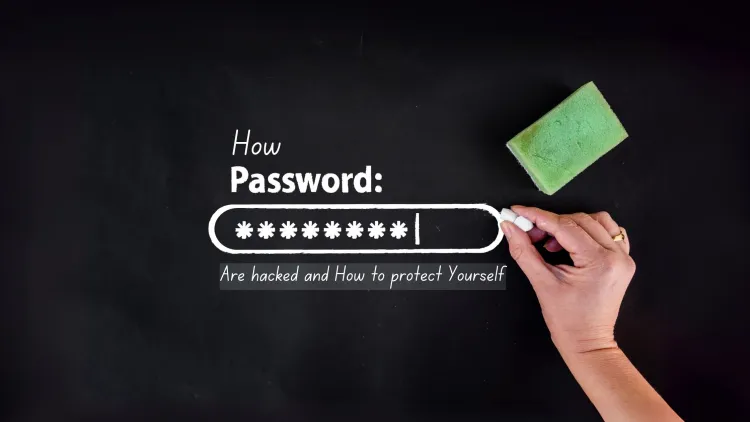
Quick answer: Hackers crack passwords through brute force, where they try every combination, and through other methods such as guessing, phishing and using leaked credentials. You can protect yourself with long unique passwords, a password manager, multi-factor authentication and by never reusing passwords across sites.
Key takeaways
- Brute force tries every combination, and dictionary attacks try common words.
- Long, unique passwords stop most guessing.
- Credential stuffing uses leaked passwords on other sites.
Introduction
Passwords are the first line of defense for protecting personal and sensitive information online. However, despite their importance, passwords are often compromised through various methods. Hackers use sophisticated techniques to bypass weak password security, leading to identity theft, financial fraud, and data breaches. In this blog, we will explore how hackers crack passwords and provide tips on how to strengthen your password security to safeguard your online accounts.
Common Techniques Used to Hack Passwords
1. Brute Force Attacks
A brute force attack involves an attacker trying every possible combination of characters until the correct one is found. This method can be slow, but it’s effective if the password is short or simple.
How Brute Force Attacks Work:
- Automated Tools: Hackers use software that automates the process of trying different password combinations.
- Targeting Weak Passwords: Short passwords with common words or simple patterns are easy to guess through brute force.
2. Dictionary Attacks
In a dictionary attack, hackers use a list of common words, phrases, and password combinations to guess the password. This method is faster than brute force since it focuses on commonly used passwords instead of trying every combination.
How Dictionary Attacks Work:
- Pre-made List of Words: Attackers use a dictionary file that contains frequently used passwords or words.
- More Effective on Simple Passwords: Weak passwords that rely on common words or names are vulnerable to this attack.
3. Phishing Attacks
Phishing is a social engineering technique where hackers trick individuals into revealing their passwords. Phishing attacks are often carried out via fake emails or websites that appear to be legitimate.
How Phishing Works:
- Fake Emails or Websites: Hackers create emails that look like they are from trusted sources, asking users to enter their login credentials.
- Stolen Credentials: Once the victim enters their password, the attacker gains access to their account.
4. Keylogging
Keylogging involves the use of malware that records every keystroke made on a victim’s device. This allows hackers to capture passwords as they are typed.
How Keyloggers Work:
- Invisible Software: The malware runs in the background without the user’s knowledge, logging keystrokes and capturing sensitive information like passwords.
- Delivered through Malware: Keyloggers are often installed through infected emails, software downloads, or malicious websites.
5. Rainbow Table Attacks
Rainbow table attacks are used to crack hashed passwords by exploiting precomputed tables that contain millions of hashed values for common passwords.
How Rainbow Tables Work:
- Precomputed Hashes: Hackers use tables that contain hashed versions of commonly used passwords, making it faster to crack passwords that are stored in an insecure format.
- Less Effective with Salted Hashes: Modern security measures like salting passwords (adding random data before hashing) make rainbow table attacks less effective.
6. Social Engineering
Hackers can also use social engineering to gather information that helps them guess or reset a user’s password. This can include researching the user’s personal details or exploiting weaknesses in security questions.
How Social Engineering Works:
- Exploiting Personal Information: Attackers gather information from social media or public databases to guess answers to security questions or passwords.
- Password Resetting: Some attackers use social engineering to trick customer support into resetting a user’s password.
7. Credential Stuffing
Credential stuffing involves hackers using stolen login credentials (such as email and password pairs) obtained from data breaches to attempt to log into multiple accounts on different websites.
How Credential Stuffing Works:
- Reusing Stolen Credentials: Since many users reuse passwords across multiple platforms, hackers try the same combination on various websites.
- Automated Tools: Attackers use automated tools to quickly attempt logins on thousands of sites, relying on users’ bad security habits.
How to Protect Your Passwords
1. Use Strong, Unique Passwords
Create complex passwords that include a mix of uppercase and lowercase letters, numbers, and special characters. Avoid using easily guessable information like names or birthdates.
2. Enable Multi-Factor Authentication (MFA)
MFA adds an additional layer of security by requiring users to verify their identity through something they know (password) and something they have (authentication app, SMS code).
3. Use Password Managers
Password managers generate and securely store complex passwords for each of your accounts, reducing the temptation to reuse passwords or choose weak ones.
4. Regularly Update Your Passwords
Change your passwords periodically to reduce the risk of old passwords being compromised. Avoid reusing passwords across multiple sites.
5. Be Wary of Phishing Scams
Always verify the source of emails or websites that ask for your login information. Ensure that the website URL is correct and that the communication comes from a trusted source.
To take this further with guided labs and an instructor, see our hands-on ethical hacking course.
Related reading
- Common Types of Password Attacks and How to Prevent Them | Complete Guide for 2026
- Inside the Mind of a Hacker: Tactics, Techniques, and Procedures (TTPs)
- How to Create Strong Passwords Without Losing Your Mind | A Step-by-Step Guide
Reference
For the authoritative details, see OWASP Cheat Sheet Series.
Frequently Asked Questions
What's Your Reaction?
 Like
0
Like
0
 Dislike
0
Dislike
0
 Love
0
Love
0
 Funny
0
Funny
0
 Wow
0
Wow
0
 Sad
0
Sad
0
 Angry
0
Angry
0

Vaishnavi is a skilled tech professional at the Ethical Hacking Training Institute in Pune, responsible for managing and optimizing the technical infrastructure that supports advanced cybersecurity education. With deep expertise in network security, backend operations, and system performance, she ensures that practical labs, online modules, and assessments run smoothly and securely. Her behind-the-scenes contributions play a vital role in delivering a seamless and secure learning experience for aspiring ethical hackers.

![Top 10 Famous Ethical Hackers in India [Updated 2026]](https://www.webasha.com/blog/uploads/images/202608/image_450x280_b3317756e192c8d5e1fb674259f1a0c3.jpg)