Ankit Fadia: His Journey in Cybersecurity and Why the 'No. 1 Hacker' Label Is Disputed
Ankit Fadia, often called India’s No. 1 Hacker, is a prominent yet controversial figure in cybersecurity. Gaining fame as a teenager for his bestselling book “Unofficial Guide to Ethical Hacking,” he introduced ethical hacking to the masses in India. His contributions include over 14 books, numerous workshops, and media appearances that popularized cybersecurity concepts. Despite his achievements, Fadia’s expertise has been questioned, with critics labeling his techniques as basic and his claims of working with intelligence agencies as unverified. While his legacy remains divisive, Fadia's role in making cybersecurity mainstream in India is undeniable.
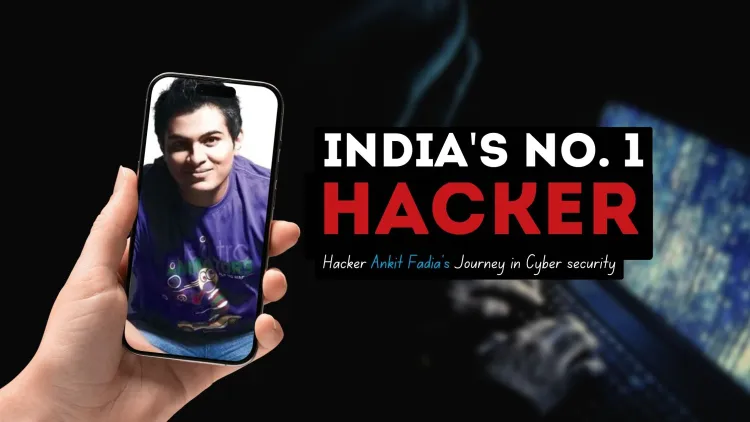
Quick answer: Ankit Fadia is an Indian author, speaker and television presenter, born in 1985, who became widely known in the early 2000s for books on ethical hacking written while he was a teenager. The "India's No. 1 Hacker" label is a media title, not an official ranking, and parts of the security community have questioned the technical depth of his claims.
Key takeaways
- Ankit Fadia's main contribution was popularising the idea of ethical hacking among young Indians, through books, talks and television, rather than publishing original security research.
- "No. 1 Hacker" has no objective measure. Nobody maintains a ranking, and it is a label applied by media.
- Some of his biographical and professional claims have been questioned publicly. We have not verified them, so this page separates documented facts from disputed ones.
- Whoever you admire, judge security skill by evidence you can check: certifications, published research, CVE credits, bug bounty records and open-source work.
Who is Ankit Fadia?
Ankit Fadia was born on 24 May 1985 in India and became a public figure as a teenager. He is best known as the author of "An Unofficial Guide to Ethical Hacking", published in the early 2000s, which sold well in India when few books on the subject were available locally. He later wrote further books on hacking and computer security, gave talks and workshops, and appeared on television and in newspapers as a cybersecurity commentator. He has presented technology programming on Indian television.
These are the points on which most accounts agree. Reports differ on details such as his exact age at the time of the first book, the number of books he has written, and his higher education, so this page does not state them as fact. If you need exact details for an assignment, check the publisher's records and reliable news archives.
What he did well
- He made the topic visible. In the early 2000s, ethical hacking was barely discussed in Indian schools and colleges. His books and talks were the first introduction to computer security for many students who later chose careers in the field.
- He wrote for beginners. Plain-language books helped readers who had no technical background to start asking questions about passwords, networks and safe browsing.
- He spoke to wide audiences such as students, companies and the public, helping normalise security awareness.
Why is the title disputed?
Several things are worth knowing if you read about him:
- No official ranking exists. There is no governing body or league table for hackers. "No. 1" was a headline phrase.
- Technical depth has been questioned. Some security professionals have publicly said that his books cover basic material and that claims of working with government agencies or companies were not supported by public evidence. We have not verified either the claims or the criticisms, so treat both with care and read the original sources.
- Fame and expertise are different things. Public presenters can be good communicators without doing advanced technical research, and the reverse is also true.
We are not asking you to form an opinion of a person from a blog post. The more useful point is the method: how to evaluate a security claim.
How do you judge a security expert's credibility?
| Evidence | Why it helps | Where to check |
|---|---|---|
| Vendor-issued certifications | Proves a tested level of skill, with the issuer able to confirm it | The issuer's verification page, such as EC-Council or OffSec |
| CVE credits | Shows a vulnerability was found and accepted by a vendor or the CVE programme | National Vulnerability Database |
| Published research and conference talks | Peer-visible technical work | Conference archives, papers |
| Bug bounty hall-of-fame entries | Company-confirmed findings | Programme pages |
| Open-source tools | Code you can read and test | Public repositories |
For an extraordinary claim, such as "I broke into X", look for independent confirmation. Responsible security work usually leaves a trace in advisories, reports or credits, even when the client's name stays private.
Other Indian names worth reading about
If you want examples of people whose technical work is easy to check, two commonly cited names are Vivek Ramachandran, known for his work on Wi-Fi security and for founding SecurityTube and Pentester Academy, and Trishneet Arora, who founded TAC Security. Our posts on Onkar Sonawane and Mr. Indian Hacker cover others. Read multiple sources about each, and verify key facts yourself.
What this means if you want a cybersecurity career
- Skip the idea of being a "hacker" in the movie sense. Employers hire people who find and fix weaknesses legally.
- Build fundamentals: networking, Linux, one programming language, and web basics.
- Practise only in labs and on authorised targets. Hacking systems without permission is a crime under India's IT Act, 2000, whatever the intention.
- Earn credentials that can be verified, and build a portfolio of write-ups from legal labs and bug bounty work.
- Report vulnerabilities responsibly. In India, CERT-In accepts vulnerability reports.
Next steps
For a practical roadmap, read the step-by-step path to ethical hacking for beginners. For a structured course with labs, see our Certified Ethical Hacking CEH v13 AI course.
Frequently Asked Questions
What's Your Reaction?
 Like
0
 Dislike
0
 Love
0
 Funny
0
 Wow
0
 Sad
0
 Angry
0

Vaishnavi is a skilled tech professional at the Ethical Hacking Training Institute in Pune, responsible for managing and optimizing the technical infrastructure that supports advanced cybersecurity education. With deep expertise in network security, backend operations, and system performance, she ensures that practical labs, online modules, and assessments run smoothly and securely. Her behind-the-scenes contributions play a vital role in delivering a seamless and secure learning experience for aspiring ethical hackers.