Should Governments Regulate AI-Powered Cybersecurity Tools? Balancing Innovation and Security
Artificial Intelligence (AI) has revolutionized cybersecurity by automating threat detection, enhancing security measures, and reducing response time. However, AI-powered cybersecurity tools can also be weaponized by cybercriminals, misused for mass surveillance, or create vulnerabilities due to over-reliance on automation. This raises an important debate: Should governments regulate AI in cybersecurity? This blog explores the benefits and risks of AI-powered cybersecurity, the potential consequences of unregulated AI, and how regulations can ensure ethical AI usage while not hindering innovation. We discuss the challenges of AI governance, the role of public-private collaboration, and the need for global cybersecurity standards. A balanced approach to AI regulation can help governments mitigate AI-driven cyber threats while allowing businesses to develop cutting-edge security solutions without excessive restrictions.
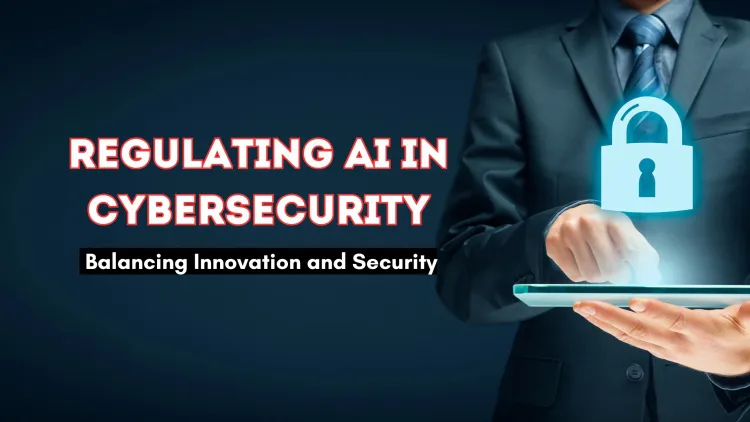
Quick answer: Supporters of regulating AI cybersecurity tools argue it can limit misuse, protect privacy and set accountability. Critics worry heavy rules may slow defenders while attackers ignore them. Most experts favour balanced, risk-based rules that cover high-impact uses and keep room for legitimate security research and innovation.
Key takeaways
- Regulation debate centres on misuse versus innovation.
- India's rules are evolving, so check official sources.
- Follow guidance from standards bodies.
Table of Contents
- Introduction
- The Rise of AI in Cybersecurity
- The Risks of Unregulated AI in Cybersecurity
- Arguments for Government Regulation
- Arguments Against Government Regulation
- Possible Approaches to AI Cybersecurity Regulation
- Conclusion: A Balanced Approach to AI Regulation
Introduction
Artificial Intelligence (AI) is transforming cybersecurity by enhancing threat detection, automating security operations, and predicting cyberattacks before they happen. However, AI-powered cybersecurity tools also introduce new challenges. These tools can be weaponized by cybercriminals, exploited for surveillance, or used to undermine privacy and digital rights. This raises a question: Should governments regulate AI-driven cybersecurity tools?
While regulation can prevent misuse, it also risks slowing innovation and creating bureaucratic hurdles for cybersecurity professionals. Government regulation of AI cybersecurity tools has pros and cons, unregulated AI carries risks, and potential frameworks for AI governance exist.
The Rise of AI in Cybersecurity
How AI is Used in Cybersecurity
AI-powered cybersecurity tools are revolutionizing how organizations defend against cyber threats. Some key applications include:
- Threat Detection & Response – AI detects anomalies in real-time and automatically mitigates cyber threats.
- Automated Pentesting – AI tools can perform penetration testing to find vulnerabilities in networks.
- AI-Driven Firewalls – AI enhances firewall security by analyzing traffic behavior and blocking threats.
- Fraud Detection – AI helps financial institutions identify and stop fraudulent transactions.
- Identity Verification – AI-powered biometric authentication enhances user security.
While these applications improve security, bad actors can also exploit AI for malicious purposes.
The Risks of Unregulated AI in Cybersecurity
Without proper regulation, AI-powered cybersecurity tools pose several risks:
1. AI-Powered Cybercrime
Cybercriminals are using AI to automate attacks, create deepfake scams, and crack passwords faster than ever before. AI can generate realistic phishing emails, bypass traditional security defenses, and orchestrate large-scale cyberattacks with minimal human intervention.
2. Ethical Concerns in AI-Powered Surveillance
AI-driven security tools can be misused for mass surveillance, leading to violations of privacy rights. Governments with excessive control over AI cybersecurity tools could exploit them for political or oppressive purposes.
3. Bias in AI Algorithms
AI systems learn from historical data, which can introduce bias into threat detection models. This can lead to discriminatory security measures, such as profiling certain groups or businesses unfairly.
4. Over-Reliance on AI for Security
AI is not foolproof. Hackers can manipulate AI models through adversarial attacks, tricking systems into misidentifying threats. Over-reliance on AI without human oversight could create dangerous blind spots in cybersecurity.
Arguments for Government Regulation
1. Preventing AI Cybercrime
Regulation can establish strict ethical and security standards to ensure that AI-powered cybersecurity tools do not fall into the wrong hands.
2. Ensuring Ethical AI Usage
Governments can enforce responsible AI practices, preventing AI from being used for mass surveillance, discrimination, or unauthorized data collection.
3. Standardizing AI Security Practices
A regulated AI framework can set universal security standards, ensuring all AI cybersecurity tools meet minimum safety requirements.
4. Protecting Privacy and Human Rights
Regulations can prevent AI-driven cyber tools from infringing on privacy rights by limiting mass data collection and unauthorized monitoring.
Arguments Against Government Regulation
1. Slowing Innovation
Strict government regulations could delay advancements in AI-powered cybersecurity, making it harder for businesses to keep up with evolving cyber threats.
2. Bureaucratic Complexity
Regulating AI in cybersecurity may require multiple agencies, leading to legal red tape that slows down the deployment of critical security technologies.
3. AI Regulation May Favor Governments Over Businesses
Governments might enforce AI regulations that benefit state agencies while restricting private companies from using powerful AI security tools.
4. Cybercriminals Will Ignore Regulations
Regulating AI tools will not stop cybercriminals from developing their own AI-powered attacks, as they operate outside legal frameworks.
Possible Approaches to AI Cybersecurity Regulation
1. AI Governance Frameworks
Governments can create AI-specific regulations similar to GDPR (General Data Protection Regulation) for cybersecurity tools, ensuring ethical use without stifling innovation.
2. Public-Private Collaboration
Regulators can work with cybersecurity firms and ethical hackers to develop balanced policies that protect security while fostering innovation.
3. Ethical AI Development Guidelines
Organizations should be required to follow ethical AI principles, ensuring their cybersecurity tools do not violate privacy laws or human rights.
4. Global Cybersecurity Standards
International cooperation is needed to set global AI security standards, preventing AI-powered cyber threats across borders.
Conclusion: A Balanced Approach to AI Regulation
AI is both a powerful defense tool and a potential weapon in cybersecurity. Governments must find a balance between regulating AI to prevent cyber threats while ensuring innovation continues. Instead of outright bans, a framework for ethical AI usage, public-private collaboration, and standardized security practices may be the best approach.
Regulation is necessary, but it should not hinder AI's potential to strengthen cybersecurity. The future of AI-powered cybersecurity depends on responsible development, transparent policies, and collaboration between governments, businesses, and ethical hackers.
To take this further with guided labs and an instructor, see our cyber security certification pathway.
Related reading
- The Ethics of Using AI for Hacking and Security | Balancing Protection and Risk
- Ethical Concerns Around AI Tools Like ChaosGPT | Risks, Regulations & Cybersecurity Implications
- A Comprehensive Guide to Global AI Regulations | How Countries Are Governing Artificial Intelligence
Reference
For the authoritative details, see Ministry of Electronics and IT (India).
Frequently Asked Questions
What's Your Reaction?
 Like
0
Like
0
 Dislike
0
Dislike
0
 Love
0
Love
0
 Funny
0
Funny
0
 Wow
0
Wow
0
 Sad
0
Sad
0
 Angry
0
Angry
0

Vaishnavi is a skilled tech professional at the Ethical Hacking Training Institute in Pune, responsible for managing and optimizing the technical infrastructure that supports advanced cybersecurity education. With deep expertise in network security, backend operations, and system performance, she ensures that practical labs, online modules, and assessments run smoothly and securely. Her behind-the-scenes contributions play a vital role in delivering a seamless and secure learning experience for aspiring ethical hackers.