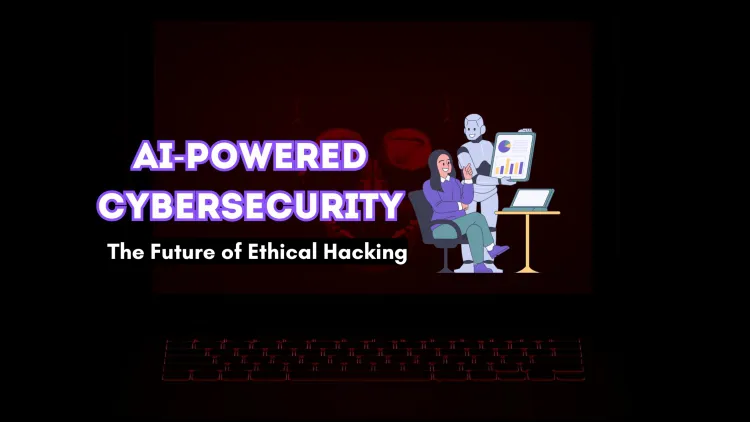
AI-Powered Cybersecurity | The Next Big Thing in Ethical Hacking
As cyber threats become more advanced, AI-powered cybersecurity is emerging as a critical tool for ethical hackers. AI is revolutionizing ethical hacking by automating penetration testing, detecting cyber threats in real-time, enhancing malware analysis, and improving overall security posture. By leveraging machine learning, predictive analytics, and AI-driven automation, cybersecurity professionals can stay ahead of evolving cyber threats. However, AI also introduces challenges such as false positives, reliance on data accuracy, and the risk of cybercriminals using AI for attacks. This blog explores how AI is reshaping ethical hacking, the benefits it offers, and what the future holds for AI-driven cybersecurity.
Quick answer: AI-powered cybersecurity is becoming part of ethical hacking through smarter scanning, faster analysis and automated reporting. Testers still need core skills in networking, Linux and web security, plus strong ethics and written authorisation. AI is a helper that speeds up work, not a substitute for understanding how systems break.
Key takeaways
- AI speeds scanning analysis, but you still decide what to test and what is in scope.
- Learn the manual method first so you can spot a wrong AI suggestion.
- Record every AI-assisted step in your notes.
Table of Contents
- Introduction
- The Role of AI in Ethical Hacking
- Benefits of AI in Ethical Hacking
- Challenges of AI in Ethical Hacking
- Future of AI in Ethical Hacking
- Conclusion
Introduction
As cyber threats become more advanced, ethical hackers need modern tools to identify vulnerabilities, prevent cyberattacks, and strengthen security frameworks. Artificial Intelligence (AI) is changing cybersecurity by enhancing threat detection, automating penetration testing, and improving response times.
AI-powered cybersecurity is not just a trend, it’s becoming an essential part of ethical hacking. By leveraging machine learning algorithms, predictive analytics, and AI-driven automation, ethical hackers can stay ahead of cybercriminals.
In this blog, we’ll explore how AI is transforming ethical hacking, the benefits it offers, and the future of AI-powered cybersecurity.
The Role of AI in Ethical Hacking
AI-powered cybersecurity is reshaping the ethical hacking landscape in multiple ways:
1. AI-Driven Threat Detection
Traditional cybersecurity tools rely on predefined rules, making them less effective against zero-day attacks. AI can:
- Analyze vast amounts of security data in real time.
- Identify anomalies that indicate a cyber threat.
- Predict attack patterns before they cause damage.
2. Automating Penetration Testing
AI is making penetration testing (pentesting) faster and more efficient by:
- Scanning systems for vulnerabilities automatically.
- Simulating cyberattacks to test security defenses.
- Prioritizing security weaknesses based on real-world attack data.
3. AI in Social Engineering Defense
AI-powered tools can detect and prevent phishing attacks by:
- Analyzing email and message patterns for suspicious activity.
- Identifying fraudulent login attempts using biometric authentication.
- Alerting users about potential scams in real time.
4. Enhancing Security Operations with AI
AI assists security teams by:
- Automating repetitive cybersecurity tasks.
- Providing real-time insights for faster decision-making.
- Detecting insider threats by monitoring user behavior.
5. AI-Powered Malware Analysis
AI enhances malware detection by:
- Identifying new malware strains based on behavior analysis.
- Automating reverse engineering of malicious code.
- Improving cybersecurity defenses against evolving threats.
Benefits of AI in Ethical Hacking
| AI-Powered Cybersecurity Features | Benefits |
|---|---|
| Faster Threat Detection | AI identifies and responds to threats instantly. |
| Automated Pentesting | Ethical hackers can test vulnerabilities efficiently. |
| Enhanced Security Analysis | AI processes large amounts of security data. |
| Improved Malware Detection | AI can detect and neutralize new malware variants. |
| Proactive Threat Prevention | AI predicts cyberattacks before they happen. |
| Reduced False Positives | AI improves accuracy in threat detection. |
Challenges of AI in Ethical Hacking
While AI is very useful for cybersecurity, it also comes with challenges:
- Over-Reliance on AI: Ethical hackers must not depend entirely on AI and should combine it with human expertise.
- AI Bias & Errors: AI models can make mistakes if trained on biased or outdated data.
- Cybercriminals Using AI: Hackers are also using AI to automate cyberattacks and create more sophisticated phishing campaigns.
Future of AI in Ethical Hacking
The future of AI-powered cybersecurity will see:
- AI-Driven Cybersecurity Assistants helping ethical hackers analyze security threats.
- Autonomous Cyber Defense Systems that can detect, respond, and neutralize attacks without human intervention.
- AI-Based Cybersecurity Certifications, where professionals train with AI-driven labs.
As AI continues to evolve, ethical hackers must adapt and embrace AI tools to stay ahead of cybercriminals.
Conclusion
AI-powered cybersecurity is reshaping ethical hacking, making it faster, smarter, and more efficient. While AI is a powerful ally, human expertise remains irreplaceable in understanding and mitigating cybersecurity threats.
By leveraging AI-driven threat detection, automated pentesting, and intelligent malware analysis, ethical hackers can enhance their skills and protect organizations from cyber threats.
The next big thing in ethical hacking is AI-powered cybersecurity, are you ready for it?
To take this further with guided labs and an instructor, see our CEH v13 exam preparation.
Related reading
- How AI is Revolutionizing Ethical Hacking | Automating Security Testing, Threat Detection, and Cyber Defense
- How AI is Transforming Security Assessments and Pentesting | Enhancing Cybersecurity with Intelligent Automation
- How AI is Shaping the Future of Ethical Hacking | Enhancing Cybersecurity with Intelligent Automation
Frequently Asked Questions
What's Your Reaction?
 Like
0
Like
0
 Dislike
0
Dislike
0
 Love
0
Love
0
 Funny
0
Funny
0
 Wow
0
Wow
0
 Sad
0
Sad
0
 Angry
0
Angry
0

Vaishnavi is a skilled tech professional at the Ethical Hacking Training Institute in Pune, responsible for managing and optimizing the technical infrastructure that supports advanced cybersecurity education. With deep expertise in network security, backend operations, and system performance, she ensures that practical labs, online modules, and assessments run smoothly and securely. Her behind-the-scenes contributions play a vital role in delivering a seamless and secure learning experience for aspiring ethical hackers.











![Top 10 Famous Ethical Hackers in India [Updated 2026]](https://www.webasha.com/blog/uploads/images/202608/image_140x98_da23f65c290cfbf1237d77aec58a2f0f.jpg)