OSCP vs eJPT: Which Practical Certification Should Come First?
For a learner still building practical penetration-testing foundations, eJPT is usually the closer starting fit. Consider OSCP preparation when you can already explain networking and system behaviour, work independently in authorised labs and document your results. eJPT is an optional learning milestone; OffSec does not require it before the OSCP+ exam.
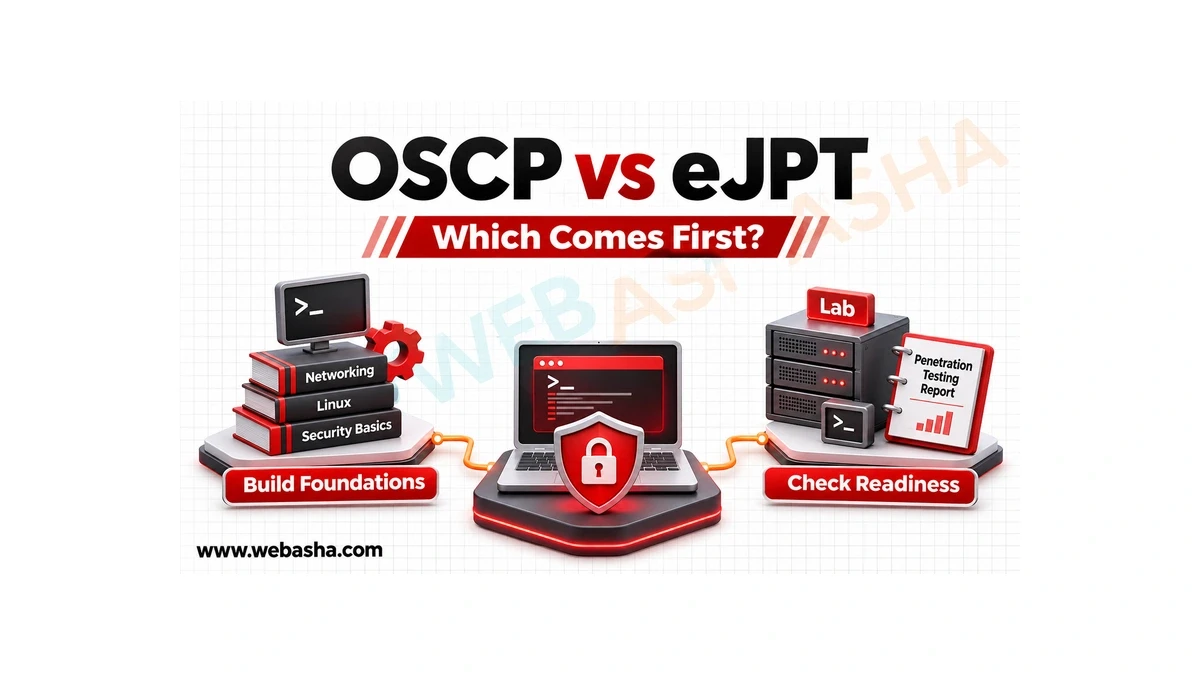
For a learner still building practical penetration-testing foundations, eJPT is usually the closer starting fit. Consider OSCP preparation when you can already explain networking and system behaviour, work independently in authorised labs and document your results. eJPT is an optional learning milestone; OffSec does not require it before the OSCP+ exam.
This OSCP vs eJPT comparison uses issuer information checked on 17 November 2026. The recommended order below is editorial guidance based on starting skills, not a universal certification ladder. [1] [3]
Choose the next skill gap to work on
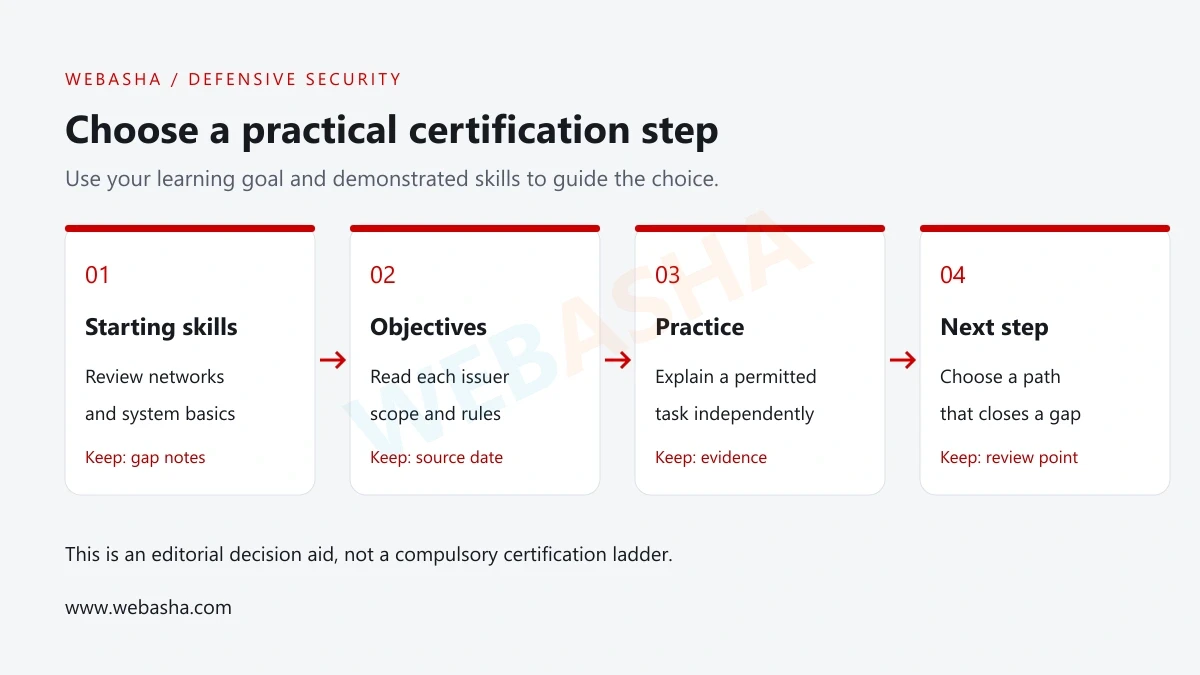
- Review your practical starting point before choosing an exam.
- Use the issuer objectives to compare scope.
- Practise evidence collection and reporting throughout your learning.
- Check exam policies separately for each certification.
OSCP vs eJPT: what are you choosing?
eJPT is INE Security’s Junior Penetration Tester certification. Its stated coverage includes assessment methodology, host and network auditing, host and network penetration testing, and web application testing. [1]
PEN-200 is OffSec’s penetration-testing course that prepares learners for the OSCP+ examination. The course page distinguishes the lifetime OSCP credential from the OSCP+ designation, which has a three-year validity period. [2]
The practical question is which set of learning tasks you are ready to tackle. A learner who still struggles to interpret basic system output needs a different next step from someone who can assess an unfamiliar permitted lab and produce a readable report.
| Decision area | eJPT direction | OSCP / PEN-200 direction |
|---|---|---|
| Starting position | Entry-level practical penetration testing. | Networking, system administration and basic scripting foundations recommended. |
| Learning focus | A structured foundation across host, network and introductory web assessment. | Broader penetration-testing study with independent practice and evidence gathering. |
| Preparation evidence | Explain the purpose and result of a basic permitted task. | Demonstrate an independent method and rehearse detailed documentation. |
| Required sequence | Can be a first practical milestone. | No eJPT prerequisite; use the actual issuer requirements. |
The first two rows summarise the official course descriptions; the preparation-evidence row is a suggested self-review, not an issuer grading rubric. [2]
Check your starting point with a small evidence review
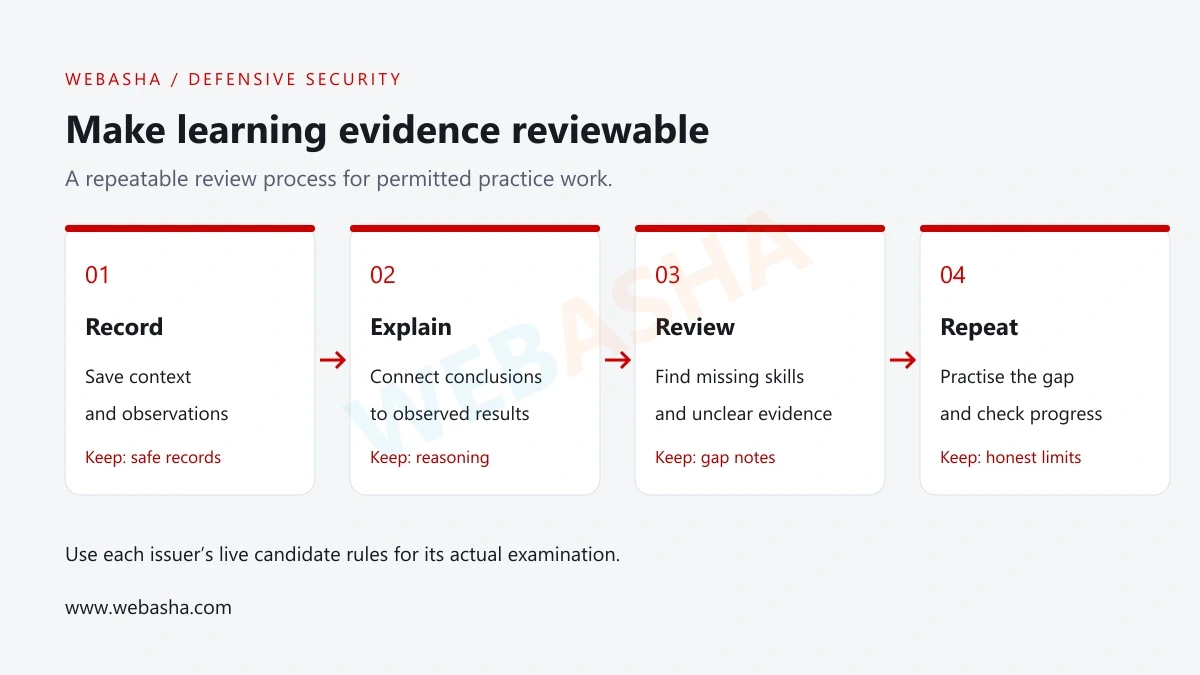
Before comparing badges, choose one recent exercise that you were permitted to perform. Explain its objective, environment and result without opening a walkthrough. Then show which record supports the result. If that explanation breaks down, write down the missing concept.
| Area | What to demonstrate | If it is difficult |
|---|---|---|
| Networking | Explain addressing, DNS and the role of a service. | Revisit protocol basics before relying on tool output. |
| Systems | Explain accounts, permissions and services on Windows and Linux. | Practise small administration tasks in your own lab. |
| Reasoning | Give a reason for each check and interpret its result. | Reduce exercise complexity and inspect the concept. |
| Scripting | Read a short Bash or Python script and explain its input and output. | Work on basic program flow and error handling. |
| Evidence | Connect a conclusion to an actual observation. | Improve notes before attempting longer exercises. |
This review does not produce an exam-readiness score. It helps you choose work that addresses a specific weakness. For a broader starting plan, see the WebAsha beginner cybersecurity guide.
When eJPT can be a useful first milestone
Consider eJPT when you understand basic IT concepts but need a coherent practical learning sequence. INE describes it for candidates with little to no cybersecurity experience who have a basic understanding of networks and systems. [1]
For example, a student might recognise an IP address and a web request but struggle to explain what to inspect next in a lab. The useful learning goal is to connect observations into a method, keep a record and explain the outcome. An entry-level practical path can provide structure for that work.
Work through the official objectives and use approved exercises to identify gaps. Keep your own notes about where help was needed. Revisit those tasks after a break and check whether the reasoning still makes sense. Completing guided content once gives limited evidence of independent understanding.
An eJPT pass can be a milestone in that learning plan. It does not establish that every PEN-200 topic or OSCP+ exam condition has been mastered. Review the next issuer’s requirements separately before moving on.
When direct OSCP preparation may make sense
OffSec lists no formal PEN-200 prerequisites, but strongly recommends TCP/IP knowledge, reasonable Windows and Linux administration experience, and basic Bash or Python familiarity. These recommendations matter when deciding whether to begin the course now. [2]
A working administrator with relevant independent lab experience may choose to review those foundations and enter PEN-200 study directly. There is no need to add an eJPT attempt solely because a social-media diagram places it before OSCP. The missing skills, study support and assessment goal should drive the decision.
Use a recent exercise to test your own account of readiness. Can you explain failed approaches, verify a result and reconstruct the task from your notes? Can you stay within scope and distinguish an observed condition from an assumption? These are useful practice questions, even though only the issuer determines exam results.
A direct route still needs a study plan. Map official topics to your knowledge, identify unfamiliar areas and rehearse the documentation workflow. Avoid assuming that professional seniority in another IT role covers every practical assessment skill.
Make reporting part of either route
For your own learning, keep the objective, permitted scope, relevant environment details, observations and limitations together. A short accurate record is more useful than a large folder of screenshots with no explanation.
The OSCP+ guide requires a professional report sufficiently detailed for a technically competent reader to reproduce the documented process. It also sets strict evidence and submission requirements. Read the live guide before rehearsing an exam-style report. [3]
Do not transfer that requirement automatically to another examination. Use INE’s candidate instructions to establish the applicable eJPT response and submission process. A personal practice report is a learning aid; it is not evidence that an issuer requires the same document.
| Field | What to write |
|---|---|
| Objective | The approved question you tried to answer. |
| Context | Lab identifier, relevant setup and scope boundaries. |
| Observation | What actually happened, with supporting records. |
| Interpretation | What the evidence establishes and what remains unknown. |
| Review | The concept to revisit or the documentation to correct. |
Check exam rules and dated changes before committing
The OSCP+ guide reviewed specifies 23 hours and 45 minutes for the proctored examination and a further 24 hours for documentation upload. It prohibits LLM and AI-chatbot use. Read the full restrictions; a study tool’s availability does not establish exam permission. [3]
INE announced updated eJPT training and an updated exam in March 2026. That makes older experience posts an unreliable sole source for today’s candidate instructions. Check the official certification page and the terms attached to your own entitlement. [5]
Check access periods, voucher conditions, equipment requirements, permitted resources and submission instructions before booking. This comparison deliberately avoids quoting prices or treating one candidate’s experience as a universal policy.
Choose a route without collecting unnecessary milestones
| Your situation | Reasonable next action |
|---|---|
| Basic networks or systems are unfamiliar | Build those foundations and complete small permitted exercises first. |
| You know basic IT but need a practical sequence | Compare eJPT objectives with your gaps and inspect the training format. |
| You already work independently in relevant labs | Review PEN-200 scope and decide whether direct preparation fits. |
| You passed eJPT but need frequent walkthroughs | Revisit the underlying skills before increasing complexity. |
| A target role mentions a credential | Read the full role requirements and separate required from preferred criteria. |
Keep a short decision note: your goal, current evidence, missing skills and next review task. Set the review after a meaningful piece of practice rather than after an arbitrary number of weeks. Revise the route if the work exposes a different need.
If your goal is defensive monitoring, compare actual duties before committing to a penetration-testing certification. The WebAsha SOC analyst guide describes another direction to investigate.
Common decision mistakes and how to correct them
Following a fixed badge ladder: write down the skill each proposed step would add. If it duplicates demonstrated knowledge, review whether that assessment serves your goal.
Equating a walkthrough with independent work: repeat an appropriate authorised exercise later, explain the choices and record where help is still needed. Respect disclosure and lab rules.
Using an old comparison table: check issuer pages for the exam you intend to book. Record the check date and any unresolved question, especially around policy changes.
Presenting learning work as client experience: label permitted projects accurately and remove private or restricted information. The WebAsha beginner portfolio guide can help organise that evidence.
Discuss your preparation plan with WebAsha
Bring a foundation checklist or a permitted practice-report excerpt to a training discussion. Ask how instructors review reasoning, lab scope and documentation. Confirm any certification entitlement directly rather than assuming it is included in a course.
Ask WebAsha Technologies about ethical hacking foundation training and practical lab-reporting support. Contact WebAsha with your starting skills and learning goal.
Official references
Frequently Asked Questions
What's Your Reaction?
 Like
0
 Dislike
0
 Love
0
 Funny
0
 Wow
0
 Sad
0
 Angry
0

With a passion for staying on the cutting edge of technology trends, I am dedicated to delivering content that not only informs but also inspires. Whether you need in-depth analysis pieces, informative guides, or thought-provoking opinion pieces, I craft content that resonates with tech enthusiasts and professionals alike.