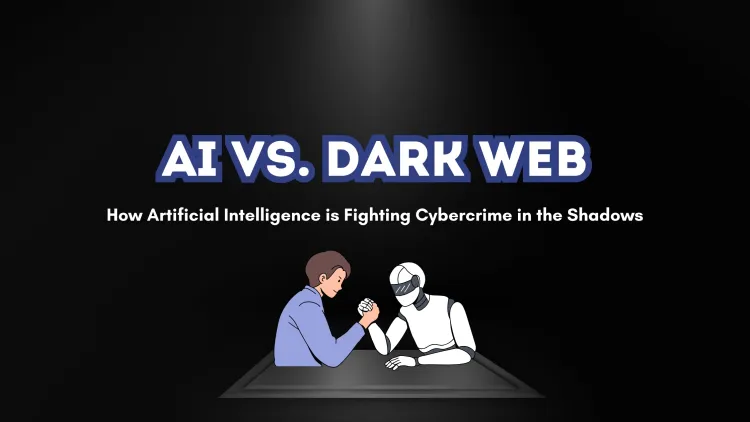
AI vs. Dark Web | How Artificial Intelligence is Fighting Cybercrime in the Shadows
The dark web is a hidden part of the internet where cybercriminals operate anonymously, engaging in illegal activities such as drug trafficking, identity theft, ransomware sales, and cyberattacks. Traditional cybersecurity measures struggle to combat these threats due to the encrypted and decentralized nature of the dark web. However, Artificial Intelligence (AI) has emerged as a powerful weapon in the fight against dark web cybercrime. AI enhances threat detection, automated monitoring, and cyber forensics by analyzing large datasets, tracking cryptocurrency transactions, detecting malware, and identifying fraudulent activities. AI-powered web crawlers and machine learning algorithms can uncover hidden marketplaces, analyze hacker communications, and prevent cyberattacks before they happen. However, cybercriminals are also using AI to their advantage—developing intelligent hacking tools, deepfake scams, AI-generated phishing attacks, and adaptive malware that can bypass security
Quick answer: AI fights dark web cybercrime by monitoring forums and marketplaces, analysing text and flagging threats such as stolen data sales. Criminals respond with their own AI to hide activity and evade detection. Monitoring must respect legal limits and privacy, and analysts need to verify what the AI reports.
Key takeaways
- Monitoring tools scan forums for your brand and leaked data.
- Criminals change language to evade filters.
- Act fast on leaked credentials: reset and revoke sessions.
Table of Contents
- Introduction
- The Role of AI in Dark Web Surveillance
- Cybercriminals Fighting Back: How Hackers Use AI Against Security Measures
- Challenges and Ethical Considerations
- The Future of AI in Dark Web Security
Introduction
The dark web has become a hub for cybercriminal activities, including identity theft, illegal drug sales, human trafficking, and hacking services. Traditional cybersecurity measures often struggle to track and combat these threats due to the dark web's anonymity and encryption technologies. However, the rise of Artificial Intelligence (AI) has introduced powerful tools to detect, analyze, and counter cybercrime on the dark web.
AI is revolutionizing cyber threat intelligence by automating threat detection, monitoring encrypted networks, identifying malicious activities, and supporting law enforcement in taking down illegal marketplaces. But as AI evolves, so do cybercriminals, who are also leveraging AI for more sophisticated attacks. The battle between AI and the dark web is a continuous game of cat and mouse, shaping the future of cybersecurity.
The Role of AI in Dark Web Surveillance
1. AI-Powered Web Crawlers
The dark web is not indexed by traditional search engines like Google. AI-driven web crawlers are specially designed to navigate hidden forums, marketplaces, and encrypted communication channels to detect illegal activities.
These AI-powered tools use:
- Machine learning algorithms to adapt to new dark web structures.
- Natural Language Processing (NLP) to analyze conversations and detect suspicious discussions.
- Sentiment analysis to flag high-risk transactions and threats.
2. Machine Learning for Threat Detection
Machine learning models are trained on cybercrime patterns to predict and identify potential threats. These models analyze historical cyberattacks, hacker tactics, and suspicious behavior to generate early warnings for cybersecurity teams.
For example:
- AI can detect unusual cryptocurrency transactions linked to money laundering.
- AI can identify hacked databases for sale on the dark web.
- AI can flag emerging cyberattack techniques before they spread.
3. AI for Blockchain Analysis
Cryptocurrency is the preferred method of payment on the dark web. AI-powered blockchain analytics tools track Bitcoin, Monero, and other crypto transactions to trace money laundering and illegal purchases.
AI can:
- Identify wallets linked to criminal activities.
- Analyze transaction patterns to detect fraud.
- Unmask cryptocurrency mixing services that attempt to hide illicit funds.
4. Deepfake Detection and AI-Driven Identity Protection
Cybercriminals use AI-generated deepfakes to bypass security measures, create fake identities, and spread misinformation. AI-driven facial recognition and forensic analysis tools detect deepfake videos, audio, and manipulated images to prevent fraud.
5. Automated Law Enforcement Assistance
AI helps law enforcement agencies in:
- Tracking cybercriminal networks.
- Analyzing seized data for connections to criminal enterprises.
- Identifying vulnerabilities in illegal online marketplaces.
Cybercriminals Fighting Back: How Hackers Use AI Against Security Measures
While AI is being used to combat cybercrime, hackers are also using AI to their advantage. Some of the ways cybercriminals use AI include:
1. AI-Generated Phishing Attacks
Hackers use AI to create highly convincing phishing emails and deepfake calls that bypass traditional security measures. AI analyzes victim behavior to craft personalized phishing scams.
2. AI-Powered Malware and Ransomware
Cybercriminals are using machine learning to develop more sophisticated malware that can adapt to security defenses and avoid detection by traditional antivirus software.
3. AI to Evade Detection
Dark web criminals are using adversarial machine learning to trick AI-based security systems by altering their attack signatures in real time.
4. AI for Password Cracking
Machine learning accelerates password brute-force attacks by predicting common password patterns and increasing attack speed.
5. Automated Hacking Tools
Hackers are creating AI-powered hacking bots that automate cyberattacks and exploit vulnerabilities faster than human attackers.
Challenges and Ethical Considerations
While AI offers significant advantages in fighting dark web cybercrime, it also comes with challenges:
1. Privacy Concerns
AI-powered surveillance tools raise concerns about mass monitoring, privacy violations, and potential misuse of data by governments or corporations.
2. Legal and Jurisdictional Barriers
Dark web activities are global, but law enforcement agencies are bound by national laws and jurisdictional limits, making AI-driven investigations complex.
3. AI Bias and False Positives
AI models may incorrectly flag legitimate activities as suspicious, leading to innocent individuals being investigated. Proper training and audits are required to reduce bias and errors.
4. Arms Race Between AI and Cybercriminals
As AI security tools improve, cybercriminals also enhance their AI-driven attacks, leading to an ongoing cybersecurity arms race.
The Future of AI in Dark Web Security
The future of AI in cybersecurity will involve:
- More advanced AI threat intelligence systems.
- Integration of AI with blockchain tracking tools.
- Greater collaboration between cybersecurity firms and law enforcement agencies.
- Enhanced AI-driven forensic tools to detect and prevent cybercrimes.
The battle between AI and the dark web is ongoing, but AI’s rapid advancements are making it a tool in the fight against cybercrime. While AI alone cannot eliminate the dark web, it plays an essential role in detecting, tracking, and disrupting illegal activities.
By leveraging machine learning, deep learning, and advanced analytics, AI will continue to evolve as a formidable force against dark web cyber threats.
Would you like insights on AI-based cybersecurity tools or recommendations for protecting businesses from dark web threats? Let me know!
To take this further with guided labs and an instructor, see our EC-Council CTIA certification training.
Related reading
Frequently Asked Questions
What's Your Reaction?
 Like
0
Like
0
 Dislike
0
Dislike
0
 Love
0
Love
0
 Funny
0
Funny
0
 Wow
0
Wow
0
 Sad
0
Sad
0
 Angry
0
Angry
0

Vaishnavi is a skilled tech professional at the Ethical Hacking Training Institute in Pune, responsible for managing and optimizing the technical infrastructure that supports advanced cybersecurity education. With deep expertise in network security, backend operations, and system performance, she ensures that practical labs, online modules, and assessments run smoothly and securely. Her behind-the-scenes contributions play a vital role in delivering a seamless and secure learning experience for aspiring ethical hackers.
![Top 10 Famous Ethical Hackers in India [Updated 2026]](https://www.webasha.com/blog/uploads/images/202608/image_450x280_b3317756e192c8d5e1fb674259f1a0c3.jpg)