
From Smart Homes to Industry: How to Secure the Growing IoT Ecosystem
The Internet of Things (IoT) has revolutionized daily life by connecting devices, from smart homes to industrial systems. However, as the number of connected devices increases, so do the security risks. Many IoT devices have vulnerabilities such as weak security protocols, poor authentication, and outdated software, making them susceptible to cyberattacks.Key Risks to the IoT ecosystem include data breaches, insecure communication, botnets, and physical tampering. These threats can compromise sensitive data, privacy, and even public safety. To protect IoT devices, it's crucial to implement best practices like changing default passwords, enabling encryption, regular software updates, network segmentation, and continuous monitoring.The future of IoT security relies on collaboration with manufacturers to ensure devices are secure from the design stage, and constant adaptation to emerging threats is essential. As the IoT ecosystem expands, securing connected devices will be crucial in prev
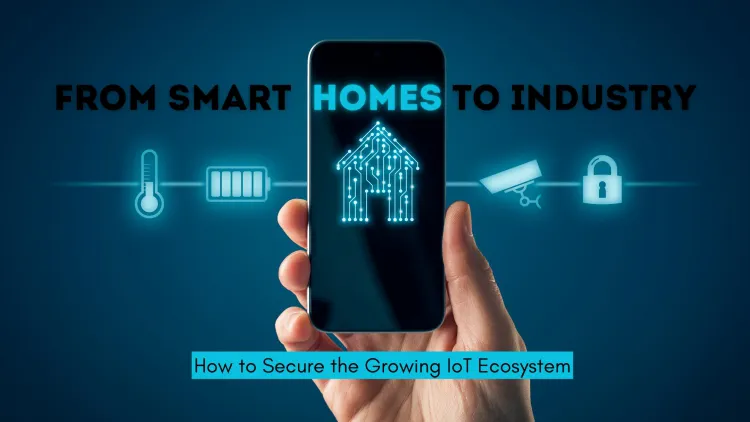
Quick answer: Secure IoT by treating every connected device as a possible entry point. Change default passwords, update firmware, segment IoT devices onto their own network, encrypt communications, disable unused services and monitor device behaviour. In industry and healthcare, add asset inventories and vendor security requirements.
Key takeaways
- Treat every connected device as a possible entry point.
- Change default passwords and update firmware.
- Use a separate network for IoT devices.
Introduction
The Internet of Things (IoT) has transformed the way we interact with the world around us. From smart homes to connected factories and healthcare systems, IoT has enabled greater convenience, efficiency, and automation. However, as the number of connected devices grows, so does the potential for cyber threats. In this blog, we will explore the importance of securing the IoT ecosystem, the risks associated with IoT devices, and strategies for safeguarding these devices in a hyperconnected world.
What is IoT and Why Does Security Matter?
The Internet of Things (IoT) refers to the network of physical devices that are embedded with sensors, software, and other technologies to connect and exchange data over the internet. These devices include everything from wearable fitness trackers to smart refrigerators, thermostats, industrial machinery, and even autonomous vehicles.
The increasing integration of IoT devices into everyday life presents significant security challenges. Many IoT devices are vulnerable to attacks because they often have weak security protocols, lack proper authentication methods, and are sometimes not updated with the latest security patches. Without proper protection, these devices can be exploited by cybercriminals, leading to data breaches, privacy violations, or even physical damage.
Key Risks and Threats to the IoT Ecosystem
1. Data Breaches
IoT devices collect vast amounts of sensitive data, including personal information, health data, and location tracking. If these devices are not properly secured, they can become entry points for cybercriminals to access this data.
2. Insecure Communication
Many IoT devices rely on wireless communication, which can be intercepted if not encrypted properly. Hackers can exploit these vulnerabilities to eavesdrop on communications and manipulate the data being transmitted.
3. Lack of Device Authentication
IoT devices often fail to use strong authentication methods, making it easier for attackers to gain unauthorized access. Default passwords and unencrypted credentials can be exploited by cybercriminals to take control of devices.
4. Botnets and Distributed Denial of Service (DDoS) Attacks
Many IoT devices have insufficient security and can be hijacked to form a botnet. These botnets can be used to launch DDoS attacks, overwhelming websites and online services with massive amounts of traffic.
5. Physical Security Risks
In some cases, physical tampering with IoT devices can lead to vulnerabilities being exploited. Devices that are not physically secure can be compromised, allowing hackers to bypass digital defenses.
Best Practices for Securing IoT Devices
1. Change Default Passwords and Use Strong Authentication
Default passwords are a common vulnerability for many IoT devices. It's essential to change the default passwords to strong, unique passwords for each device. Additionally, enabling multi-factor authentication (MFA) for device access adds an extra layer of security.
2. Encrypt Data Transmission
IoT devices should use encryption protocols to ensure that data being transmitted is secure. Secure communication protocols such as TLS (Transport Layer Security) or SSL (Secure Sockets Layer) should be implemented to prevent hackers from intercepting sensitive data.
3. Regular Software Updates and Patch Management
IoT devices often lack regular updates, leaving them vulnerable to exploitation. Manufacturers should provide regular software patches to address security vulnerabilities. It's for users to keep their devices updated and ensure they are running the latest firmware.
4. Network Segmentation
In order to protect critical systems and data, IoT devices should be isolated on separate networks or subnets. This limits the potential damage an attacker can cause if one device is compromised and prevents lateral movement within the network.
5. Monitor and Audit Device Activity
Continuous monitoring of IoT devices is essential for identifying suspicious behavior. By tracking device logs and network traffic, organizations can detect potential security threats before they escalate. Automated systems can help to quickly identify anomalies and alert administrators.
6. Secure Physical Access to Devices
Physical access to IoT devices should be restricted. Devices placed in publicly accessible areas should be secured against tampering or theft. Use tamper-resistant enclosures and employ physical security measures to protect devices from unauthorized access.
7. Use Secure IoT Protocols
IoT devices should support secure communication protocols, such as IPSec, MQTT over TLS, or CoAP over DTLS, which provide strong encryption and data integrity during transmission.
8. Collaboration with IoT Manufacturers
Work closely with IoT device manufacturers to ensure they follow best practices for security in the design and development stages. Manufacturers should be encouraged to provide timely security updates and ensure their devices meet security standards before they reach consumers.
Why Securing the IoT Ecosystem matters
With the rise of smart homes, smart cities, and connected industrial systems, securing the IoT ecosystem matters to prevent large-scale disruptions. IoT security impacts not only individuals but entire industries and economies. Vulnerabilities in IoT devices can lead to widespread data breaches, loss of privacy, financial losses, and even threats to public safety.
By implementing security measures and following best practices, organizations and individuals can help mitigate risks and ensure that IoT devices remain a positive force for innovation rather than a target for cybercriminals.
Conclusion
The IoT ecosystem is evolving rapidly, and with that growth comes the challenge of securing connected devices from potential threats. By following best practices such as strong authentication, encryption, regular updates, and network segmentation, we can protect these devices from cyber-attacks and safeguard sensitive data. As the IoT ecosystem continues to expand, security will remain a critical consideration in maintaining the integrity and privacy of the connected world.
To take this further with guided labs and an instructor, see our learning cyber security step by step.
Related reading
- The Rise of IoT: Why You Need to Care About Security Now
- [2026] Top VAPT IoT Security Interview Questions
- Securing 5G Networks | Protecting Next-Generation Wireless Infrastructure from Cyber Threats, Attacks, and Vulnerabilities
- Tesla Wall Connector Charger Hacked | Through Charging Port in 18-Minute Attack
Reference
For the authoritative details, see NIST Special Publications.
Frequently Asked Questions
What's Your Reaction?
 Like
0
Like
0
 Dislike
0
Dislike
0
 Love
0
Love
0
 Funny
0
Funny
0
 Wow
0
Wow
0
 Sad
0
Sad
0
 Angry
0
Angry
0

Vaishnavi is a skilled tech professional at the Ethical Hacking Training Institute in Pune, responsible for managing and optimizing the technical infrastructure that supports advanced cybersecurity education. With deep expertise in network security, backend operations, and system performance, she ensures that practical labs, online modules, and assessments run smoothly and securely. Her behind-the-scenes contributions play a vital role in delivering a seamless and secure learning experience for aspiring ethical hackers.













![Top 10 Famous Ethical Hackers in India [Updated 2026]](https://www.webasha.com/blog/uploads/images/202608/image_140x98_da23f65c290cfbf1237d77aec58a2f0f.jpg)