Welcome!

Unlock your personalized experience.
Sign Up
Tag

Penetration testing Articles, Guides & Tutorials - Page 4

182 posts Page 4 / 12

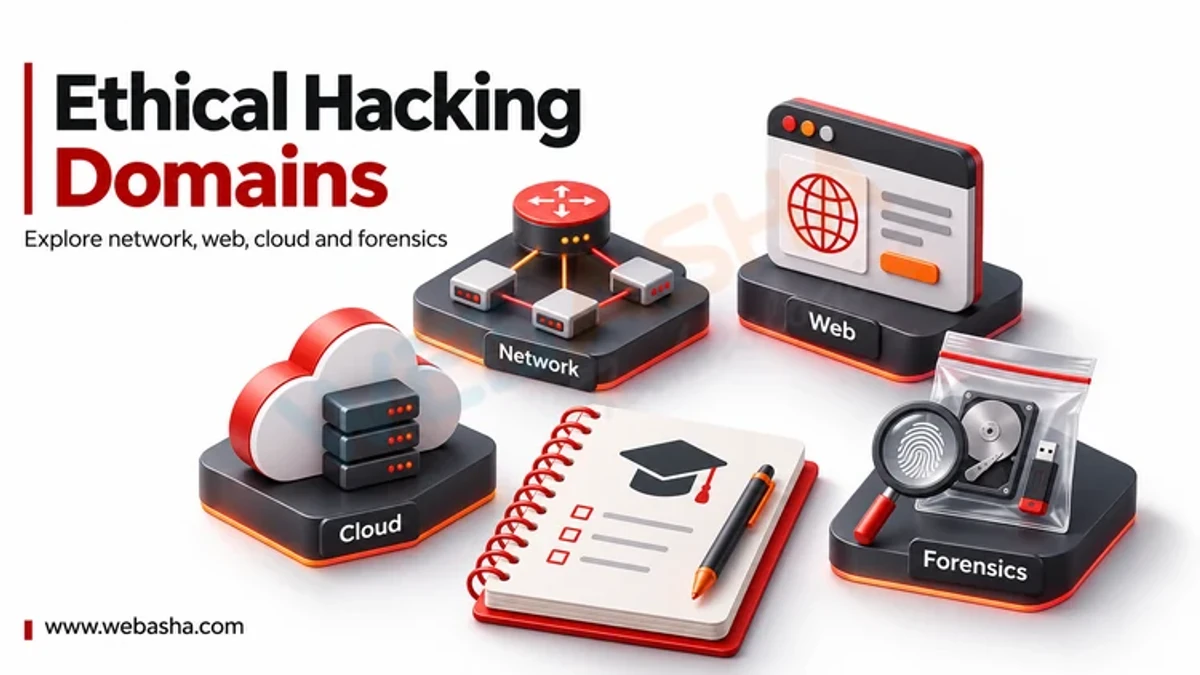
Exploring the Different Domains in Ethical Hacking | Network, Web, Cloud Security, Forensics, and More

Ethical hacking is a vast field that includes multiple domains, each focusing on a different aspect of cybersecurity. These domains are important for identifying vulnerabilities, preventing cyber threats, and ensuring data security. The key ethical hacking domains include network security, web application security, wireless security, cloud security, digital forensics, cryptography, and social engineering. Each domain requires specialized skills, tools, and certifications. Ethical hackers working in network security focus on securing networks and preventing cyber intrusions, while those in web security test for OWASP Top 10 vulnerabilities in web applications. Wireless security experts protect Wi-Fi networks from unauthorized access, while cloud security specialists ensure the security of cloud-based systems. Forensics professionals investigate cybercrimes, while cryptography experts develop encryption techniques. Social engineering specialists test human vulnerabilities.

Can You Work in Ethical Hacking Without Coding? Exploring Career Paths, Skills, and Opportunities

Many aspiring ethical hackers wonder whether coding skills are necessary to enter the field of cybersecurity. While programming knowledge is beneficial, it is not mandatory for every role in ethical hacking. This blog explores various ethical hacking jobs that do not require coding, such as Security Analysts, SOC Analysts, Vulnerability Assessors, and Cybersecurity Consultants. It also discusses essential non-coding skills, including network security, penetration testing, security tools, and risk assessment. While coding can enhance career growth and flexibility, professionals can still thrive in ethical hacking by mastering security frameworks, ethical hacking tools, and industry certifications.

Ghidra Reverse Engineering Tool: Install, Features and a First Analysis

Ghidra 11.3, the latest release from the National Security Agency (NSA), is an advanced open-source reverse engineering tool designed to help cybersecurity professionals analyze compiled code across various platforms such as Windows, macOS, and Linux. With enhanced features like debugging capabilities for kernel-level analysis, integration with Visual Studio Code, and an upgraded JIT p-code emulator, Ghidra 11.3 continues to be a powerful resource for ethical hackers, malware analysts, and penetration testers. This release also includes PyGhidra integration, support for new processor instruction sets, and an improved user interface. The tool is fully backward-compatible but introduces several new features, making it a must-have for professionals dealing with reverse engineering and vulnerability analysis. This post covers the major updates, installation steps, and features of Ghidra 11.3, as well as how it continues to evolve in the cybersecurity field.

Ethical Hacking Jobs for Non-Technical Graduates | How to Break Into Cybersecurity Without a Technical Degree

Non-technical graduates can successfully pursue a career in ethical hacking by developing a basic understanding of cybersecurity concepts, earning relevant certifications, and gaining practical experience. Roles such as cybersecurity analyst, vulnerability analyst, and compliance specialist are perfect for non-technical individuals. With the right resources and determination, breaking into the ethical hacking field is possible for anyone, regardless of their technical background.

Top Ethical Hacking Courses with Placement Assistance | A Guide to Kickstart Your Cybersecurity Career

With the growing need for cybersecurity professionals, ethical hacking courses with placement assistance are an excellent choice for those looking to enter the field. Courses like CEH, OSCP, and CompTIA Security+ offer hands-on training and job support to help you secure your first ethical hacking job. When choosing the right course, consider factors like accreditation, course content, hands-on training, and placement assistance to ensure your success in the cybersecurity industry.

The Beginner's Guide to Ethical Hacking: A Step-by-Step Learning Path for 2027

In this blog, we've compiled a list of the best books that can guide beginners in the field of ethical hacking. These books cover various aspects, including web application security, penetration testing, networking, and programming. Whether you’re just starting or looking to enhance your knowledge, these books will help you develop the skills needed to succeed in ethical hacking. Some of the top books for beginners include: The Web Application Hacker’s Handbook by Dafydd Stuttard and Marcus Pinto Hacking: The Art of Exploitation by Jon Erickson The Hacker Playbook by Peter Kim Penetration Testing: A Hands-On Introduction to Hacking by Georgia Weidman Black Hat Python by Justin Seitz These books will help you grasp fundamental concepts like network security, vulnerability assessment, and penetration testing.

Ethical Hacking vs. Cybersecurity | Understanding the Key Differences and Career Paths

Ethical hacking and cybersecurity are two distinct yet complementary fields focused on safeguarding organizations from cyber threats. While both aim to protect systems, networks, and data, they differ in their approach, responsibilities, and the skillsets required. This post explains what ethical hacking and cybersecurity entail, comparing the two fields and helping you understand which path is best suited for you. We'll discuss key differences, similarities, required skills, and certifications, along with tips for choosing between these two important cybersecurity career paths.

How to Learn Ethical Hacking for Free | The Ultimate Beginner's Guide Without Spending a Dime

With the growing demand for ethical hackers in the cybersecurity industry, many aspiring professionals wonder if they can learn ethical hacking for free. The answer is yes! There are plenty of free resources available, including online courses, practice labs, tools, and cybersecurity communities. To start, learners should focus on fundamental topics like networking, operating systems (Linux and Windows), and programming languages such as Python and JavaScript. Free platforms like Cybrary, TryHackMe, and Hack The Box provide hands-on ethical hacking training. Additionally, participating in Capture The Flag (CTF) challenges and bug bounty programs can help develop real-world hacking skills. This guide explores the best free resources and strategies to learn ethical hacking and build a successful career without any financial investment. With the growing demand for ethical hackers in the cybersecurity industry, many aspiring professionals wonder if they can learn ethical hacking for free.

Essential Skills Required to Become an Ethical Hacker | Key Technical & Soft Skills

Ethical hacking is a highly sought-after career in cybersecurity, requiring a combination of technical and soft skills. To succeed as an ethical hacker, professionals must develop expertise in networking, operating systems, programming, penetration testing, cryptography, and ethical hacking tools. Additionally, soft skills like problem-solving, continuous learning, and effective communication are important. This post covers the essential skills required to become an ethical hacker, covering both technical and non-technical aspects. It also provides a roadmap for beginners to start learning ethical hacking through certifications, online training, and hands-on practice. If you're looking to enter the ethical hacking field, WebAsha Technologies offers expert-led courses to help you build a successful career.

Can You Become an Ethical Hacker Without a Computer Science Degree? A Complete Guide to Skills, Certifications, and Career Paths

Many aspiring ethical hackers wonder whether a computer science degree is necessary to break into the cybersecurity field. The truth is that formal education is not mandatory to become an ethical hacker. What matters most is hands-on skills, practical knowledge, and industry-recognized certifications like CEH (Certified Ethical Hacker), OSCP (Offensive Security Certified Professional), and CompTIA Security+. Employers prioritize technical skills, problem-solving abilities, and real-world experience over academic qualifications. This guide explores alternative paths to ethical hacking, including self-learning, online courses, boot camps, and cybersecurity training institutes like WebAsha Technologies. With expert guidance, structured training, and practical labs, WebAsha helps individuals transition into ethical hacking even without a technical background. By building a strong portfolio, networking with professionals, and gaining hands-on experience, you can successfully land a job a

Certified Ethical Hacker (CEH) | A Complete Guide to Starting Your Ethical Hacking Career

The Certified Ethical Hacker (CEH) certification, offered by EC-Council, is one of the most recognized credentials in the field of ethical hacking and cybersecurity. It validates your ability to identify vulnerabilities, conduct penetration testing, and protect systems from cyber threats. This blog provides a step-by-step guide to becoming a CEH-certified ethical hacker, covering prerequisites, training options, exam details, study materials, costs, career opportunities, and salary expectations. For beginners and IT professionals looking to advance in cybersecurity, this guide will help you understand how to prepare for the CEH exam and start a rewarding career in ethical hacking.

Ethical Hacking Career Roadmap for Beginners | Step-by-Step Guide to Becoming a Certified Ethical Hacker

Ethical hacking is one of the most sought-after careers in cybersecurity, offering excellent job opportunities, high salaries, and continuous learning. This blog provides a step-by-step roadmap to help beginners start their ethical hacking journey. It covers the fundamental skills, certifications, and hands-on experience needed to become a professional ethical hacker. Key topics include networking basics, programming languages, cybersecurity tools, penetration testing, bug bounties, certifications like CEH and OSCP, and job opportunities in cybersecurity. Whether you have a technical background or not, this guide will help you break into the ethical hacking field and build a successful career.

How to Become an Ethical Hacker | The First Step to a Successful Cybersecurity Career

Ethical hacking is a rapidly growing field in cybersecurity, offering exciting career opportunities for individuals who want to secure systems and prevent cyber threats. Many beginners wonder what the first step to becoming an ethical hacker is. The journey starts with mastering cybersecurity fundamentals, learning networking concepts, understanding operating systems like Linux and Windows, and acquiring basic programming skills. Hands-on experience with ethical hacking tools such as Nmap, Metasploit, and Burp Suite is important. Aspiring ethical hackers should also learn penetration testing methodologies and obtain relevant certifications like CEH, OSCP, or CompTIA Security+. This blog provides a structured roadmap for beginners, covering essential knowledge areas, best learning resources, and common challenges in ethical hacking. For those with a technical background and those starting from scratch, this guide will help you take your first step toward becoming a professional ethical

How to Start an Ethical Hacking Career from Scratch

Start an ethical hacking career by identifying the work you want to do, checking your computing foundations and building evidence through authorised practice. Learn networks, operating systems, web behaviour and basic scripting before relying on security tools. Produce a small assessment report, seek feedback and compare your skills with real entry requirements.

Is Ethical Hacking Hard to Learn? How to Diagnose the Difficulty

Ethical hacking can be difficult because it combines computing foundations, unfamiliar tools and judgement about incomplete evidence. The difficulty is usually easier to manage when you identify the exact obstacle: a networking gap, a Linux problem, an unclear web concept or an exercise that is too advanced. Reduce the task, practise with feedback and repeat it independently.

Ethical Hacking for Beginners: What Should You Learn First?

Start an ethical hacking course with networking, operating systems and the web, then practise assessment methods in explicitly authorised labs. Choose a course that connects each tool to a question, an observable result and a written finding. You do not need to buy an advanced examination package before discovering which foundations you lack.