AI in Zero Trust Security | The Future of Cyber Protection
As cyber threats continue to evolve, traditional security models are proving ineffective in protecting modern IT infrastructures. Zero Trust Security, which operates on the principle of "never trust, always verify," is becoming the go-to cybersecurity approach. AI enhances Zero Trust by automating authentication, continuously monitoring user behavior, and dynamically adjusting security policies based on real-time risk assessments. This blog explores how AI-driven Zero Trust security works, its benefits, challenges, and how businesses can adopt AI-powered solutions to strengthen their cybersecurity posture.
Topic: AI in Cybersecurity in Cybersecurity & Ethical Hacking · Explainer
Also covers: Active Directory & Identity Security
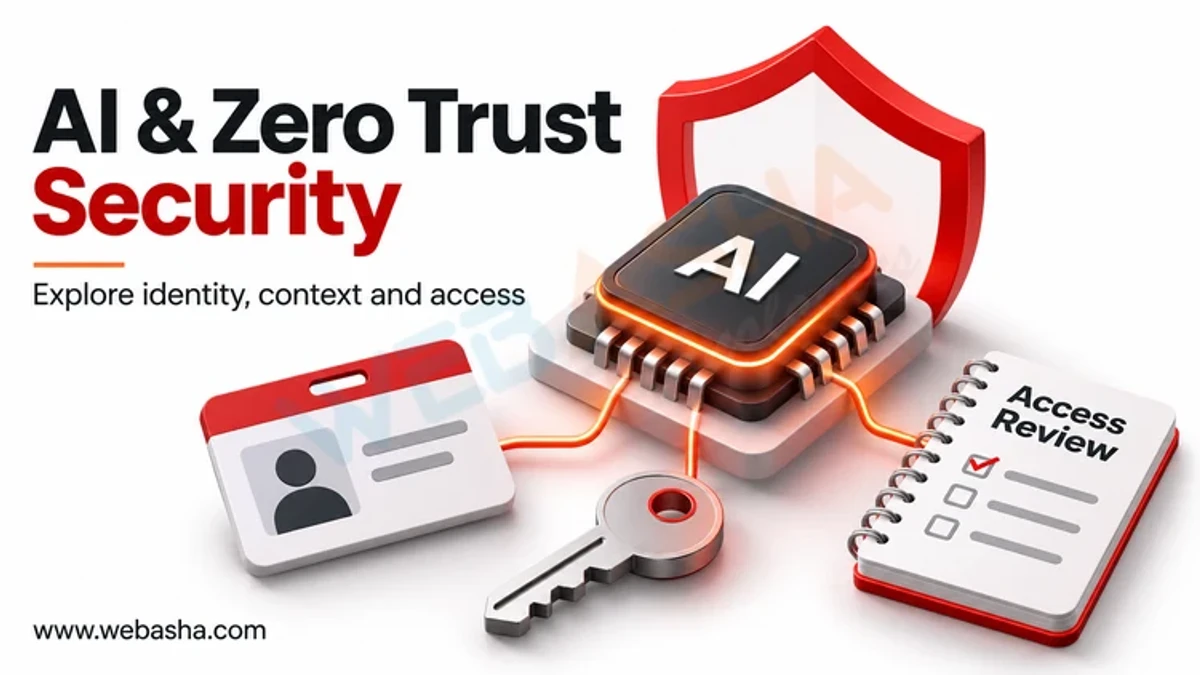
Quick answer: Zero trust means no user or device is trusted by default. AI supports it by continuously checking behaviour, adjusting access based on risk and spotting unusual activity quickly. Challenges include model accuracy, integration with existing systems and privacy concerns, so teams should start with high-value assets and expand step by step.
Key takeaways
- Zero trust means every request is checked, not trusted by network location.
- AI can adjust access based on risk signals such as device health and behaviour.
- Start with strong identity and multi-factor authentication.
Table of Contents
- Introduction
- Understanding Zero Trust Security
- How Is AI Enhancing Zero Trust Security?
- How Do AI vs. Traditional Zero Trust Security Approaches Compare?
- Challenges of AI in Zero Trust Security
- Conclusion
Introduction
Traditional perimeter-based security models are no longer sufficient against today’s cyber threats. Organizations are shifting towards Zero Trust Security Models, where no entity, inside or outside the network, is trusted by default. Artificial Intelligence (AI) helps strengthen Zero Trust by automating threat detection, enforcing strict access controls, and continuously verifying user behavior.
This post explains how AI is shaping Zero Trust Security Models, its benefits, challenges and how businesses can use AI to strengthen their cybersecurity posture.
Understanding Zero Trust Security
Zero Trust is a security framework that operates on the principle of “never trust, always verify.” Instead of assuming trust within a network, it requires continuous authentication and authorization for every access request. The core components of a Zero Trust model include:
- Least Privilege Access: Users and devices receive the minimum access necessary to perform tasks.
- Continuous Authentication: Verification happens at multiple levels as well as at login.
- Micro-Segmentation: Networks are divided into isolated segments to prevent lateral movement.
- Real-Time Monitoring: All activities are continuously monitored for anomalies.
Why Do Traditional Security Approaches Fail?
Traditional security models operate on a castle-and-moat approach, where anyone inside the network is trusted. This model fails against modern threats like:
- Insider Threats (compromised employees, rogue insiders)
- Credential Theft (phishing, brute-force attacks)
- Advanced Persistent Threats (APTs) that evade traditional detection methods
- Cloud & Remote Work Risks, as users access networks from multiple devices and locations
With cybercriminals becoming more sophisticated, Zero Trust is essential for reducing risks and minimizing breaches.
How Is AI Enhancing Zero Trust Security?
AI-driven Zero Trust security combines machine learning, behavioral analytics, and automation to strengthen cybersecurity defenses. Here’s how AI contributes to the Zero Trust framework:
1. Intelligent Access Control
AI-powered Identity and Access Management (IAM) solutions analyze user behavior, location, device information, and historical data to determine access permissions dynamically.
Example: If a user typically logs in from New York but suddenly accesses the system from another country, AI can flag or block the request.
2. Continuous User Verification
Instead of relying on a one-time login, AI enables continuous authentication by monitoring user behavior patterns. Any deviation from normal behavior triggers security measures like multi-factor authentication (MFA) or access revocation.
3. Automated Threat Detection and Response
AI-driven Security Information and Event Management (SIEM) tools can process vast amounts of data in real time to detect anomalies, phishing attempts, malware, and lateral movement within networks.
Example: AI can identify an employee accessing sensitive data outside of business hours and automatically restrict access.
4. AI-Powered Micro-Segmentation
AI dynamically adjusts security policies based on real-time risk assessments, ensuring data and applications remain isolated from potential threats.
Example: If AI detects a suspicious process running on a device, it can isolate the affected segment to prevent a breach from spreading.
5. Predictive Threat Intelligence
AI uses predictive analytics to detect zero-day vulnerabilities and emerging cyber threats before they exploit network weaknesses.
Example: AI-powered systems analyze global attack patterns and alert organizations about potential threats targeting their infrastructure.
How Do AI vs. Traditional Zero Trust Security Approaches Compare?
| Feature | Traditional Zero Trust | AI-Powered Zero Trust |
|---|---|---|
| Access Control | Predefined rules and policies | Adaptive, behavior-based access |
| Authentication | One-time login verification | Continuous authentication using AI |
| Threat Detection | Manual monitoring & signature-based detection | Real-time AI-powered anomaly detection |
| Incident Response | Manual investigation and action | Automated response with machine learning |
| Micro-Segmentation | Static network segmentation | AI-driven dynamic segmentation |
| Threat Intelligence | Relies on past attack databases | Predictive threat analytics |
Challenges of AI in Zero Trust Security
While AI enhances Zero Trust security, it also presents challenges:
- Adversarial AI Attacks: Hackers use AI to trick security systems and evade detection.
- False Positives: AI may sometimes misclassify normal user activity as a threat.
- Ethical Concerns: AI-driven surveillance raises privacy concerns.
- Dependency on AI Models: Over-reliance on AI may lead to security blind spots if algorithms are not regularly updated.
Future Trends: AI and the Evolution of Zero Trust Security
The future of AI-powered Zero Trust security will see even more advanced automation, deep learning-driven anomaly detection, and AI-assisted risk assessments. Some key trends include:
- Zero Trust + AI-Driven Edge Security: Protecting remote users and IoT devices with real-time AI monitoring.
- Self-Learning Security Systems: AI models that continuously evolve and adapt to new cyber threats.
- Quantum-Resistant AI Algorithms: Enhancing cryptographic security against quantum computing threats.
- AI-Augmented Cybersecurity Teams: Using AI to assist human analysts in threat hunting and incident response.
Conclusion
AI is changing Zero Trust Security Models by introducing real-time threat detection, automated incident response, and intelligent access control. While challenges exist, the benefits far outweigh the risks, making AI-driven Zero Trust a critical cybersecurity approach for organizations of all sizes.
By integrating AI into their security strategies, businesses can stay ahead of cyber threats, protect sensitive data, and build a more resilient security infrastructure for the future.
To take this further with guided labs and an instructor, see our cyber security training in Pune.
Related reading
- How AI is Changing APT Detection and Prevention | The Future of Cybersecurity
- AI in Zero Trust Security Models | What You Need to Know
- What is Zero Trust Network Architecture and why is it essential for modern cybersecurity strategies in 2026?
Reference
For the authoritative details, see NIST Cybersecurity Framework.
Frequently Asked Questions
What's Your Reaction?
 Like
0
 Dislike
0
 Love
0
 Funny
0
 Wow
0
 Sad
0
 Angry
0

Vaishnavi is a skilled tech professional at the Ethical Hacking Training Institute in Pune, responsible for managing and optimizing the technical infrastructure that supports advanced cybersecurity education. With deep expertise in network security, backend operations, and system performance, she ensures that practical labs, online modules, and assessments run smoothly and securely. Her behind-the-scenes contributions play a vital role in delivering a seamless and secure learning experience for aspiring ethical hackers.