Tech Career Fields Compared: Cyber, Cloud, Data and Development
Cybersecurity, cloud, data and software development differ most in how people enter them. Cybersecurity is often entered from IT support or networking, through a SOC analyst role. Cloud and DevOps usually follow system administration or Linux experience. Data roles start with SQL, spreadsheets and statistics, often as a data analyst.
Topic: Data Analytics & Data Science in AI & Data · Career guidance
Also covers: Cybersecurity Careers & Certifications, Python for AI & Automation, Ethical Hacking
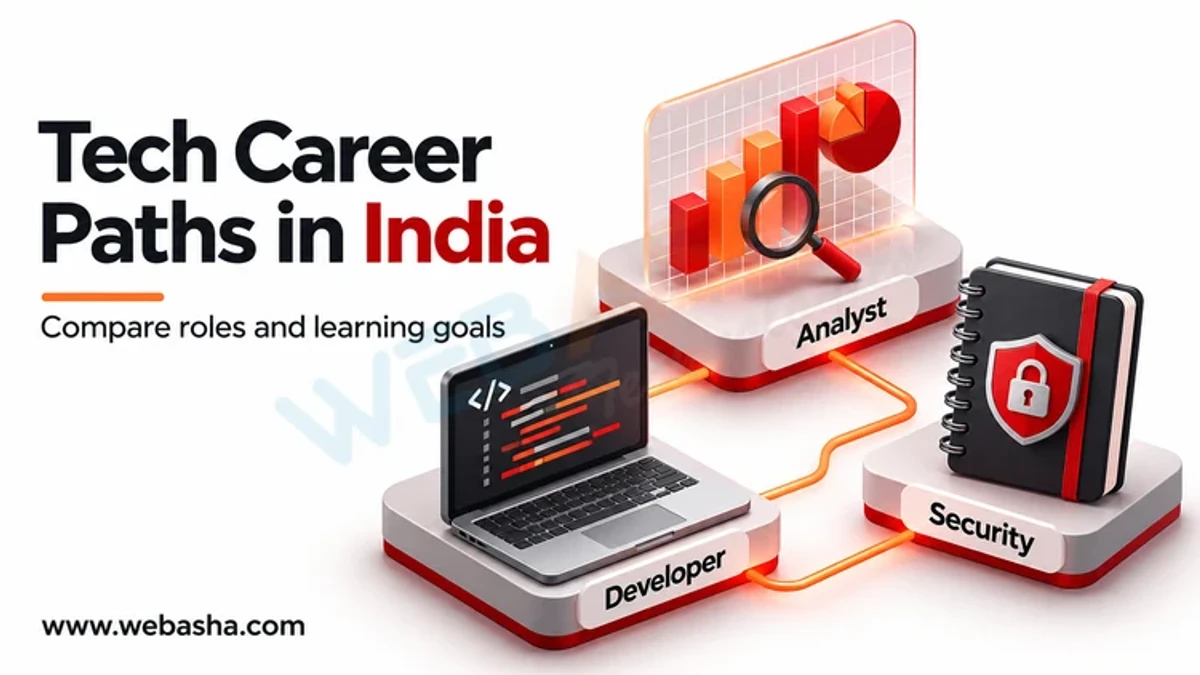
Quick answer: Cybersecurity, cloud, data and software development differ most in how people enter them. Cybersecurity is often entered from IT support or networking, through a SOC analyst role. Cloud and DevOps usually follow system administration or Linux experience. Data roles start with SQL, spreadsheets and statistics, often as a data analyst. Development is the field most open to direct entry, because a coding test and a portfolio can stand in for prior IT work. Compare the fields by the first role, the prerequisites and the evidence each expects, then pick the route that fits your background.
Key takeaways
- Each field has a typical first role and a typical feeder background.
- Cybersecurity and cloud usually build on support, networking or Linux work.
- Data roles reward SQL and statistics more than infrastructure skills.
- Development hires heavily on coding tests and portfolios.
- Moving between fields later is common, because the foundations overlap.
Table of Contents
- How Do the Four Fields Compare at Entry Level?
- How Do People Enter Cybersecurity?
- How Do People Enter Cloud and DevOps?
- How Do People Enter Data and AI?
- How Do People Enter Software Development?
- Which Field Fits Your Background?
- Can You Switch Fields Later?
- References
How Do the Four Fields Compare at Entry Level?
| Field | Typical first role | Prerequisites | Evidence employers look for |
|---|---|---|---|
| Cybersecurity | SOC analyst, security support | Networking, Windows and Linux, log reading | Lab investigations, Security+ or ISC2 CC |
| Cloud and DevOps | Cloud support, junior DevOps | Linux, networking, scripting | A deployed project, a cloud fundamentals or associate exam |
| Data and AI | Data analyst, reporting analyst | SQL, spreadsheets, statistics, Python | Dataset analyses with clear write-ups |
| Software development | Junior developer, QA engineer | One language, data structures, Git | Public repositories, coding test results |
The US BLS Occupational Outlook Handbook describes the duties of each of these occupations in more detail.
How Do People Enter Cybersecurity?
Many start in IT support or network administration, then move to a security operations centre. The NIST NICE Framework lists the tasks for each security work role, and CISA's Cyber Career Pathways Tool shows how roles connect. ISC2 CC remains an entry exam, but its free programme ended for new candidates on 20 May 2026. Practise only in your own lab; unauthorised testing is an offence under the IT Act 2000, Sections 43 and 66. See also choosing a cybersecurity specialisation.
How Do People Enter Cloud and DevOps?
Cloud teams expect you to understand servers and networks before you automate them. Learn the service models in NIST SP 800-145, then one platform. AWS certifications start at Cloud Practitioner. On Azure, check Microsoft's retirement list first, because AZ-204 and AZ-500 retired in 2026. A useful route map: becoming a cloud administrator.
How Do People Enter Data and AI?
Most people start as analysts: cleaning data, writing SQL queries against databases such as PostgreSQL and building reports. Machine learning roles usually come later and need statistics and Python. Microsoft retired DP-100 and AI-900 during 2026, so confirm any data or AI exam is current before you prepare. A strong first portfolio piece is a public dataset, a short list of business questions, the SQL or Python you used, and a one-page summary a manager could read.
How Do People Enter Software Development?
Development is the most portfolio-driven field. Employers set coding tests and read your repositories. Learn one language well, data structures, Git and testing. Secure coding basics from the OWASP Top 10 give your projects an edge and prepare you for code reviews. Small fixes to open-source projects also show that you can read other people's code and accept feedback.
Which Field Fits Your Background?
| Your background | Field with the shortest route |
|---|---|
| IT support or hardware | Cybersecurity or cloud |
| Networking or system administration | Cloud and DevOps, or security |
| Commerce, maths or statistics | Data analysis |
| Computer science or self-taught coding | Software development |
| No technical background | Start with support basics or data analysis |
Can You Switch Fields Later?
Yes. Developers move into application security, administrators into cloud, and analysts into data engineering. The shared foundations make these moves practical. Choose the field with the clearest entry route for you now, and plan to specialise once you are working. For guided labs in any of these fields, ask WebAsha about tech career training.
References
Frequently Asked Questions
What's Your Reaction?
 Like
0
 Dislike
0
 Love
0
 Funny
0
 Wow
0
 Sad
0
 Angry
0

Vaishnavi is a skilled tech professional at the Ethical Hacking Training Institute in Pune, responsible for managing and optimizing the technical infrastructure that supports advanced cybersecurity education. With deep expertise in network security, backend operations, and system performance, she ensures that practical labs, online modules, and assessments run smoothly and securely. Her behind-the-scenes contributions play a vital role in delivering a seamless and secure learning experience for aspiring ethical hackers.